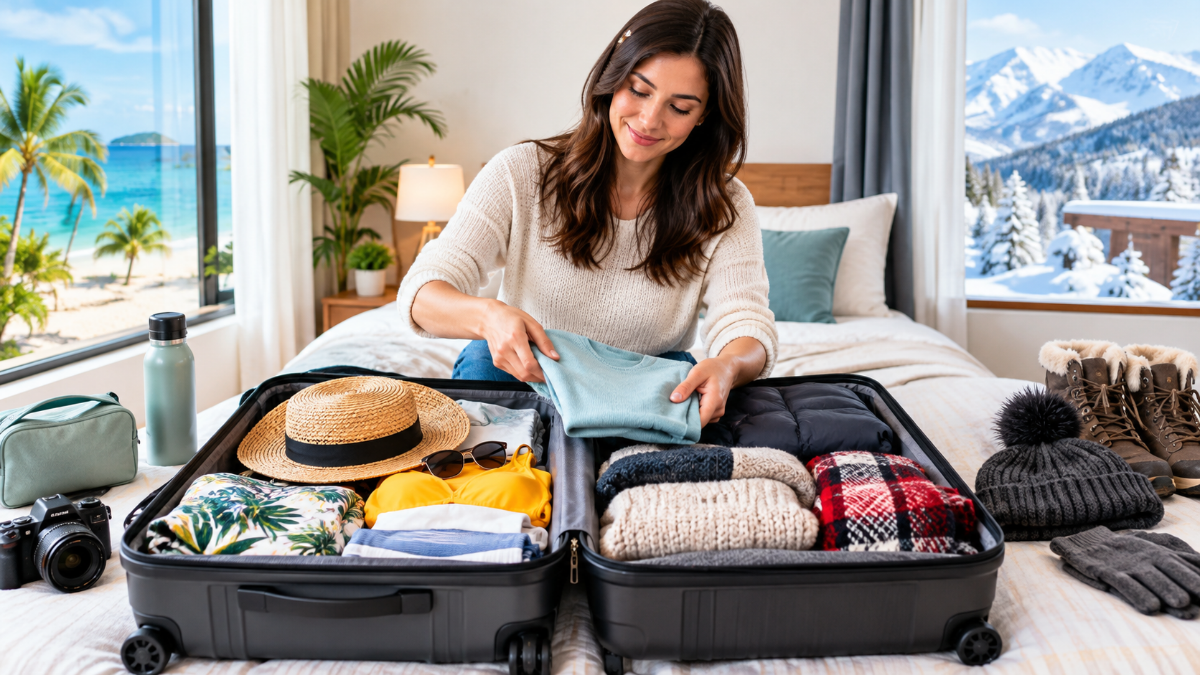
Packing for one climate is simple enough. Packing for two completely different climates on the same trip can make even a small suitcase feel impossible. You need clothes that keep you warm in one place and comfortable in another, without carrying half your wardrobe.
For women planning a multi-climate trip, the challenge is finding travel outfits that work in both settings. Heavy sweaters take up space, summer clothes offer little warmth, and packing separate outfits for each destination quickly adds weight.
The good news? You don’t need two wardrobes. With smart layering, versatile fabrics, and a few carefully chosen pieces, you can pack for hot and cold weather without sacrificing comfort or personal style.
Why Packing for Two Climates Feels So Difficult
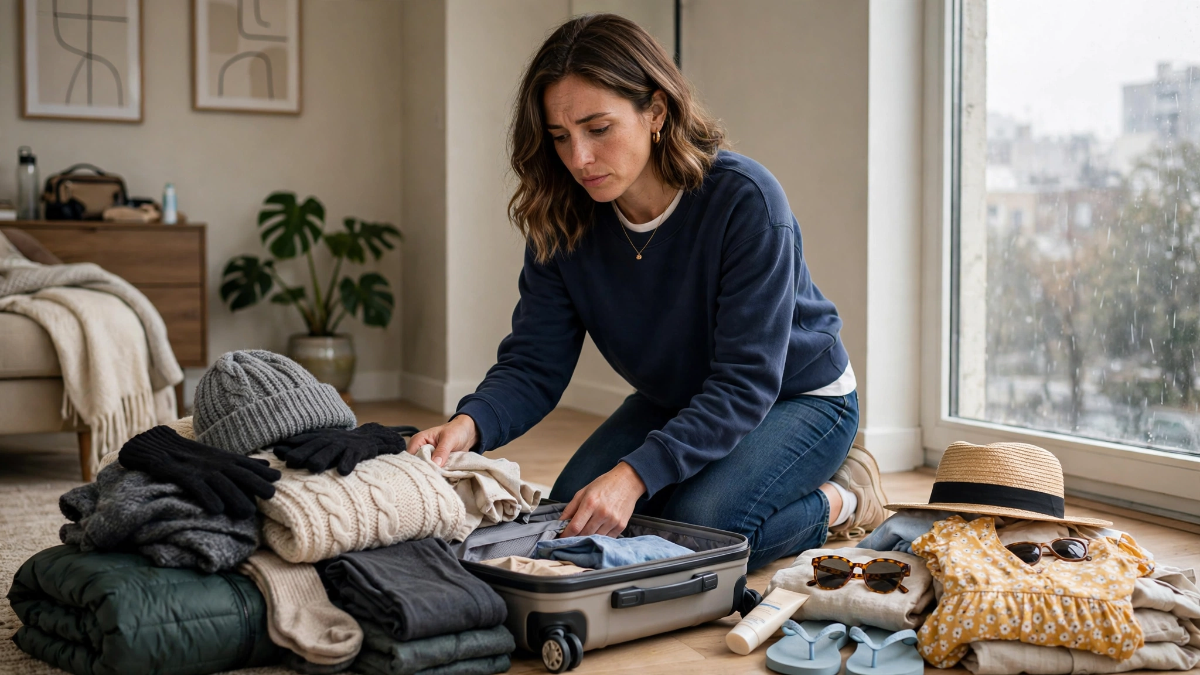
The biggest mistake when packing for different climates is treating each destination like a separate trip. A warm beach destination might call for linen trousers, cotton tops, and sandals. A cooler mountain town may need sweaters, closed-toe shoes, and a weather-resistant jacket.
Packing complete outfits for both locations means carrying clothes that only work for half your journey. The better approach is to build one flexible travel wardrobe around pieces that can handle changing temperatures.
For example, a long-sleeve cotton shirt works on a cool morning, inside an air-conditioned airport, or over a tank top on a warm afternoon.
The goal isn’t to make every item work everywhere. It’s to make most of your clothes useful in more than one situation.
Think about the activities you’ll actually do rather than packing for every possible weather condition. A sightseeing trip, a beach holiday, and a hiking adventure all have different clothing needs, even when temperatures are similar.
Start With a Shared Base Wardrobe

The easiest way to pack for a trip with two completely different climates is to choose a small group of clothes that work in both destinations.
These are your base pieces. They should feel comfortable, mix easily, and look appropriate for most of your planned activities.
Neutral colors such as navy, cream, olive, charcoal, and beige make mixing clothes easier. You can still include brighter colors, especially if they already work with your favorite trousers or jackets.
Focus on clothing that can be worn alone in warm weather or layered when temperatures drop.
A practical shared wardrobe might include:
- Straight-leg trousers: Choose a comfortable pair in a medium-weight fabric that works with both sandals and closed-toe shoes.
- Lightweight long-sleeve shirt: Cotton or linen blends work well for sun protection and casual layering.
- Simple T-shirts: Pack two or three that coordinate with every bottom.
- Dark jeans: Useful for cooler evenings, travel days, and casual dinners.
- Versatile midi dress: Wear it alone in warm weather or add tights, boots, and a cardigan in cooler conditions.
The fabric and fit of these pieces matter as much as their color.
Clothes that are too tight can feel uncomfortable when layered, while oversized pieces may create unnecessary bulk beneath a jacket.
Look for relaxed but controlled shapes that leave enough room to move.
Choose Fabrics That Adapt to Temperature Changes
Not every fabric performs equally well in changing climates.
This quick guide can help you decide which materials deserve space in your suitcase.
| Fabric | Best Use | What to Know |
|---|---|---|
| Merino wool | Cool days and changing temperatures | Insulates when damp and manages moisture |
| Cotton | Warm, dry days | Comfortable but slow to dry |
| Linen | Hot, humid destinations | Breathable but wrinkles easily |
| Lightweight fleece | Cold mornings and evenings | Warm without the weight of a thick sweater |
| Quick-dry synthetic blends | Active sightseeing and travel | Dry faster after washing |
A fabric that dries quickly can be especially useful when you need to wash a shirt in a hotel sink and wear it again during the trip.
Use the Three-Layer Method for Cold Weather
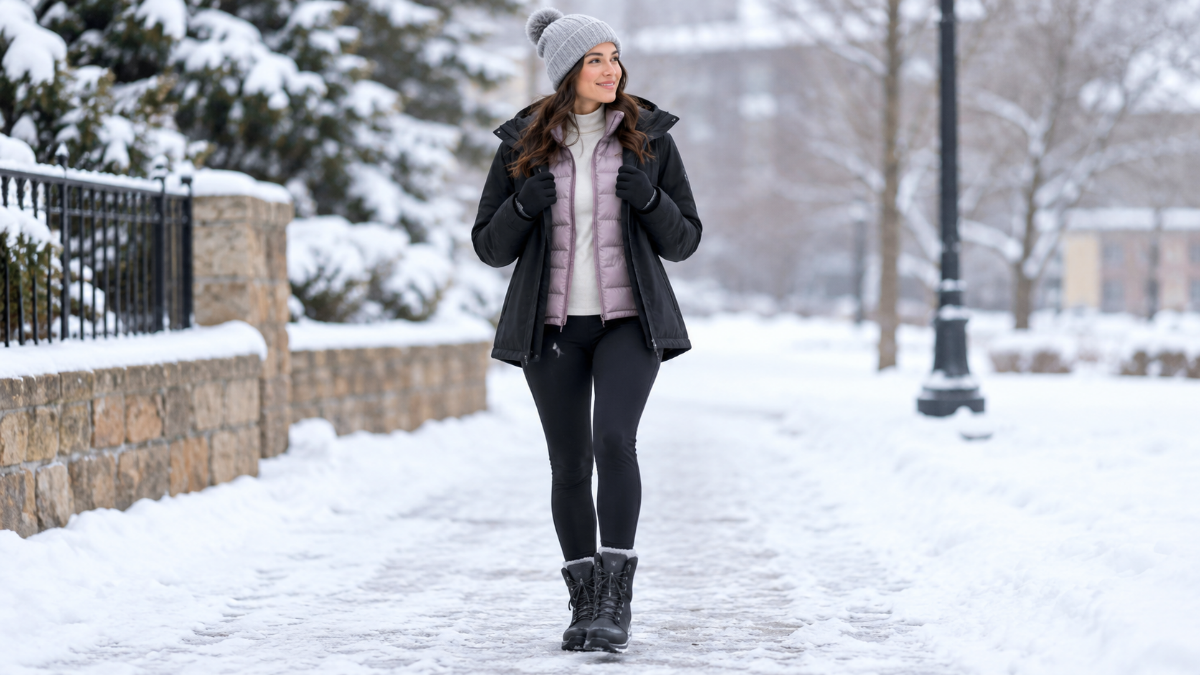
You don’t need a suitcase full of thick winter clothing to stay comfortable in cooler destinations. Instead, use three layers that can be added or removed as temperatures change.
Base layer: The layer closest to your skin
Start with a fitted long-sleeve top or lightweight thermal shirt.
For cold or active conditions, merino wool or moisture-wicking synthetic fabric works better than ordinary cotton because it helps manage sweat.
Middle layer: The warmth
Add a lightweight sweater, fleece, or cardigan.
This layer traps warmth without requiring a bulky coat. A fine-knit sweater can also work for casual dinners or evening walks.
Outer layer: The weather protection
Finish with a jacket suited to your destination.
A packable insulated jacket works for dry, chilly conditions. For wet or windy weather, choose a waterproof, wind-resistant shell and wear insulation underneath when needed.
Fit note: Test all three layers together before leaving. Your jacket should close comfortably without pulling across the shoulders or restricting your arms.
If you’re visiting a truly freezing destination, you’ll need more protection, including insulated footwear, gloves, and a warm hat. Layering helps, but it doesn’t replace appropriate cold-weather gear.
Build Hot-Weather Outfits Around the Same Pieces
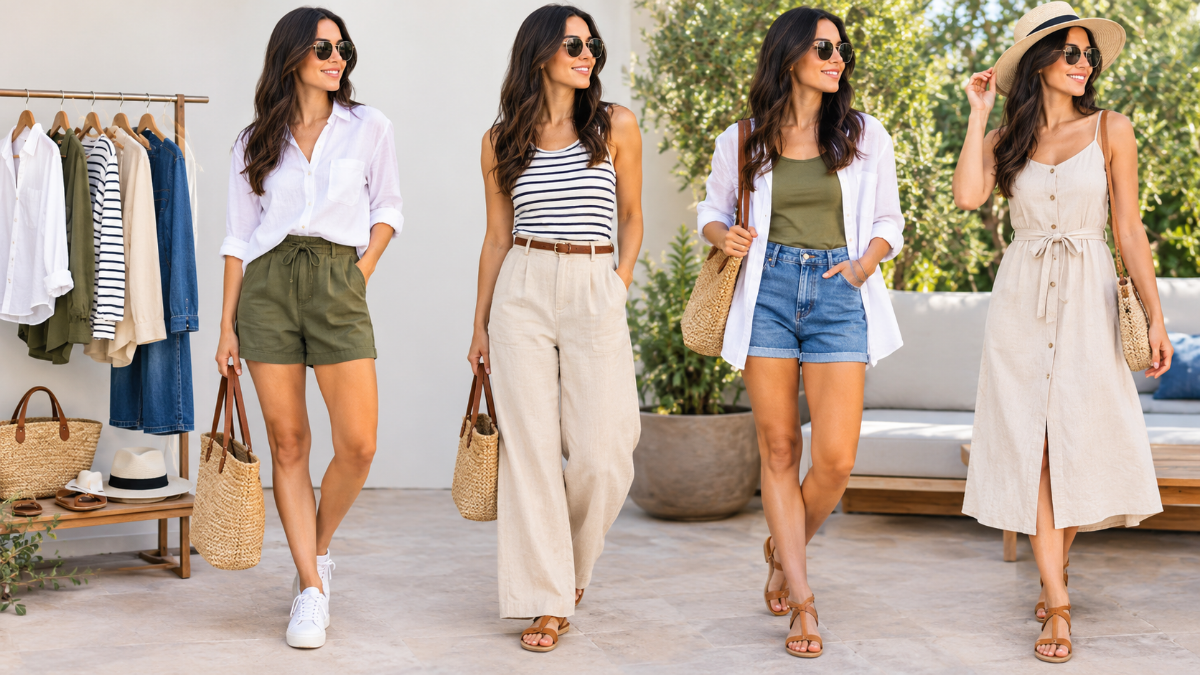
Once your cold-weather layers are sorted, planning for the warmer destination becomes much easier.
Your basic T-shirts, lightweight trousers, and button-down shirts can form the foundation of your warm-weather wardrobe.
Remove the heavy layers, switch your shoes, and adjust your accessories.
For example, straight-leg trousers with a cotton T-shirt and sneakers work for airport travel. At a warm destination, the same trousers can be paired with a sleeveless top and flat sandals.
The key is choosing fabrics that won’t feel heavy or clingy in heat.
Loose-fitting linen trousers, breathable cotton tops, and relaxed dresses allow more airflow than thick denim or heavy synthetic fabrics.
For hot, sunny days, a lightweight long-sleeve shirt can also provide useful coverage without requiring an additional outfit.
Make Simple Outfit Swaps Instead of Packing Extras
You can create different looks for each climate by changing just one or two pieces.
| Shared Base | Warm Climate | Cool Climate |
|---|---|---|
| Straight-leg trousers | Tank top and sandals | Knit sweater and ankle boots |
| Midi dress | Flat sandals and sunhat | Cardigan, tights, and boots |
| Cotton T-shirt | Linen shorts and sneakers | Fleece, jeans, and jacket |
| Button-down shirt | Open over a sleeveless top | Under a sweater |
| Dark jeans | Lightweight blouse | Thermal top and insulated jacket |
This approach also helps keep your travel outfits coordinated without making them feel repetitive.
A scarf, a different shoe, or a change in layers can make the same basic pieces look suitable for another setting.
Choose Shoes That Work Across Both Destinations

Shoes are often the hardest part of packing for two climates.
They take up valuable space, add weight, and aren’t always interchangeable.
A pair of sandals may be comfortable on a beach but useless on a cold, rainy walking tour. Heavy winter boots can feel equally out of place in tropical heat.
Rather than packing shoes for every outfit, choose footwear based on the surfaces, weather, and activities you’ll encounter.
For many mixed-climate trips, two or three pairs are enough:
- Comfortable walking sneakers: Choose a supportive pair with enough room for your toes and suitable grip for city sightseeing.
- Flat sandals: Useful for hot destinations, casual dinners, and relaxed days.
- Weather-appropriate boots: Add these when your colder destination includes snow, ice, heavy rain, or outdoor activities.
If the colder destination is only mildly chilly, comfortable closed-toe sneakers may be enough.
For icy or snowy conditions, however, proper winter footwear is worth the extra space.
Shoe swap: Wear your bulkiest footwear during travel when it’s practical and comfortable. Pack lighter sandals flat against the side of your suitcase.
Always test new shoes before your trip. Even attractive, supportive footwear can cause discomfort if it hasn’t been broken in.
Organize Your Suitcase by Climate, Not by Outfit
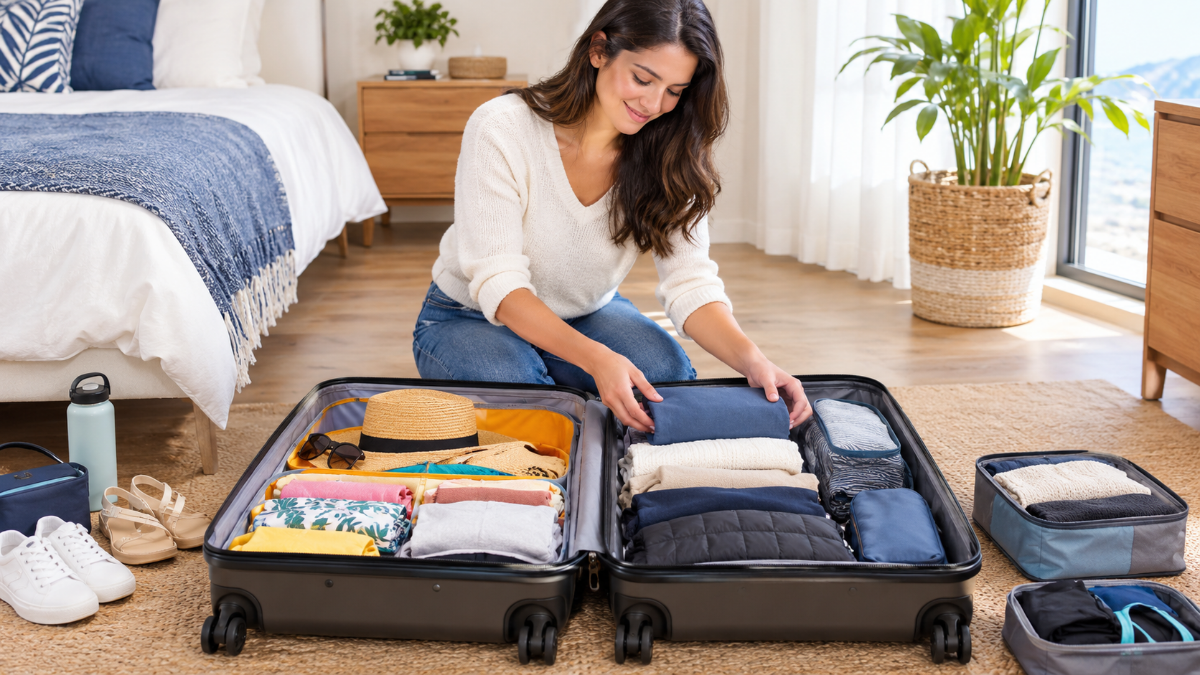
Packing everything together may seem convenient, but it makes changing climates more frustrating.
When you arrive somewhere warm, you don’t want to unpack sweaters, thermals, and winter accessories just to find your favorite T-shirt.
Organizing your suitcase by clothing function makes it easier to reach what you need.
Packing cubes can help separate your wardrobe into a few simple groups.
Keep warm-weather clothes together, cold-weather layers in another cube, and underwear and smaller accessories in a separate pouch.
You can also roll soft T-shirts and lightweight trousers to make them easier to see. Fold structured garments along their seams to reduce creasing.
What Should Go in Your Carry-On?
A delayed checked suitcase can be especially inconvenient when your destinations have very different temperatures.
Keep a few essential items in your carry-on, particularly if you’ll arrive somewhere much colder or hotter than your departure city.
Consider including a change of underwear, one versatile outfit, essential medication, and any weather protection you’ll need immediately after landing.
If your first destination is cold, keep a suitable jacket accessible rather than buried at the bottom of your checked bag.
For a warm arrival, a lightweight top and breathable trousers can make changing clothes much easier.
Avoid Packing Two Complete Wardrobes
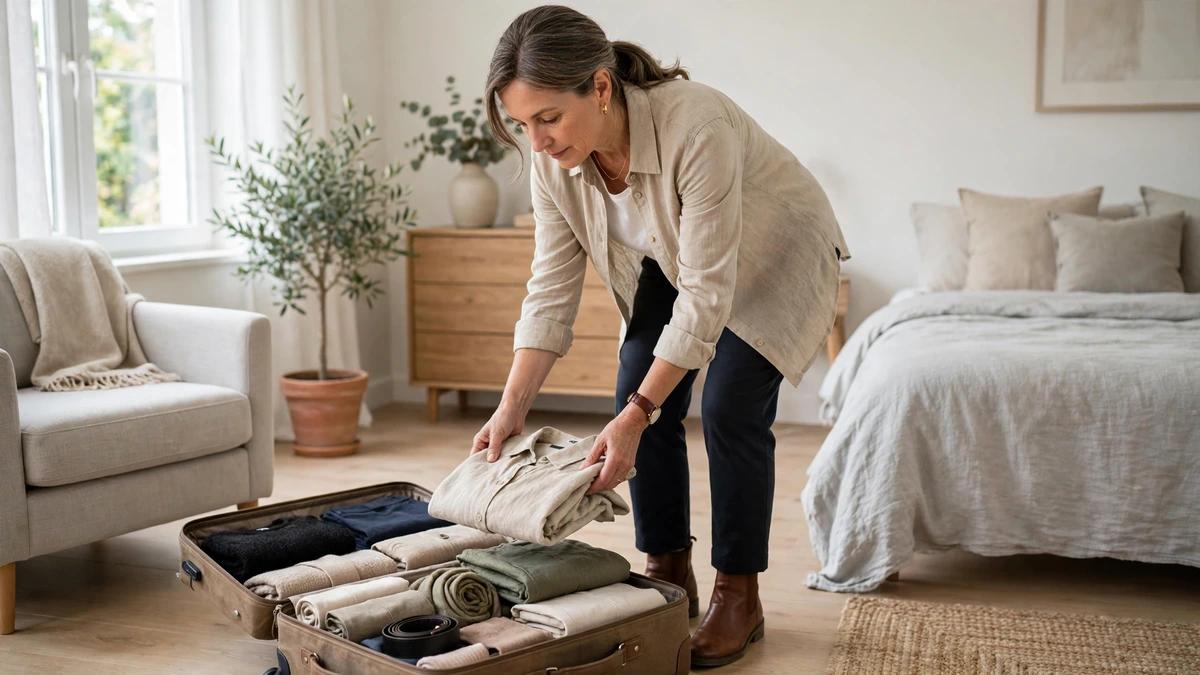
It’s tempting to pack extra clothing because the weather feels unpredictable.
But more clothing doesn’t always make a trip easier. It can create heavier luggage, longer mornings, and more decisions about what to wear.
A better method is to identify pieces that have only one use and decide whether they’re truly necessary.
Here are some common packing habits worth adjusting.
| Instead of This | Try This |
|---|---|
| Packing a different sweater for every cold day | Bring one or two layers that match all your bottoms |
| Taking separate trousers for every destination | Choose versatile trousers that work with different tops |
| Packing several bulky jackets | Combine one insulated layer with a weatherproof shell when needed |
| Bringing shoes for every outfit | Choose footwear around walking, weather, and planned activities |
| Adding clothes for unlikely events | Pack for your itinerary and realistic weather conditions |
Of course, some activities require dedicated clothing.
A formal dinner, a ski trip, or a long hike may call for pieces that can’t be replaced by your everyday wardrobe.
The aim is to reduce unnecessary duplication, not to leave behind things that keep you safe or comfortable.
Check the Weather Beyond the Temperature
A destination with a daytime temperature of 60°F (16°C) can feel very different depending on wind, rain, and sunshine.
Look at the expected daytime highs, nighttime lows, rainfall, and wind before finalizing your suitcase.
Also consider where you’ll spend most of your time.
Walking outdoors for hours calls for different clothing than moving between a hotel, restaurant, and car.
Check the forecast again shortly before departure so you can make sensible last-minute adjustments.
A Simple Two-Climate Packing Formula to Remember
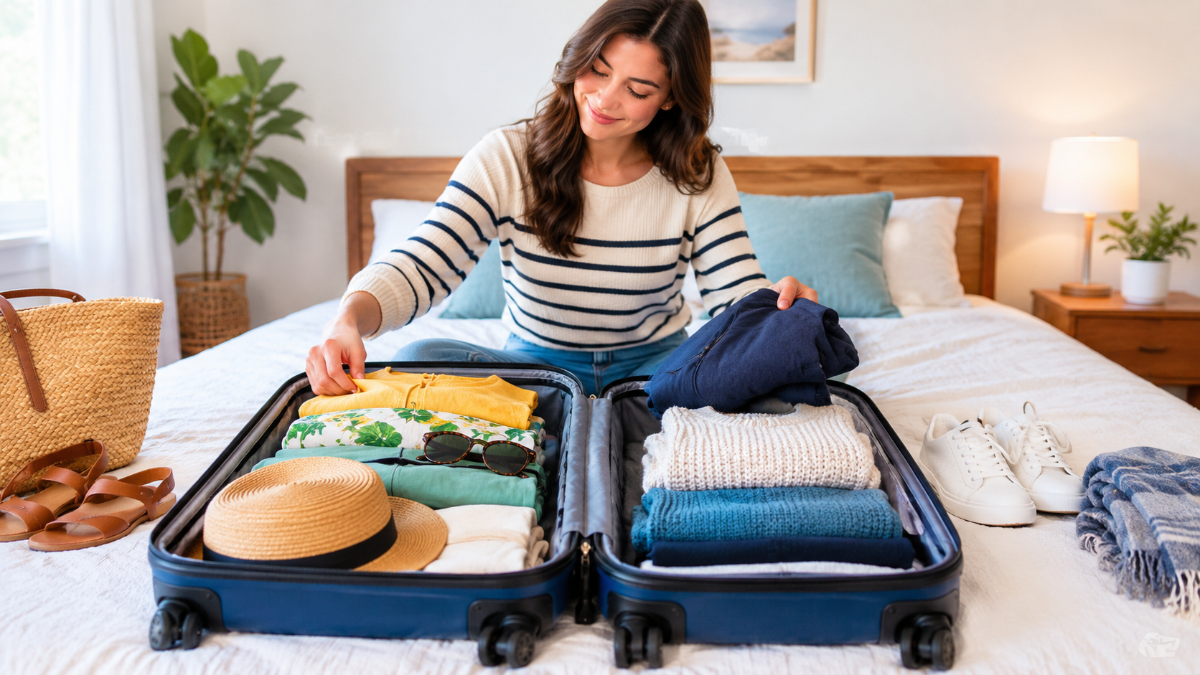
The easiest packing system starts with a shared wardrobe and adds only the pieces needed for each climate.
Formula: Versatile base pieces + removable warm layers + climate-specific shoes and accessories.
For a typical week-long trip split between warm and cool destinations, that might mean three everyday tops, two bottoms, one dress, a lightweight sweater, an insulated layer, and suitable outerwear.
Add sandals, comfortable walking shoes, and any necessary cold-weather footwear.
The exact number of pieces depends on your activities, laundry access, and the length of each stay.
For a longer trip, you may find that washing a few items halfway through is easier than packing extra outfits.
Plan Your Travel-Day Outfit Carefully
Travel days are a good opportunity to wear the clothes that take up the most space.
A comfortable pair of trousers, a breathable top, a lightweight sweater, and a jacket can work well when moving between airports and destinations.
Choose layers that are easy to remove rather than wearing one thick garment.
This is particularly helpful on flights, where cabin temperatures can feel quite different from the weather outside.
If you’re arriving in a hot climate, keep a lightweight change of clothing near the top of your bag.
If you’re landing somewhere cold, make sure your warm outer layer is accessible before leaving the airport.
Frequently Asked Questions
How do you pack for both hot and cold weather in one suitcase?
Start with versatile clothing such as T-shirts, trousers, and lightweight long-sleeve tops. Add removable layers for cold weather and a few breathable pieces for hot days. Choose shoes based on your planned activities, and avoid packing duplicate outfits for each destination.
How many outfits should I pack for a two-climate trip?
For a week-long trip, a small mix-and-match wardrobe can often provide enough combinations without requiring seven completely separate outfits. Pack based on activities and access to laundry rather than the number of days alone. Include any special clothing needed for formal events or extreme weather.
What is the best jacket for traveling between different climates?
A packable insulated jacket is useful for chilly, dry conditions because it provides warmth without taking up as much room as a heavy coat. If rain or strong wind is likely, add a lightweight waterproof shell. For severe winter conditions, choose outerwear designed for the expected temperatures.
Are packing cubes useful for trips with different climates?
Yes. Packing cubes can help separate warm-weather clothes from cold-weather layers, making it easier to find what you need at each destination. They also help keep smaller garments organized, although they don’t reduce the actual weight of your luggage.
What should I wear on a flight between hot and cold destinations?
Wear breathable trousers, a comfortable top, and removable layers. Keep your warm jacket accessible if you’re arriving somewhere cold. For a hot destination, pack a lighter top in your carry-on so you can change after landing.