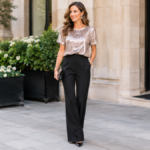
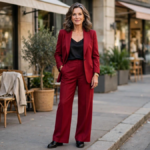
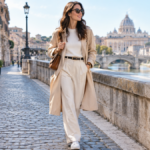
Getting dressed in your 40s can feel strangely harder than it did ten years ago. Some old favorites no longer feel right, trends move faster, and buying more clothes rarely fixes the real problem.
For many women in their 40s, that can mean getting stuck between two looks you do not want: dressing too cautiously or trying too hard to look current. Neither one feels like you.
Learning how to dress in your 40s is less about age rules and more about finding better fit, stronger proportions, comfortable fabrics, and a few outfit formulas you can repeat. You do not need a full wardrobe overhaul. You need a clearer starting point and clothes that support the life you actually live now.
You Haven’t Lost Your Style — You’ve Lost Your Starting Point

One reason getting dressed can suddenly feel confusing is that your old style shortcuts may no longer be doing their job.Maybe you once bought the same jeans without thinking. Perhaps a fitted blazer always worked for the office. Maybe you could grab almost any T-shirt, add sneakers, and feel good.
Then your schedule, priorities, comfort level, favorite silhouettes, or the way clothes sit on you changes. The old formula stops feeling automatic.That does not mean you need a completely different personality in your wardrobe.Start by separating what you genuinely like from what you have simply worn for years.Pull out three outfits you still enjoy wearing. Look for the pattern.
You might notice that you consistently like straight-leg pants, slightly relaxed tops, simple shoes, and one strong accessory.That pattern matters more than somebody else’s list of what women over 40 are “supposed” to own.Your goal is to find your current starting point, then make it easier to repeat.
Start With Clothes That Fit the Life You Have Now

A useful wardrobe has to work at 8 a.m. on a normal Tuesday, not only when you have somewhere special to go.Think about where you spend most of your week. Work may require polished separates.
Your days may involve errands, school runs, meetings, travel, dinners out, or working from home.Your clothes need to move between those situations without creating more work.Fit becomes especially important here.
A garment can technically be your size and still feel wrong because the shoulder, rise, length, waist placement, or overall cut does not suit the look you want.When something feels slightly off, check the cut before blaming yourself or the size label.
Here is a quick fit guide for pieces that often form the base of everyday outfits.
| Garment | What to Look For | Why It Works |
|---|---|---|
| Jeans | Straight, slim-straight, wide-leg, or another cut that falls cleanly from the hip | A clear leg shape gives the whole outfit structure |
| Trousers | Waist that sits comfortably without pulling, with enough room through the hip and thigh | Smooth lines make simple tops look more polished |
| Blazer | Shoulder seam close to your natural shoulder with room to layer underneath | Good shoulder fit creates shape without needing a tight waist |
| T-shirt | Fabric with enough weight to skim rather than cling | A slightly substantial knit tends to hold its shape better |
| Button-down shirt | Enough room across the chest and upper back to move comfortably | Relaxed movement looks more intentional than strained buttons |
| Dress | A shape that lets you sit, walk, and move without constant adjusting | Comfort allows the silhouette to fall naturally |
Fit note: Do not get attached to the number on the label. Different cuts can require different sizes even from the same store.
Also look at length. Small adjustments can completely change proportion.
A blazer ending around the hip creates a different shape from one ending at the upper thigh. An ankle-length trouser feels different from a full-length wide leg.
Neither is automatically better. What matters is how the pieces relate to each other.
Build One Outfit Formula You Can Trust

Decision fatigue makes wardrobes feel harder than they really are.A personal outfit formula solves much of that problem.Instead of creating a completely new look every morning, choose two or three base combinations you already know feel good. Then change the shoes, layer, color, or accessories.
For example:
Formula: straight-leg jeans + simple knit or T-shirt + structured layer + clean shoes
The structured layer could be a blazer, cropped jacket, cardigan, or overshirt. The shoes might be loafers, ankle boots, simple sneakers, or flats.
The formula stays familiar while the details change.
Here are a few ways the same idea can work across real life.
| Occasion | Simple Formula | Why It Works |
|---|---|---|
| Everyday errands | Straight jeans + crew-neck tee + cardigan + sneakers | Comfortable pieces get structure from the clean jean shape |
| Casual workday | Trousers + fine knit + blazer + loafers | Soft knit balances the sharper trousers and jacket |
| Lunch or daytime plans | Midi skirt + tucked or shorter knit + flats | Defining the waist area keeps the longer skirt balanced |
| Dinner | Dark jeans or trousers + draped blouse + heeled boot or pointed flat | Texture and a sharper shoe make familiar basics feel dressier |
| Travel day | Relaxed trousers + fitted tee + light jacket + sneakers | The fitted base keeps relaxed layers from looking bulky |
These are templates, not uniforms you must follow exactly.
If you dislike blazers, use a neat cardigan. If loafers are not comfortable, wear streamlined sneakers or flats. If you prefer skirts to trousers, build your formula around skirts.
The point is repetition with variation.
Once you know two or three combinations work, getting dressed becomes much less emotional.
Use Proportion to Make Simple Outfits Look Intentional

A good outfit often has very little to do with how expensive the individual pieces are.Proportion usually matters more.If everything is oversized, your shape can disappear under the clothes. If everything is very fitted, the outfit can feel visually busy and less relaxed.Creating contrast gives the eye somewhere to settle.
Try combinations such as:
- relaxed trousers with a more fitted or neatly tucked top
- wide-leg jeans with a shorter jacket
- a loose button-down with straight or slim-straight pants
- a full midi skirt with a top that finishes near the waist
- a longer blazer over a simple, cleaner base layer
You do not have to tuck in every shirt to create shape.
A partial tuck, a top that naturally ends closer to the waistband, or an open jacket over a fitted inner layer can create the same visual break.
Comfort upgrade: If a full tuck feels uncomfortable, try a fine knit that ends near the top of your trousers. You get clearer proportion without extra fabric around your waist.
Shoes also affect proportion more than people expect.
Chunkier sneakers add visual weight near the ground. Sleek loafers and pointed flats create a cleaner line. Ankle boots can work beautifully, but pay attention to where the shaft meets the hem of your trousers.
There is no correct shoe for being 40. There is only the shoe that supports the shape of the outfit you are building.
Let Fabric and Color Do More of the Work

Sometimes an outfit feels unfinished even though every individual piece seems fine.Fabric can be the missing reason.Very thin knits may twist, cling, or lose their shape. Stiffer fabrics can sometimes create more volume than you want. Fabrics with a little weight and movement often make basic clothing look more considered.
Look for cotton knits that hold their shape, soft wool blends, denim with structure, flowing trousers, crisp poplin, linen blends, and other fabrics that feel good against your skin.You do not need to memorize fabric rules.Touch the garment. Move in it. Sit down. Check how quickly it wrinkles. Notice whether you spend the next five minutes pulling it back into place.If you have to manage a garment constantly, it is probably not going to become a wardrobe favorite.Color can simplify things too.
Choose a small group of neutrals you actually enjoy wearing. Black, navy, cream, white, camel, chocolate, gray, olive, or denim can all act as anchors.Then add color where you naturally like seeing it.That might be a burgundy sweater, green jacket, red handbag, blue shirt, patterned scarf, or bright flat.Older fashion advice often treated age as a reason to become quieter. A better approach is to use color with intention.
This shift is useful beyond color too.
| Old Rule | What Actually Works Now |
|---|---|
| Dress more conservatively after 40 | Choose coverage based on your comfort and the occasion |
| Stop wearing trends | Use the trends that fit naturally with your existing wardrobe |
| Dark colors are always more flattering | Wear colors that work together and make you feel good |
| Certain hemlines have an age limit | Choose length based on proportion, movement, and comfort |
| Every outfit needs to look sophisticated | Casual clothes can look pulled together with fit and proportion |
Style confidence grows faster when you stop asking, “Am I allowed to wear this?”
A better question is, “Does this work with the rest of the outfit, and do I like how I feel in it?”
Add Personality Without Chasing Every Trend

Looking current does not require rebuilding your closet every season.Small changes are usually enough.A newer jean silhouette can work with sweaters you already own. A different shoe shape can change several outfits at once. A fresh color can make old neutrals feel new again.Choose trends based on compatibility rather than pressure.
If wide-leg jeans appeal to you, try them with your usual knitwear before buying five new tops.If oversized blazers feel awkward, skip them. You can get the same modern sense of structure from a straight-cut jacket that fits your proportions better.If a trend feels exciting but outside your usual style, test it through one smaller piece first.
That could mean:
- a current shoe shape
- a belt
- a new denim wash
- a handbag
- a scarf
- a color you have not worn recently
This is one of the easiest ways to approach stylish outfits for women over 40 without feeling like you are wearing a costume.
Budget-friendly swap: Before buying anything, recreate the idea with similar shapes already in your closet. You may discover that you wanted the styling idea, not the new garment.
Personal style becomes stronger when trends pass through your filter instead of replacing it.
A Small First Step You Can Take Today

You do not need to clean out your entire wardrobe this weekend.Choose one outfit you already wear often.Put it on and identify the one part that bothers you most.Maybe the jeans bunch around the shoes. Maybe the cardigan is longer than you prefer. Perhaps the shirt fabric feels too thin. Maybe the outfit simply needs a stronger shoe or a clearer waistline.
Change only that one element.Then take a quick mirror photo.This gives you something much more useful than another shopping list: evidence of what works for you.You can repeat the process with another outfit tomorrow.Over time, you will build your own answer to how to dress in your 40s, based on the clothes, comfort level, and life you actually have.
Frequently Asked Questions
What should a woman in her 40s wear to look stylish?
Start with well-fitting basics and create contrast in the proportions. Straight jeans with a knit and blazer, relaxed trousers with a fitted tee, or a midi skirt with a shorter top can all work.
Looking stylish has more to do with fit, shape, and thoughtful combinations than wearing a particular trend.
Can women over 40 still wear trendy clothes?
Yes. Trends do not come with an age limit.
The easiest approach is to choose trends that work with pieces you already enjoy. One newer jean cut, jacket shape, shoe, or color can make a wardrobe feel current without changing your whole style.
How can I look polished without dressing too formally?
Use one structured element with more relaxed pieces.
Try jeans with a blazer, trousers with a simple T-shirt, or a casual dress with neat flats. Good fit and clean proportions often create polish without needing formal clothes.
What clothes should I avoid in my 40s?
There is no universal list of clothes women should stop wearing at 40.
Instead, pay attention to garments that are uncomfortable, require constant adjusting, do not work with the rest of your wardrobe, or no longer make you feel like yourself. Replace the problem, not your personality.
How do I rebuild my wardrobe in my 40s without spending too much?
Start with what you already own and identify your most repeated outfits.
Replace only the pieces that create real fit or styling problems, and choose new items that can work with several existing pieces. Cost-per-wear usually improves when clothes have more than one job in your wardrobe.
Conclusion
Your 40s do not require a stricter wardrobe. They give you a chance to become more selective about what deserves space in it.
Good style comes from fit, comfort, proportion, and knowing which combinations make you feel most like yourself — not from following age rules. Start with one outfit you already own, improve the part that is not working, and wear it again. Small adjustments can teach you far more about your personal style than another closet full of clothes.