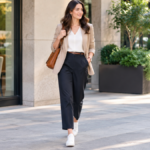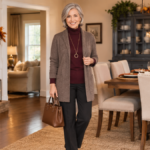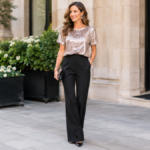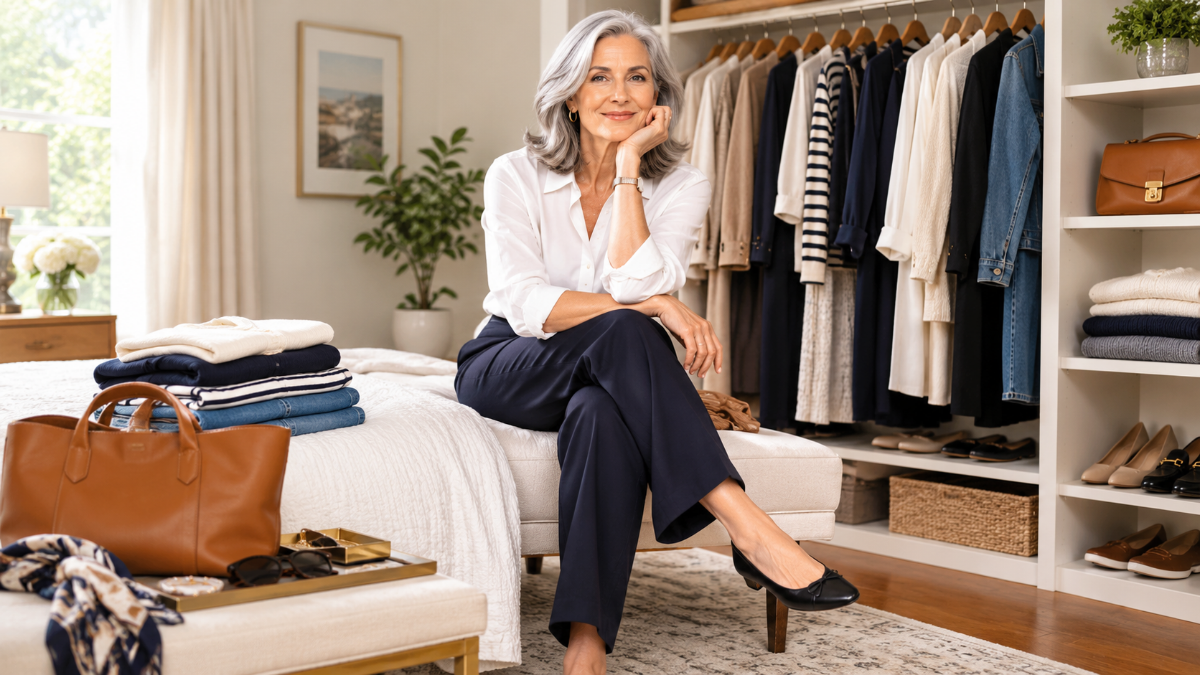
Most wardrobe advice is either too basic or too trendy to use on a busy weekday. You end up with a full closet and still feel like you have nothing to wear. That gets frustrating fast, especially when your body, your schedule, and your taste have all shifted since you last built a wardrobe.
This guide to fashion essentials for women over 50 skips the long shopping list. It explains what makes a piece worth owning, so you can spot the right ones in your own closet first. Most of it needs no overhaul, just a few good pieces that work hard together.
What Makes a Piece a True Essential
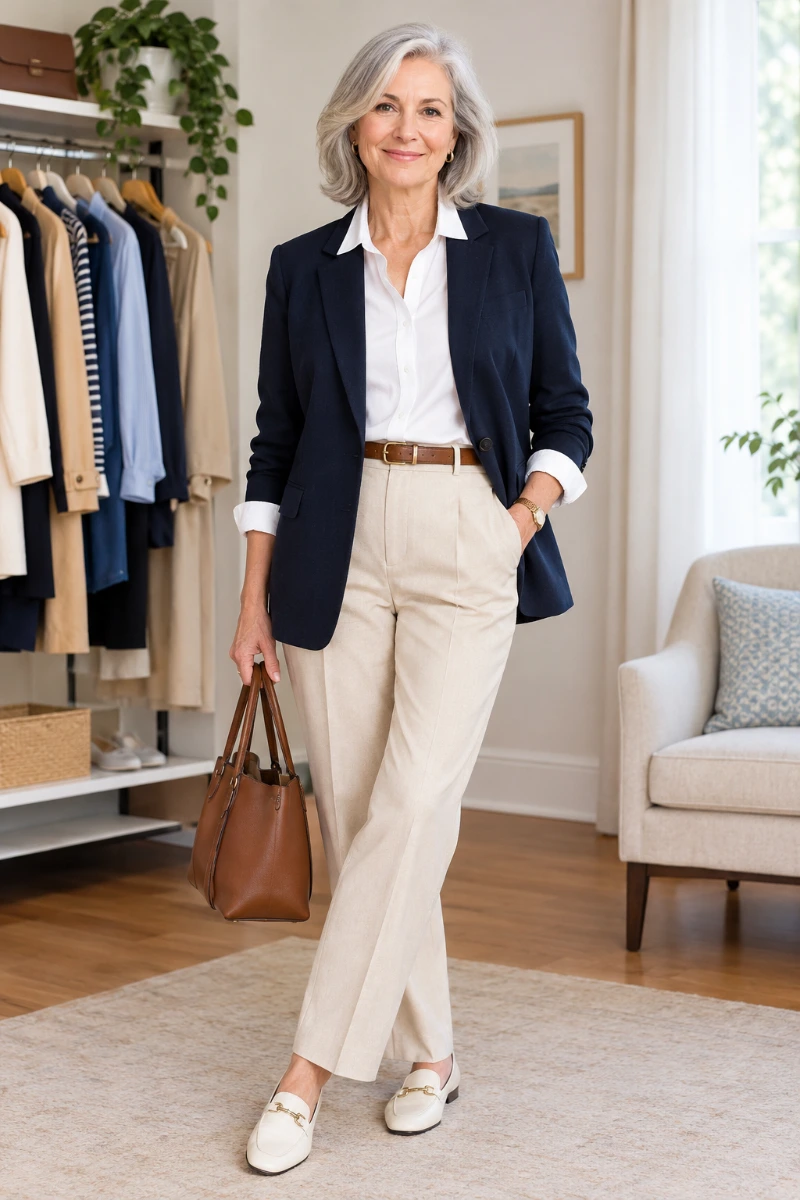
An essential is not whatever a magazine calls a must-have. It is something you reach for every week, and it works with at least three other things you already own.
Four quick checks help you decide:
- Fit: It sits well at the shoulders, waist, and hips without constant tugging. If you keep adjusting it, it will end up at the back of the closet.
- Mixability: It works for errands and dinner out with just a change of shoes or jewelry.
- Comfort: The fabric has some give and feels soft on your skin. You forget you’re wearing it.
- Cost per wear: A pricier pair of trousers worn weekly for years costs less per wear than a cheap top worn twice.
The Foundation Pieces You Build Around
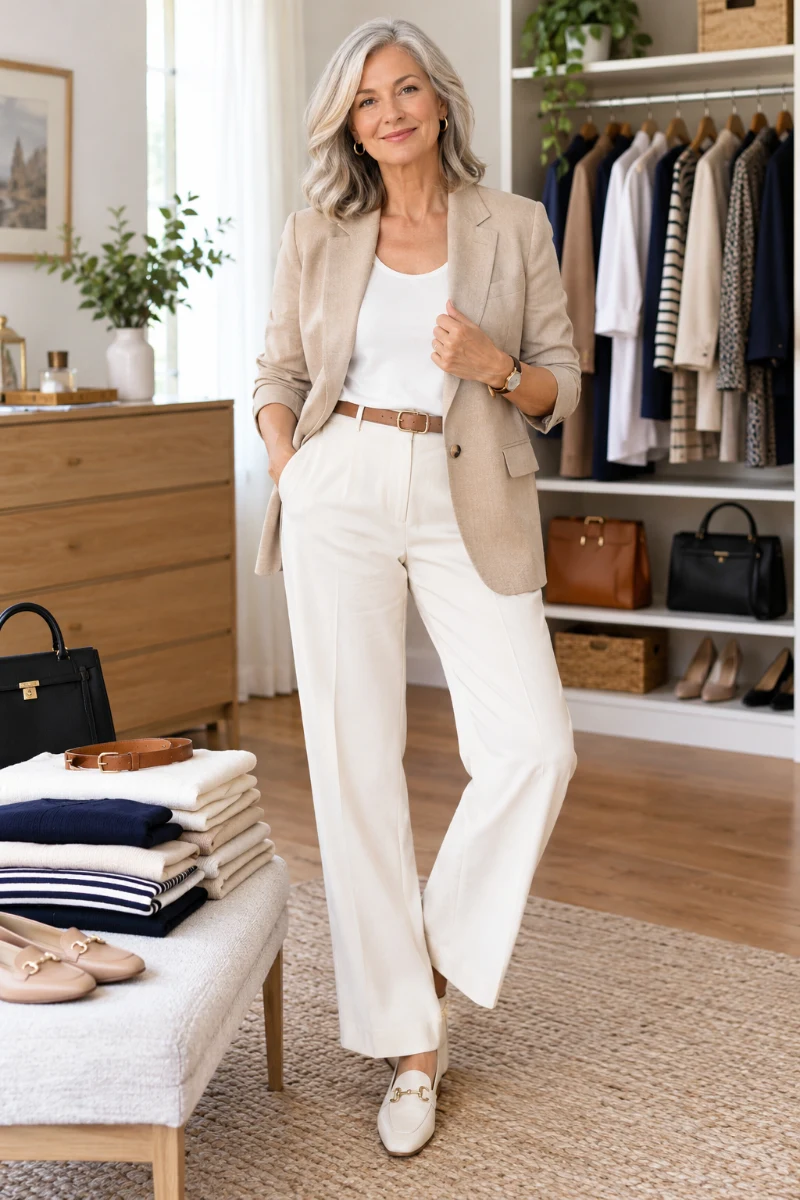
Start with the bottoms, because they anchor most outfits. One pair of straight-leg or gently tapered trousers in black, navy, or charcoal will do more work than anything else you buy.
The straight line keeps the outfit balanced from shoulders to hem. Look for a smooth waistband, and don’t worry if it has hidden elastic. Comfort at 4 p.m. matters as much as how it looks at 9 a.m.
Fabric makes the difference here. Ponte knit or a cotton blend with a little stretch holds its shape without clinging, and it travels well.
Dark-wash jeans are the second foundation piece. A straight or slightly bootcut leg, with little or no distressing, looks pulled together and goes with almost everything. The hem should land at the ankle or just above your shoe.
Add a midi skirt, either A-line or pull-on, that ends around mid-calf. It moves nicely when you walk, and it gives you a break from trousers without any fuss.
Tops and Layers That Do the Most Work
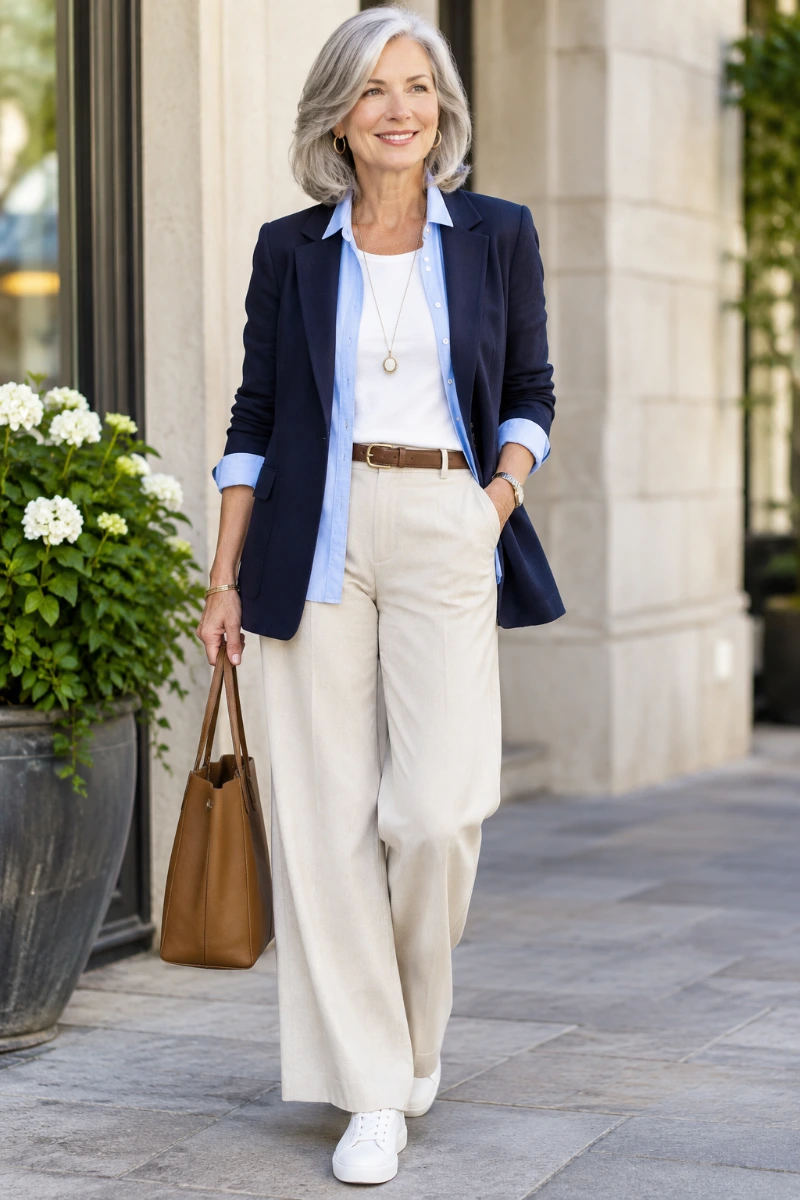
Two or three plain tops will carry most of your outfits. Cotton-modal blends and fine knits feel soft and drape without clinging.
Neckline matters more than people expect. A scoop, V, or boat neck opens up the collar area and keeps the look light. If you want more coverage on your arms, choose elbow or three-quarter sleeves.
A crisp cotton or linen-blend button-up shirt is the next piece to add. Wear it tucked in, or leave it open over a tee as a light layer.
Then add a soft blazer and a lightweight cardigan. Pick a blazer with an unstructured shoulder that ends right where your shoulder does. That simple fit check separates a blazer that looks polished from one that looks borrowed.
Fabric note: A cardigan in fine merino or a cotton blend gives you warmth without bulk, so it layers under a coat easily.
Here is a quick reference for the pieces so far. It summarizes the sections above, so use it as a shopping check.
| Piece | What to Look For | Mixes With |
|---|---|---|
| Straight-leg trousers | Smooth waistband, fabric with slight stretch, hem at the ankle | Tees, button-ups, blazers, loafers |
| Dark-wash jeans | Straight leg, minimal distressing, comfortable rise | Knits, cardigans, sneakers, ankle boots |
| Midi skirt | Mid-calf length, soft drape, easy waistband | Fitted tops, cardigans, flats |
| Soft blazer | Shoulder seam at your shoulder, fabric with a little give | Everything above |
| Lightweight cardigan | Fine knit, hip-length or longer, no itch | Dresses, skirts, tees |
A Dress and a Coat That Cover the Big Moments
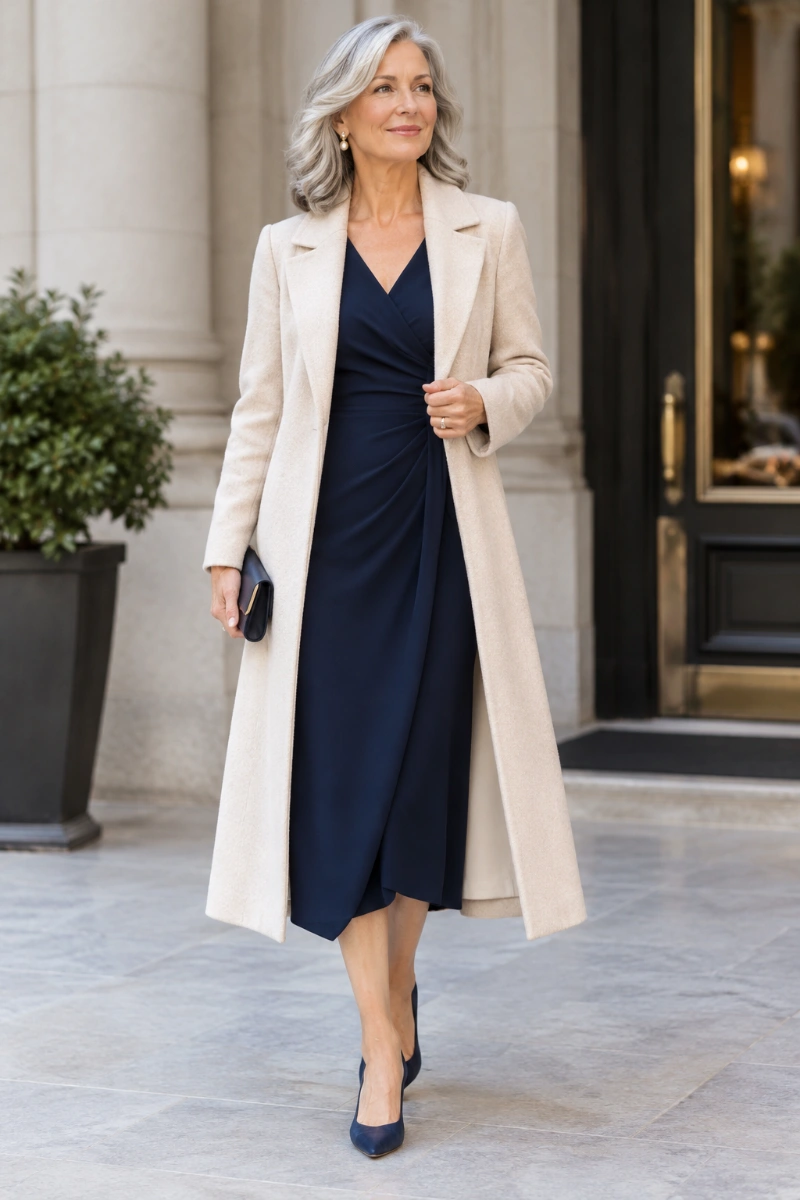
You only need one dress to start. A wrap or A-line style in jersey or crepe is a good pick, since both fabrics skim the body and resist wrinkles.
Choose sleeves you feel good in and a hem that sits below the knee. With sneakers and a denim jacket, it handles lunch with friends. With low heels and a scarf, it works for a wedding or a work event.
Color note: Pick a shade you already love wearing near your face. Navy, deep green, and soft burgundy work with a lot of other pieces in your closet.
For outerwear, one neutral coat is enough. A camel, charcoal, or black coat that falls between hip and knee hangs well over trousers and dresses alike. A fabric with some weight keeps the shape clean instead of limp.
Shoes That Carry the Whole Wardrobe
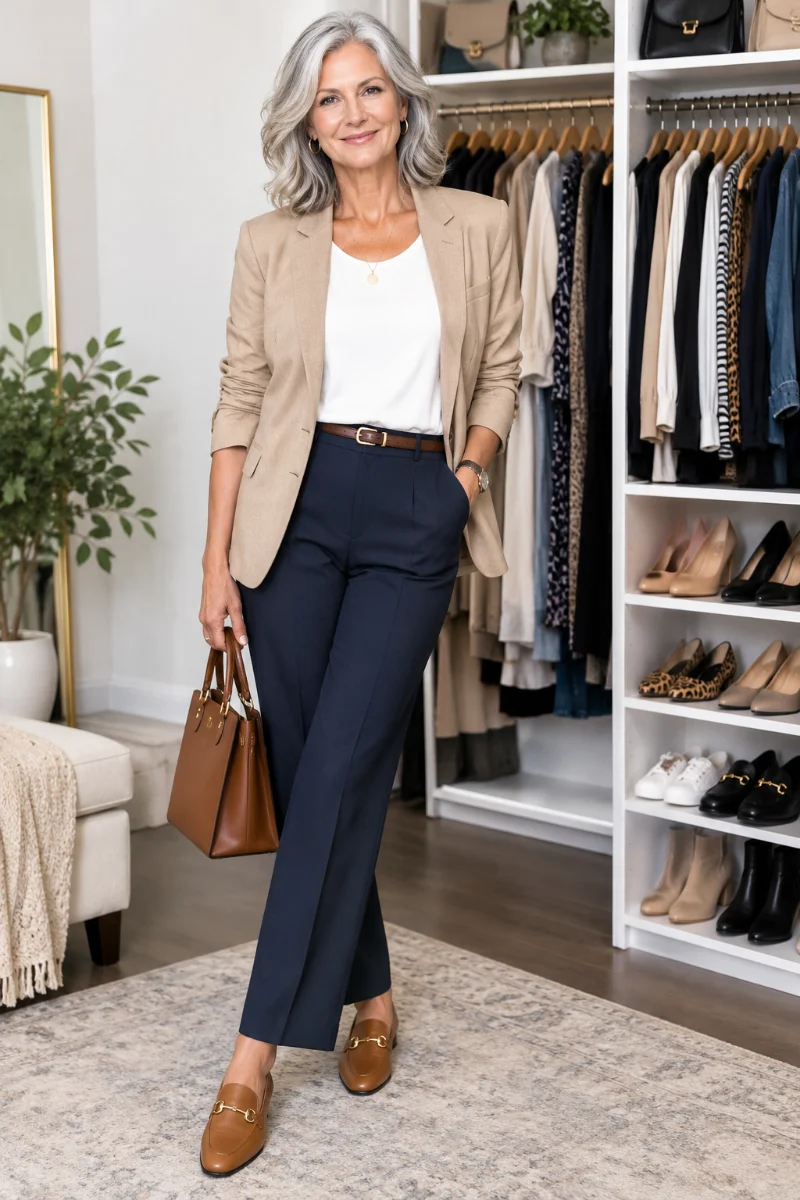
Shoes can make or break a day. If your feet hurt, the best outfit in the world won’t feel good. These four pairs cover almost everything:
- A cushioned flat or loafer: Works with trousers, skirts, and dresses, and looks neater than a casual sneaker for work days.
- A clean leather sneaker: White or soft neutral. The smooth surface looks tidier than a mesh running shoe, and it still gives you all-day comfort.
- A low block heel or wedge: The wider base feels steadier than a thin heel, which makes dressing up less of a trade-off.
- An ankle boot: Sits neatly under straight-leg trousers and jeans through the cooler months.
Comfort upgrade: A cushioned insole with arch support can make a good pair of shoes feel like a much better one.
Small Finishing Pieces That Make Outfits Look Pulled Together
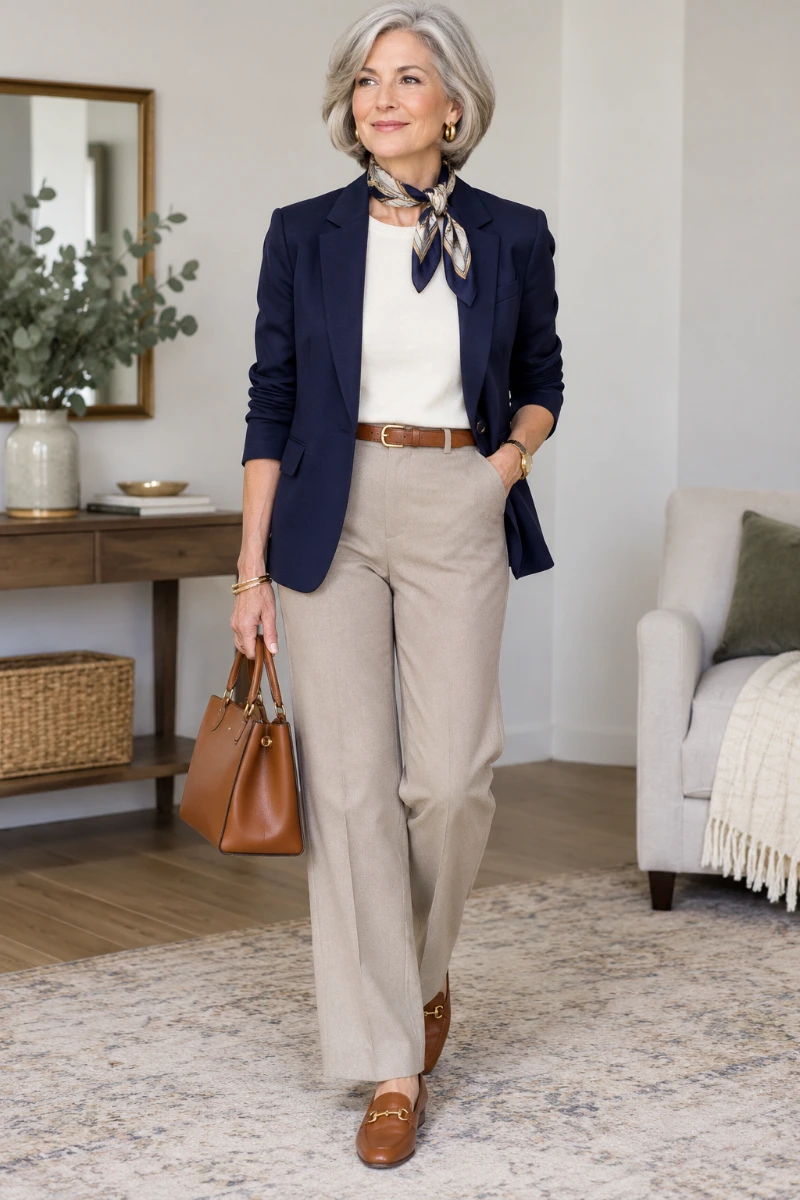
A few small items change how an outfit looks without costing much. A lightweight scarf adds color near the face. A simple belt defines the waist on a long cardigan or shirt.
Keep jewelry simple: one pair of earrings you wear daily, plus a necklace or bracelet you can swap in. A structured bag in a neutral color also makes basic outfits look intentional.
Many of these pieces change with the weather. The table below shows how the same base piece shifts across seasons.
| Base Piece | Warmer Months | Cooler Months |
|---|---|---|
| Straight-leg trousers | Cotton or linen blend, cropped slightly | Ponte or wool blend, full length |
| Cardigan | Cotton, worn open over a tank | Merino, buttoned under a coat |
| Shoes | Leather sneakers or flats | Ankle boots or loafers with socks |
| Scarf | Lightweight cotton or silk blend | Wool or cashmere blend |
How to Build This Capsule Without Overspending
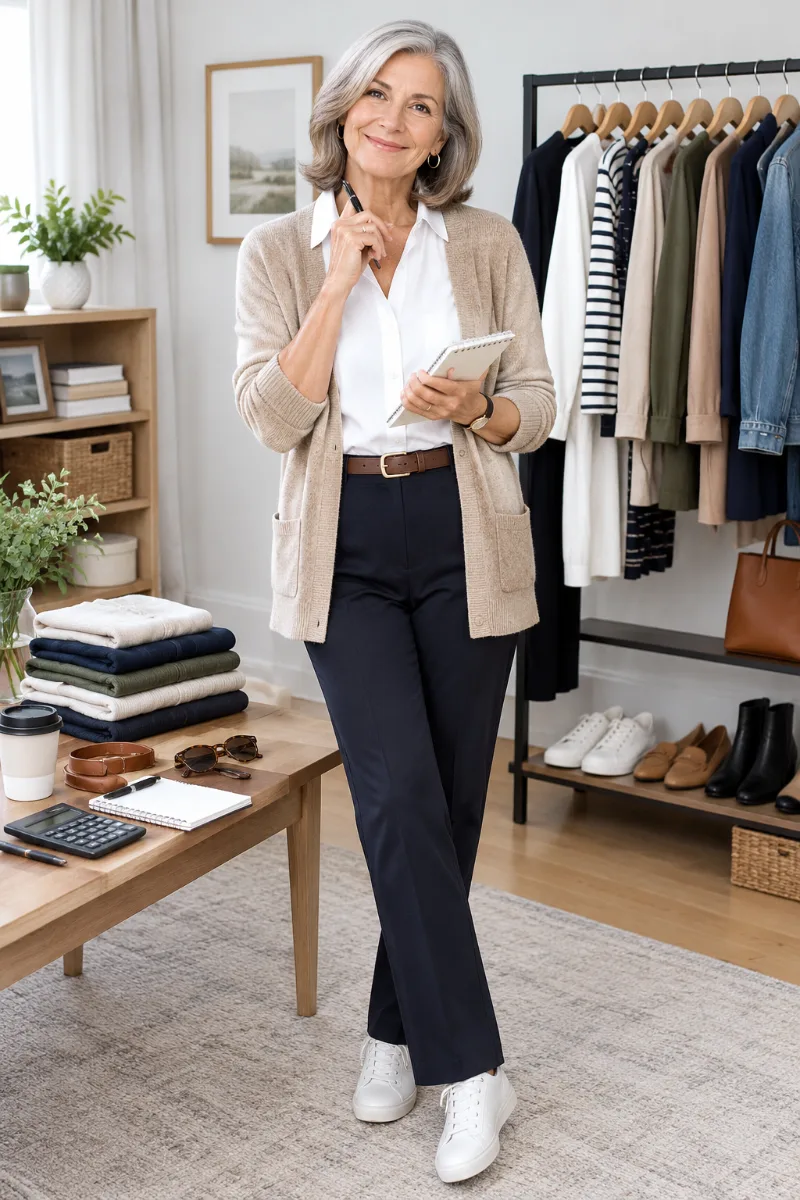
Start by shopping your own closet. Pull out anything that fits well and feels comfortable, then see which essentials you already have. Most people find they’re closer than they thought.
Next, fill the gaps one piece at a time. Spend more on things you wear weekly, like trousers, shoes, and your coat, because the cost per wear drops quickly. Spend less on trend-sensitive items, like printed scarves or bold tops.
Budget-friendly swap: If a blazer is out of budget, a well-fitting cardigan can do a similar job.
The goal is a small set of pieces that work together, which is the real point of fashion essentials for women over 50. These formulas show how the same few items stretch across a week.
| Occasion | Pieces | Why It Works |
|---|---|---|
| Errands | Dark jeans + plain tee + cardigan + leather sneakers | Comfortable, easy to layer, and neat enough for any stop |
| Lunch with friends | Midi skirt + button-up shirt + flats | The movement of the skirt looks relaxed without being sloppy |
| Work or meetings | Straight-leg trousers + knit top + soft blazer + loafers | Clean lines and a defined shoulder look polished |
| Dinner out | Wrap dress + low block heel + simple earrings | One piece does the work, so you don’t have to think much |
Frequently Asked Questions
How many pieces do I need in a capsule wardrobe?
There’s no magic number. Start with one or two items from each category in this guide, then add only when you find a real gap. If you can build five different outfits around a piece, it’s doing its job.
What colors should I choose for my essentials?
Pick a base neutral, such as navy, black, charcoal, or camel, and add two accent colors you love. Hold a fabric near your face in daylight to see if it brightens or dulls your skin. Trust what feels good.
Are jeans still a good choice for women over 50?
Yes. Dark-wash jeans with a straight leg and minimal distressing look polished and go with almost everything. Choose a rise that feels comfortable when you sit, and a hem that lands at the ankle.
What shoes are comfortable and still stylish?
Look for cushioned insoles, arch support, and smooth leather or suede uppers. Loafers, leather sneakers, and block-heel shoes all combine comfort with a neat look, and a good insole can improve almost any pair.