
A packed closet can still leave you stuck before a busy Tuesday. Too many pieces only work with one outfit, one pair of shoes, or one kind of day.
Maybe your trousers crease by noon, your favorite top needs hand-washing, or your nicest jacket never feels comfortable. Small clothing problems can make getting dressed more stressful than it needs to be.
For women balancing work, errands, travel, and changing plans, learning how to build a capsule wardrobe should make everyday dressing easier, not add more rules.
The answer is to build around your real routine. You can use clothes you already own, spot the gaps that matter, and create outfits that handle ordinary life without giving up your personal style.
What Makes a Capsule Wardrobe Work in Real Life?

A capsule wardrobe is a smaller group of clothes that work together to create different outfits. The point is not to own as little as possible. It is to have useful choices that make getting dressed simpler.
A beautiful white blouse might look like a wardrobe essential. But if it needs ironing every morning and you rarely have time, it may not be essential for you.
The same goes for fitted blazers, delicate sweaters, and shoes that hurt after an hour. Something can look wonderful without earning a place in your everyday rotation.
Before giving a piece space in your capsule, think about three things:
- Comfort: Can you sit, walk, bend, and move naturally? A piece that pulls or shifts all day may not get much wear.
- Versatility: Can you wear it with several other pieces you already own? A navy cardigan that works with jeans, trousers, and a dress has more everyday value than a layer that only matches one outfit.
- Care: Does it suit your laundry routine? Machine-washable knits and easy-care trousers may serve you better than clothes needing frequent dry cleaning.
A useful capsule also needs breathing room. You can keep a favorite statement dress, colorful jacket, or special pair of heels without forcing every item into the same formula.
The goal is a closet that supports your lifestyle, not one that looks perfectly organized but leaves you with nothing practical to wear.
Start With Your Real Schedule, Not a Clothing Checklist

Many capsule wardrobe guides begin with a set number of shirts, trousers, and shoes. That sounds simple, but those numbers mean little without knowing how you spend your week.
Someone working from home may need comfortable knits and washable bottoms. A woman heading into an office several days a week might get more use from tailored trousers and smart layers.
Think about the clothes you reach for most often. Your calendar can tell you more about your wardrobe needs than a shopping checklist.
If most days involve casual activities, build your capsule around those moments. Keep enough dressier options for meetings, dinners, and events without letting occasional outfits take over your closet.
Here are some practical outfit formulas based on common daily routines.
| Everyday situation | Outfit formula | Why it works |
|---|---|---|
| Running errands | Straight-leg jeans + cotton T-shirt + sneakers | Comfortable for walking and easy to wash |
| Casual workday | Relaxed trousers + fine-knit top + loafers | Looks neat without feeling restrictive |
| Lunch or coffee date | Dark jeans + soft blouse + ankle boots | A simple base that feels a little dressier |
| Travel day | Stretch trousers + breathable tee + cardigan | Easy movement with a removable layer |
Notice that these outfits share several basic pieces. You do not need a separate wardrobe for every part of your day.
Try laying out the clothes you wore during the past week. Look for the tops, bottoms, and shoes that appeared more than once.
Those repeated favorites are often the strongest starting point for a capsule wardrobe that works in real life.
Choose Colors and Fits That Make Mixing Clothes Easier

A capsule becomes much easier to use when the colors work together. That does not mean everything needs to be beige, black, or white.
Start with two neutral colors you enjoy wearing. Navy and cream, charcoal and black, or olive and tan can all make good foundations.
Then add one or two colors that bring some personality into your wardrobe.
A woman who loves burgundy could wear a burgundy knit with navy trousers, dark jeans, or a cream skirt. One colorful piece can create several outfits when the surrounding clothes are easy to pair.
Color note: Hold your favorite tops beside your trousers and jackets in natural light. If the colors feel comfortable together, they do not need to match exactly.
Fit matters just as much as color.
If your trousers are wide through the leg, a shorter cardigan or a top with a gentle front tuck can help define the outfit’s shape. This works because the waistline becomes easier to see beneath the extra fabric.
With slim or straight-leg trousers, a longer shirt or relaxed sweater can create a softer outline.
Neither combination is automatically better. The useful choice is the one that feels balanced and comfortable on you.
Pay attention to where garments end, too. A jacket that stops near your natural waist creates a different shape from one that falls below the hips.
Try both with the same trousers before deciding which works better with your proportions.
You also do not need every garment to fit closely. A capsule can include relaxed clothing as long as the fabric hangs well and the pieces move comfortably together.
Build Around Tops, Bottoms, Layers, and Shoes You Actually Wear
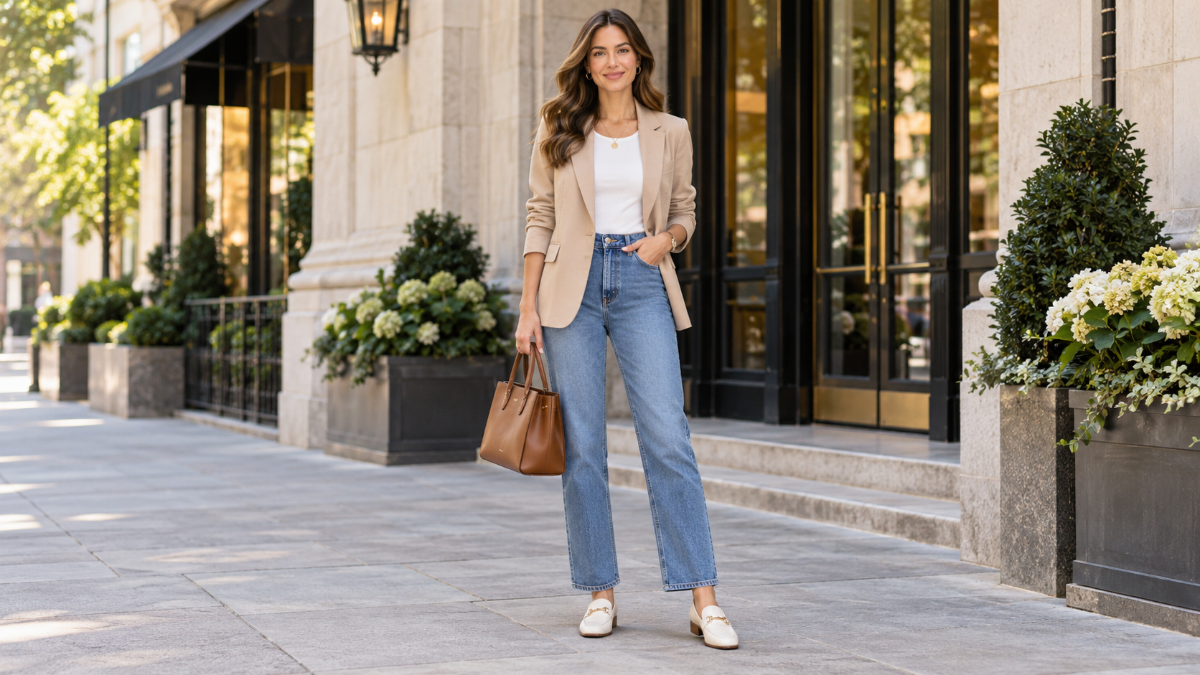
The strongest part of a capsule wardrobe is usually the least exciting: clothing you can wear on an ordinary day without much thought.
Start with tops that work with your existing bottoms.
A smooth cotton T-shirt is useful under cardigans, denim jackets, and blazers. A lightweight knit can look more polished while still feeling comfortable enough for a long day.
For bottoms, choose cuts that suit how you move.
Straight-leg jeans can work for casual days and dinners. Relaxed trousers in a fabric with some give may feel better for sitting through meetings or traveling.
A skirt or everyday dress can add variety if you enjoy wearing them. Neither is required simply because a capsule checklist says so.
Layers do much of the work when the weather changes.
A cardigan can soften a basic outfit, while a structured jacket makes the same jeans and top feel smarter. A lightweight coat can finish both casual and dressier looks.
Use this quick guide to check the practical details before adding an item.
| Wardrobe piece | What to look for | Works well with |
|---|---|---|
| Everyday T-shirt | Soft, opaque fabric with a neckline you like | Jeans, skirts, trousers, cardigans |
| Casual trousers | Comfortable waistband and fabric that moves easily | T-shirts, blouses, lightweight knits |
| Cardigan | Smooth knit, comfortable sleeves, easy-to-use buttons | Dresses, denim, tailored trousers |
| Everyday jacket | Enough room for a thin layer underneath | Casual and smart-casual outfits |
| Walking shoes | Supportive fit, secure heel, comfortable toe space | Jeans, casual dresses, relaxed trousers |
Shoes deserve particular attention. A closet full of good outfits can still feel difficult to use if your footwear does not match your daily activities.
Clean leather sneakers, comfortable loafers, and simple ankle boots can cover many everyday situations, depending on your climate.
You may need fewer pairs than expected when each one works with several outfits.
A simple personal formula is:
Formula: Comfortable base + useful layer + shoes that suit your day.
For example, wear dark straight-leg jeans with a cream knit and a navy cardigan. Choose sneakers for errands, then swap them for loafers if you are meeting someone for lunch.
The clothes stay familiar, but the outfit changes enough to suit the occasion.
Make Room for Laundry, Weather, and Unexpected Plans

A capsule wardrobe should still work when your favorite shirt is in the laundry basket or the weather changes overnight.
This is where many small wardrobes become frustrating.
If every outfit depends on the same pair of trousers, laundry day can leave you short of options. A second pair in a similar shape but different fabric can make a real difference.
Think about how often you wash clothes and how quickly they dry.
For example, cotton jersey is comfortable and often easy to wash, while linen feels breathable in warm weather but tends to wrinkle. Some fine knits need gentler care to keep their shape.
There is nothing wrong with owning delicate fabrics. Just make sure your most-used clothes fit the amount of care you can realistically give them.
Seasonal changes do not always require a completely new capsule, either.
A few useful swaps can carry the same base clothes through different temperatures.
| Base piece | Warmer-weather option | Cooler or rainy-day option |
|---|---|---|
| Straight-leg jeans | Cotton T-shirt and lightweight sneakers | Warm knit and weather-resistant boots |
| Neutral trousers | Sleeveless blouse and sandals | Fine-knit sweater and closed-toe shoes |
| Simple midi dress | Lightweight cardigan and flats | Coat, tights, and ankle boots |
| Basic white tee | Linen overshirt | Wool-blend cardigan |
These swaps work best when the colors and proportions remain compatible.
For example, a cream T-shirt can sit under a linen shirt in spring, then under a cardigan in autumn. You do not need to replace the whole outfit when the season changes.
Comfort upgrade: Keep a spare everyday top in a color that matches most of your bottoms. It can save an outfit when something gets stained or needs washing.
Also, allow space for the unexpected.
An invitation to dinner, a sudden work meeting, or a weekend trip should not force a last-minute shopping trip.
One outfit that can move from casual to slightly dressier settings is often more helpful than several pieces reserved for rare occasions.
Build Your Capsule Without Buying a Whole New Wardrobe

Learning how to build a capsule wardrobe does not mean starting with an empty closet.
In fact, buying everything at once can lead to the same problem you were trying to solve: too many clothes that do not work together.
Begin by pulling out the pieces you wear regularly. Try them on together and notice which combinations feel easy.
Some clothes may fit well but need a different pairing. A blouse that feels too formal with tailored trousers might become a regular favorite with dark jeans.
Other pieces may need a small adjustment.
Hemming trousers to work with your everyday shoes or repairing a loose button can make existing clothes more useful without buying replacements.
Before shopping, identify the exact problem you need to solve.
Maybe you have several nice tops but only one comfortable pair of trousers. Perhaps your clothes mix well, but you lack shoes suitable for wet weather.
Buy to fill those gaps rather than following a generic list of capsule wardrobe essentials.
Cost-per-wear can help here. A jacket you wear several times a week may be a better use of your budget than one you wear once a year, even if the everyday jacket costs more.
Keep a small amount of flexibility in your closet as well.
Your schedule, preferences, and body can change. Clothes that supported your routine last year may no longer suit your current needs.
A capsule wardrobe is allowed to change with you. It should feel easier to maintain over time, not harder.
Frequently Asked Questions
How many clothes should a capsule wardrobe have?
There is no fixed number that works for everyone. Your wardrobe should have enough clothing for your usual activities and laundry schedule without creating unnecessary clutter. Start with your most-worn pieces and add what is missing.
Can a capsule wardrobe include jeans and sneakers?
Yes. Jeans and sneakers are practical foundations for many casual capsule wardrobes. Choose jeans that fit comfortably and sneakers that support your normal walking routine. Both can work with simple tops, cardigans, and jackets.
How can I make a capsule wardrobe look less boring?
Use color, texture, and small styling changes. A burgundy sweater, patterned scarf, interesting earrings, or textured jacket can add personality without needing a completely different outfit. You can also mix relaxed and structured pieces.
Can I create a capsule wardrobe on a budget?
Start with clothes you already own and focus on improving outfit combinations. Repairs, alterations, and carefully chosen secondhand pieces can help fill gaps. Spend money only when you know an item will work with several things in your closet.
Should I have a different capsule wardrobe for every season?
Not necessarily. Many base pieces, such as jeans, T-shirts, trousers, and lightweight knits, can work across several seasons. Change outerwear, shoes, and fabric weights to suit your local weather. A separate seasonal capsule may be useful if your climate changes significantly.