Clothes can fit beautifully across your shoulders but still pull around your stomach. Going up a size may solve one problem while making everything else look too loose. That makes getting dressed more frustrating than it needs to be.
If your middle is fuller and your waist is less defined, you may relate to the apple body shape. Still, no two women are built exactly alike. What works for one person may feel completely wrong for another.
Learning how to dress an apple shape is not about hiding your stomach. It is about choosing clothes that give you enough room, create a balanced look, and feel comfortable throughout the day.
A few small changes to your fit, fabrics, and outfit combinations can make a real difference without replacing your whole wardrobe.
Start With Balance Instead of Hiding Your Middle
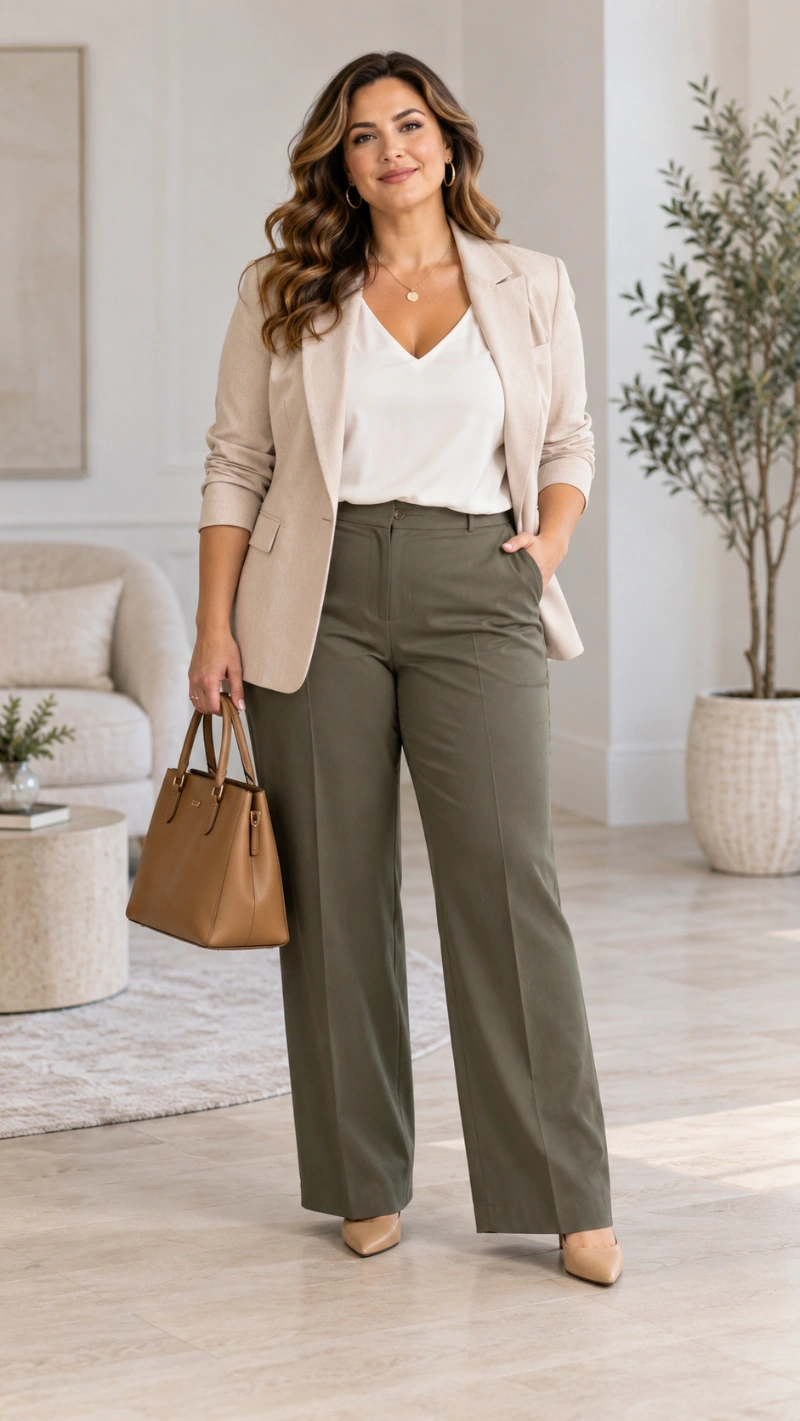
The biggest shift is to stop thinking that every outfit needs to make your stomach disappear. Clothes usually look better when they follow your natural shape without pulling too tightly or hanging too far away from your body.
For many apple-shaped women, the middle carries more fullness than the hips. The waist may be less defined, but shoulder width, bust size, and leg shape can vary quite a bit.
That is why balance matters more than following strict body-shape rules.
A top that fits neatly at the shoulders and falls softly over your waist often creates a cleaner shape than an oversized tunic. The extra fabric in a very loose top can sometimes make the entire outfit feel heavier.
Length matters too. A blouse that ends at a comfortable point near your upper hip may work better than one that stops exactly where your middle feels fullest.
Try looking at your outfit from the side as well as the front. Notice how the fabric falls when you stand, sit, and move.
The goal is not to create a different body shape. It is to let your clothes fit the one you have.
Choose Tops That Have Room in the Right Places
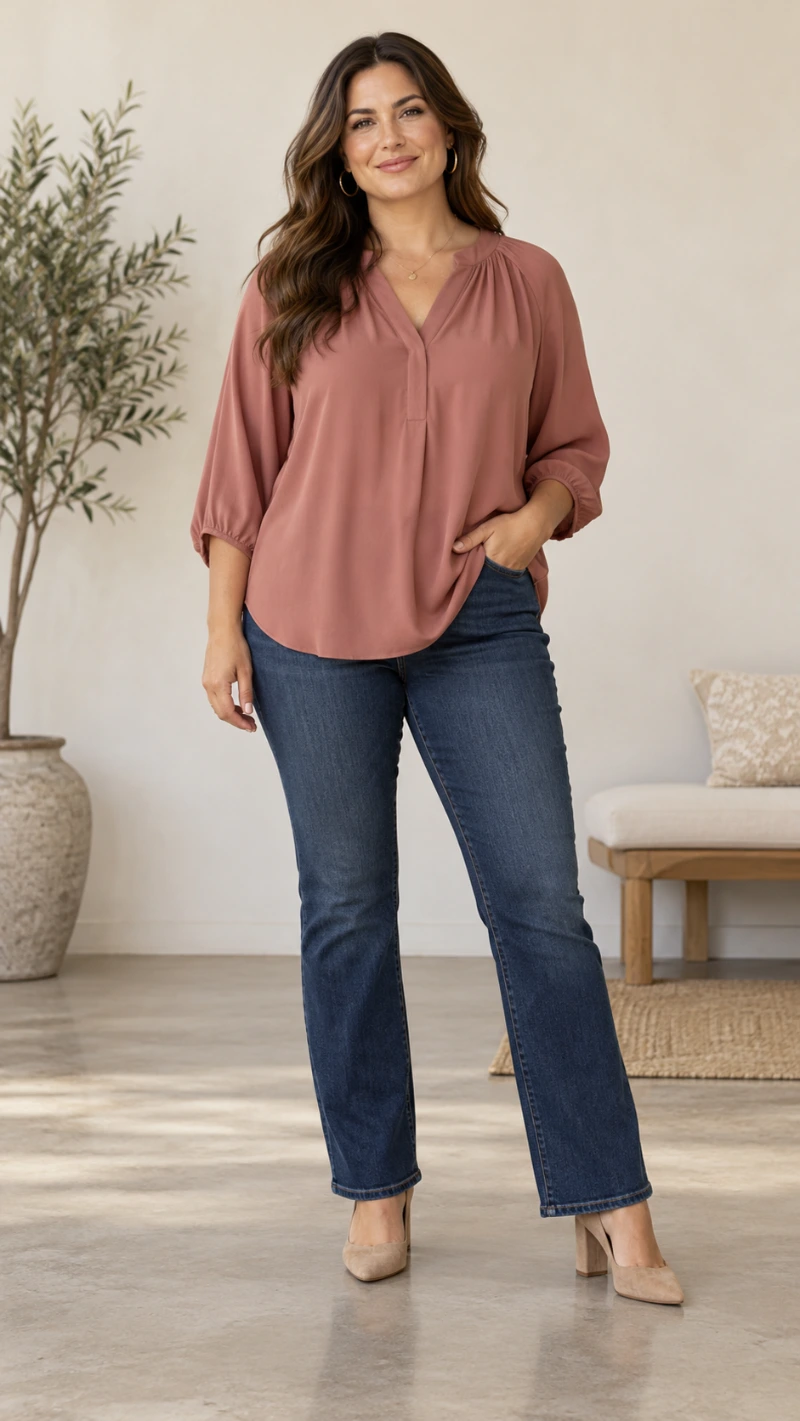
A good top should feel comfortable through your middle while keeping some shape around your shoulders, neckline, or sleeves.
Soft V-necks, scoop necks, open collars, and simple boat necks can all work. The best choice depends on your bust, shoulders, and what feels comfortable near your face.
You do not need a deep neckline to create a balanced outfit. Sometimes an open shirt collar or a small scoop is enough to give the upper half a relaxed, neat finish.
Fabric makes just as much difference as the neckline. A very thin knit may show every fold underneath, while a thick, stiff shirt can stand away from the stomach.
Look for fabric that has enough weight to fall smoothly but still moves when you walk.
Here are some useful options to compare when shopping or checking pieces you already own.
| Top or Fabric | What to Look For | Why It Can Work |
|---|---|---|
| Fluid woven blouse | Relaxed middle with fitted shoulders | Falls softly without adding too much bulk |
| Medium-weight jersey tee | Smooth surface with gentle stretch | Feels comfortable without clinging as much as thin jersey |
| Cotton button-down | Enough room between the buttons | Gives structure through the shoulders and a clean front |
| Fine-gauge knit | Soft drape with some shape | Works with trousers and skirts without a heavy look |
| Side-slit tunic | Straight fit with a hem that moves | Gives extra room when sitting or walking |
Pay attention to where your top ends. A slightly curved hem can fall more softly over the hips than a stiff, straight hem.
A front tuck is also an option if you like showing some waistline. Keep it loose rather than pulling the fabric tightly across your stomach.
There is no need to tuck anything if you feel better with your shirt worn out.
Make Waistbands Work With Your Body
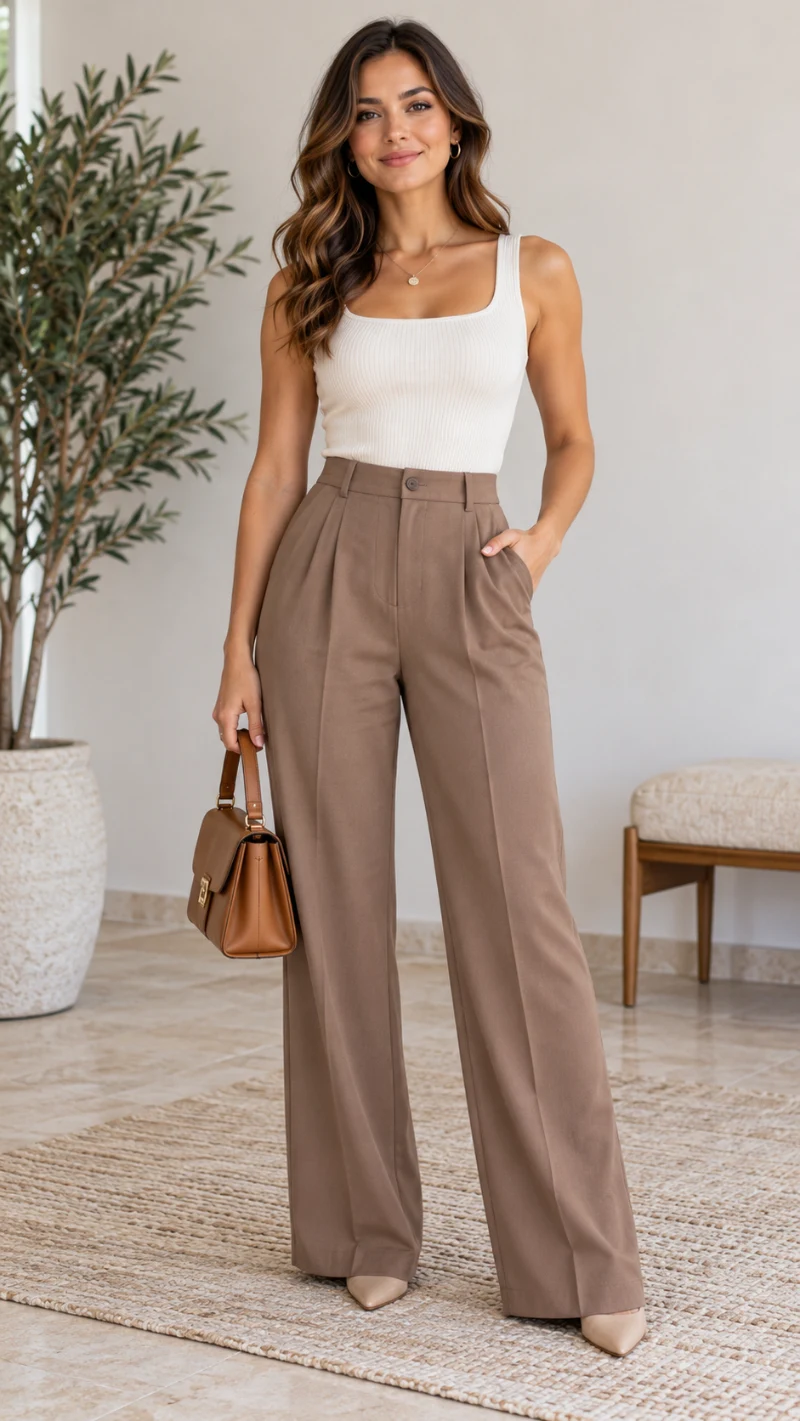
Trousers and jeans can be difficult when your waist and hips need different amounts of room.
A pair may fit your legs beautifully but press into your stomach when you sit. Another may feel comfortable at the waist yet look baggy around your thighs.
The answer is often a different rise, waistband design, or fabric rather than simply buying a larger size.
High-rise trousers can create a smooth line when the waistband sits comfortably. But they are not automatically the best choice for every apple shape.
If a high waistband rolls, digs in, or crowds your ribs, try a mid-rise cut instead.
These are a few details worth checking:
- A flexible waistband: Look for a flat front with elastic at the back, or a soft waistband that moves with you.
- A balanced leg shape: Straight-leg, bootcut, and relaxed tapered trousers can give your outfit structure without making the waist feel restricted.
- Fabric with good recovery: Denim with some stretch should return to its shape rather than becoming loose around the knees and seat.
One useful fitting trick is to sit down before deciding whether trousers fit. A waistband that feels fine while standing can become uncomfortable after an hour at a desk or in the car.
For everyday outfits, straight-leg jeans with a soft knit top can be a reliable starting point.
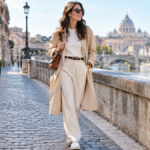
If you prefer wide-leg trousers, pair them with a top that has some shape at the shoulders. This keeps the outfit relaxed without making every piece equally loose.
Let Dresses and Layers Do Different Jobs
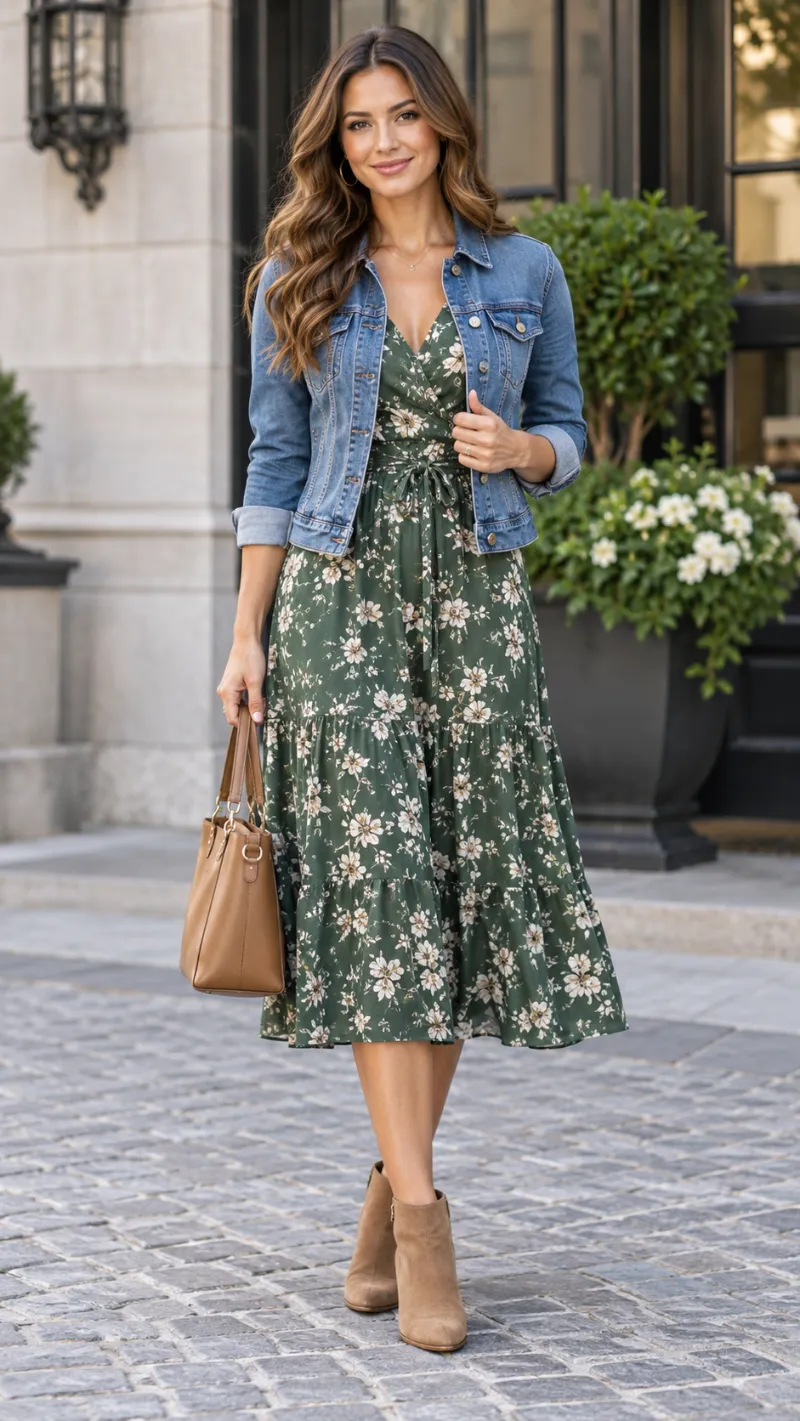
Dresses can be one of the easiest things to wear when you want to feel dressed without adjusting several pieces all day.
A softly shaped A-line dress can offer room through the waist while allowing the skirt to move freely. A straight-cut dress can also work when it has enough space at the middle and a fabric that drapes well.
Wrap dresses are another option, especially when the tie lets you adjust the fit. Just check that the neckline stays in place and the fabric does not pull across your bust or stomach.
A faux-wrap style may be easier if a traditional wrap keeps shifting.
Layers give you even more freedom. An open blazer, lightweight cardigan, or relaxed shirt jacket can add structure without requiring a fitted waist.
The key is choosing a layer that sits well across your shoulders and leaves the front of the outfit looking neat.
You can also change the feel of one base outfit with a few simple swaps.
| Base Piece | Everyday Styling | Dressier Swap |
|---|---|---|
| Soft A-line midi dress | Denim jacket and flat sandals | Open blazer and block heels |
| Straight-cut knit dress | Long cardigan and clean sneakers | Cropped jacket and ankle boots |
| Relaxed blouse with straight trousers | Lightweight shirt jacket and trainers | Tailored vest and loafers |
| Simple midi skirt with a smooth top | Soft cardigan and ballet flats | Structured blazer and slingback shoes |
Notice that none of these combinations depends on hiding your entire middle under a long layer.
A shorter jacket can look just as good as a long cardigan. The important part is how its hem works with your dress or trousers.
If the outfit starts feeling bulky, try removing one layer before changing everything else.
Use Color, Shoes, and Hemlines to Create Balance
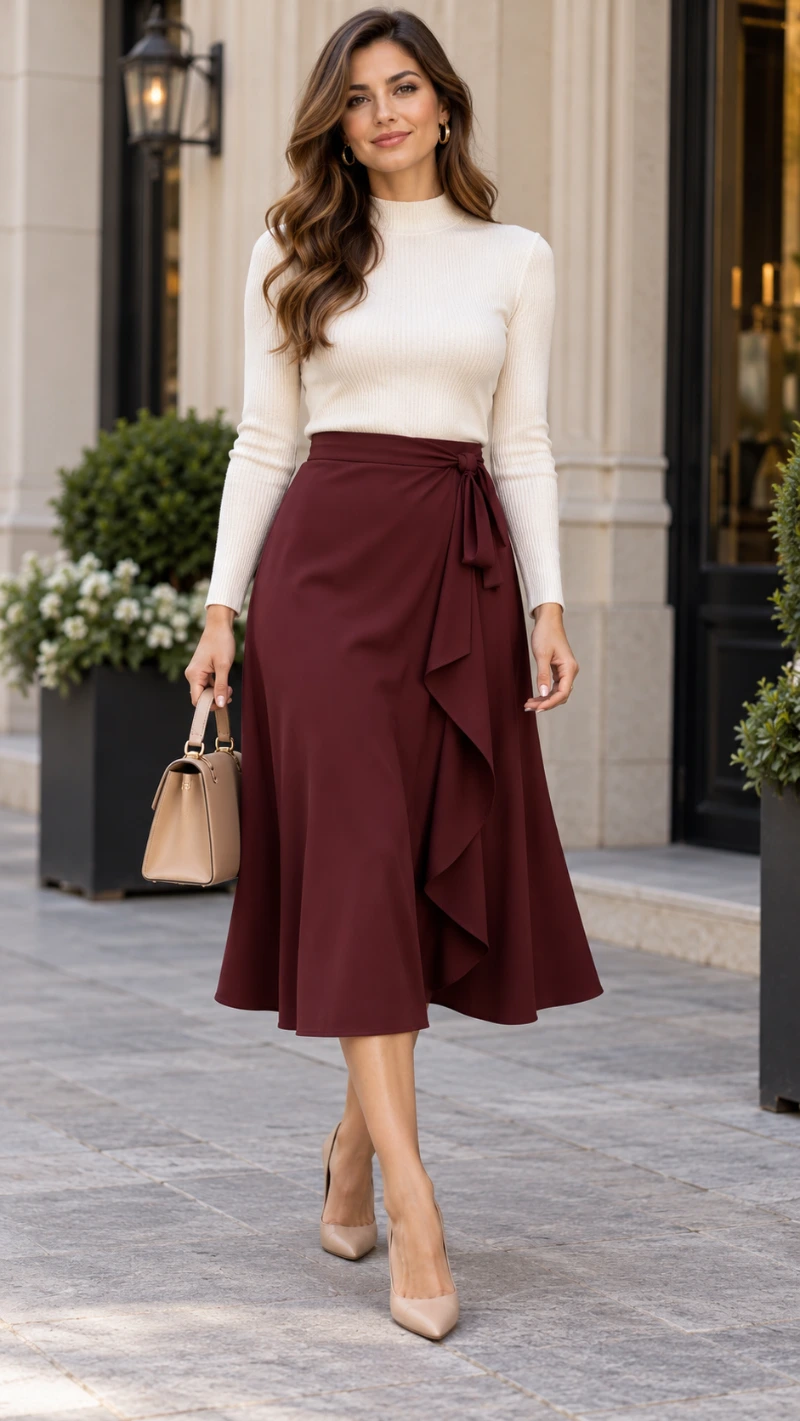
Color can make an outfit feel more connected, but it does not have to be dark or plain.
Wearing similar colors on your top and bottom creates a continuous look. For example, navy trousers with a softer blue blouse can feel polished without needing a matching set.
Cream trousers with an oatmeal sweater offer another easy combination.
You can still wear bold prints, bright tops, and contrasting colors. If a print feels busy, try pairing it with a solid piece that picks up one of its shades.
Shoes also change the overall proportions of an outfit.
A straight-leg trouser ending near the top of a loafer gives a cleaner finish than fabric bunching heavily around the ankle. Cropped trousers can look neat with ballet flats, low-profile sneakers, or ankle boots.
Fit note: Check the gap between your trouser hem and your shoes. Sometimes shortening trousers slightly makes a bigger difference than changing your top.
If you enjoy belts, try a soft or adjustable style that does not dig into your stomach.
You can wear one at your natural waist, slightly higher, or simply skip it. A visible belt is not a requirement for looking put together.
Small Styling Habits That Can Make Dressing Harder
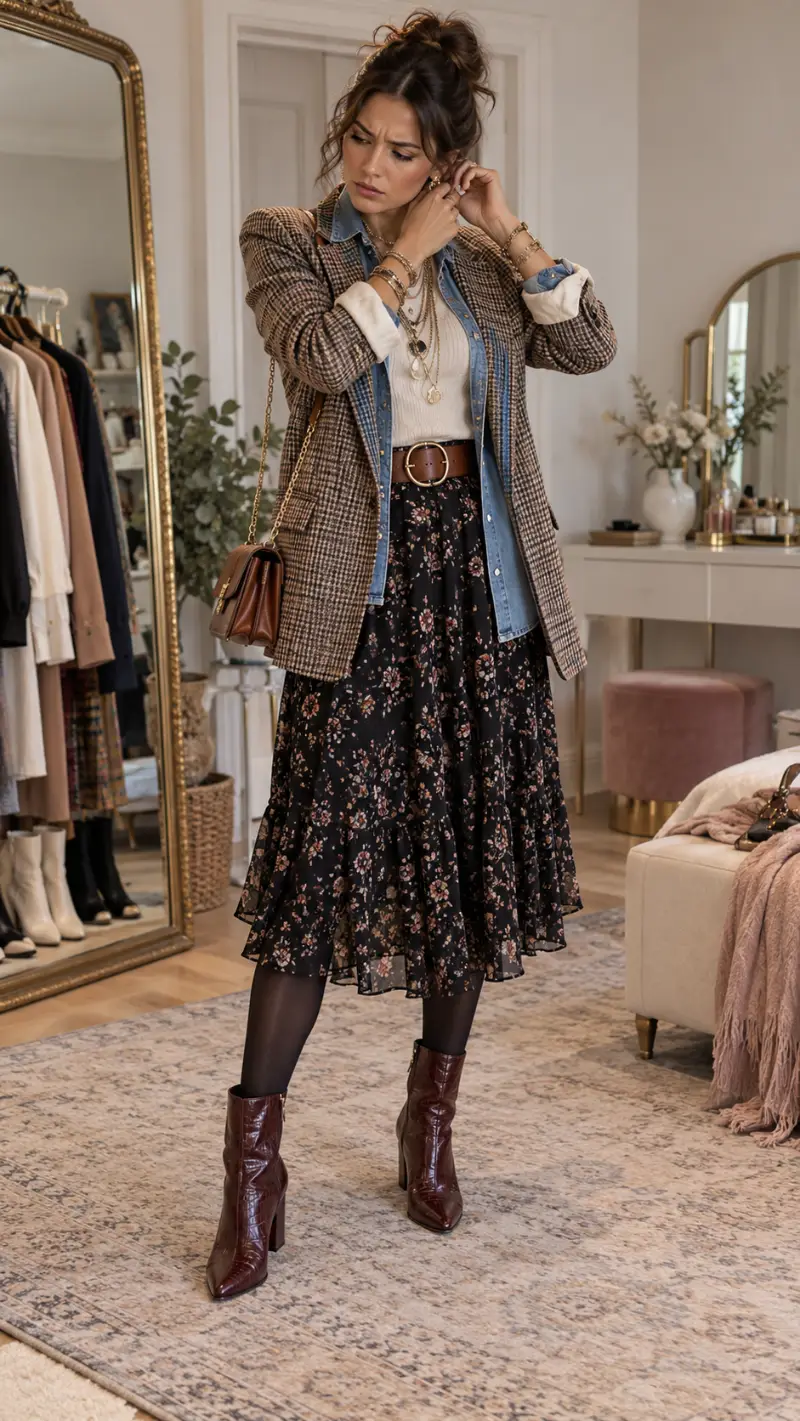
Sometimes an outfit feels uncomfortable or unbalanced because of one small fit issue.
That does not mean the garment is wrong for your body shape. A different size, hem, or fabric may solve the problem.
These common adjustments are worth trying before giving up on an item.
| If This Bothers You | Try This Instead |
|---|---|
| An oversized top looks shapeless | Keep room at the middle but choose a better shoulder fit |
| A waistband digs into your stomach | Try a different rise or a flexible back waistband |
| A shirt pulls across the bust or middle | Choose a cut with more front room rather than sizing up everywhere |
| Thin fabric shows more detail than you like | Try medium-weight jersey, crepe, or a smoother knit |
| Long layers make your outfit feel heavy | Test a shorter jacket or a lighter open shirt |
Another common issue is wearing everything very loose at once.
A flowing blouse with wide trousers can look lovely, but it helps when at least one piece has a clear shape, such as a neat shoulder seam, defined collar, or clean trouser hem.
The reverse is also true. Wearing tight clothes from head to toe is not necessary to look polished.
A little breathing room often makes an outfit look more natural because you are not constantly adjusting it.
A Simple Outfit Formula You Can Repeat
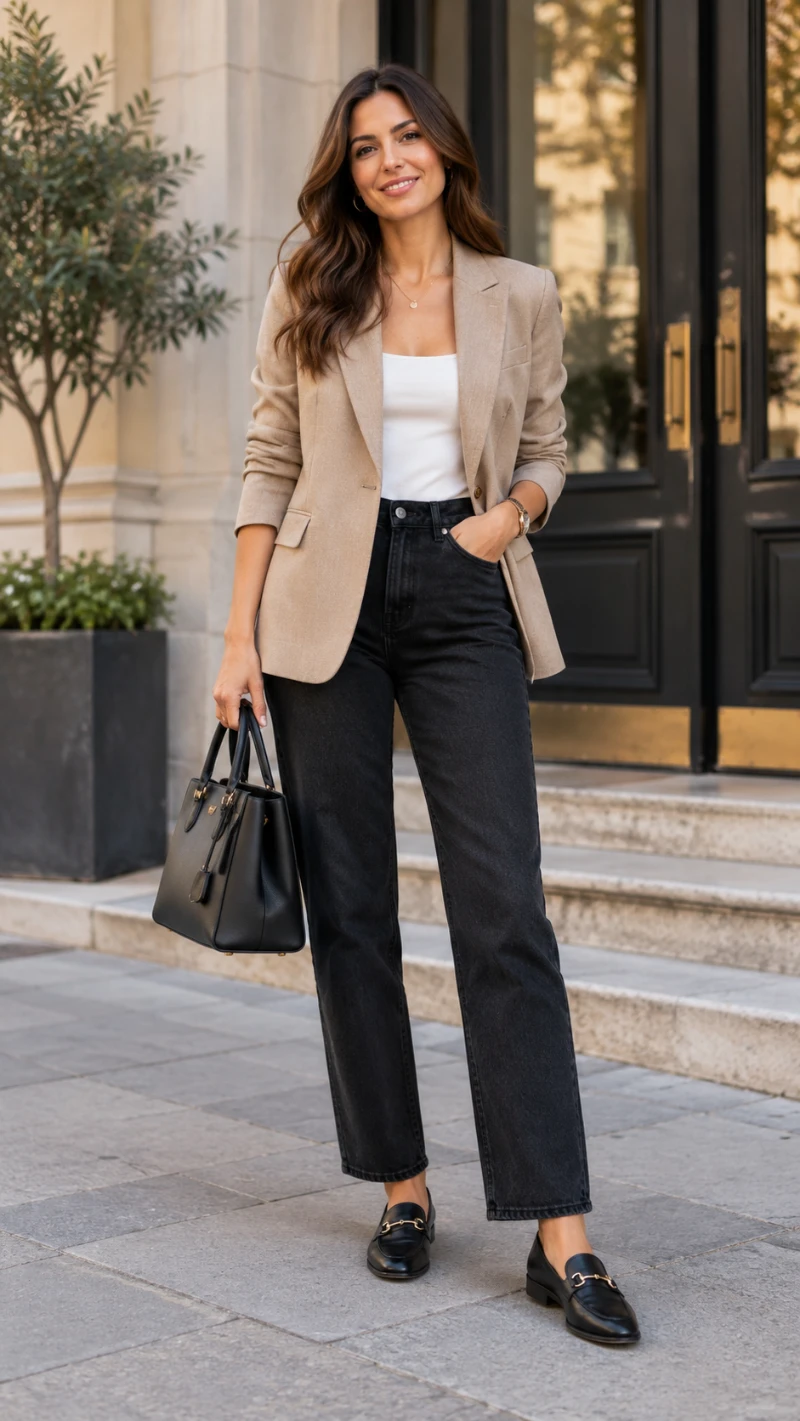
A good wardrobe does not need dozens of complicated combinations. One dependable outfit formula can make busy mornings much easier.
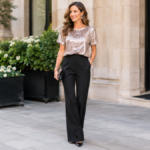
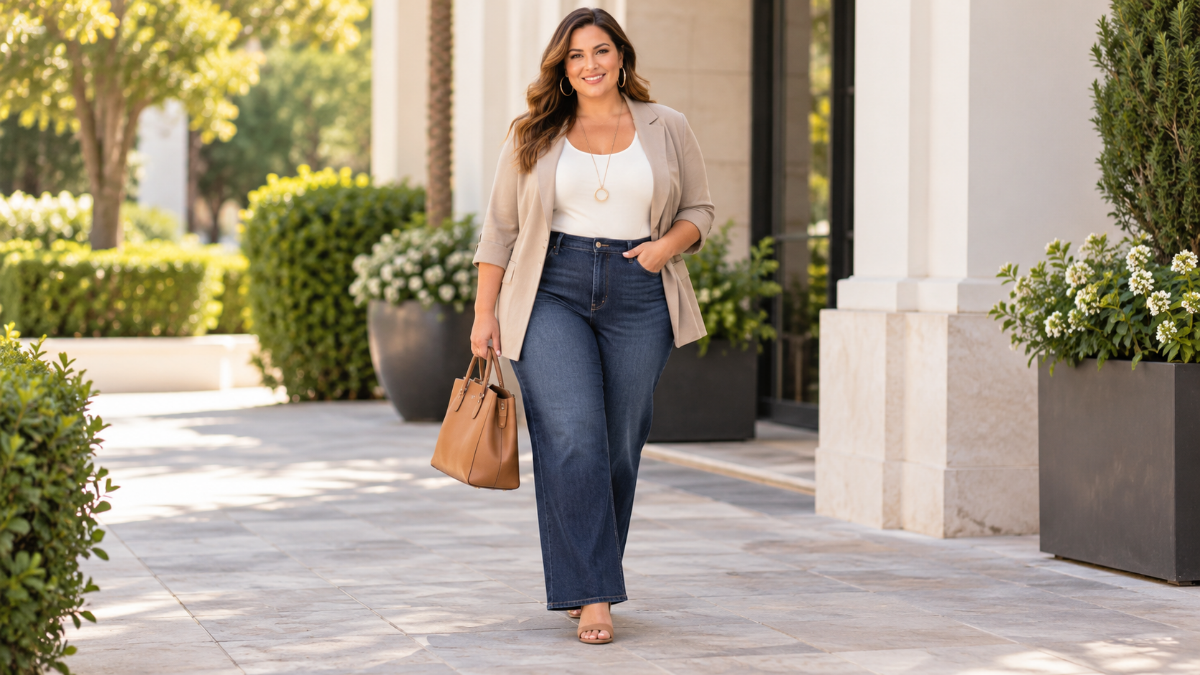
Formula: Soft scoop-neck top + straight-leg trousers + open shirt or lightweight blazer.
The top gives you a comfortable base. Straight-leg trousers create a neat lower half, while the open layer adds shape around the shoulders without pressing against your middle.
For a casual day, try a cream tee, dark straight-leg jeans, an unbuttoned olive shirt, and white sneakers.
When you want something smarter, swap the jeans for navy tailored trousers and the shirt for an open blazer. Add loafers or low block heels.
You can use the same idea with a dress. Start with a straight or softly flared midi dress, then change your shoes and jacket for the occasion.
The secret is finding a few pieces that work together and feel good when you move.
Once you know which cuts suit your own proportions, getting dressed becomes less about checking rules and more about choosing what feels right that day.
Frequently Asked Questions
What clothes look good on an apple-shaped body?
Tops with a smooth drape, straight-leg trousers, softly shaped dresses, and comfortable open layers are useful starting points. Look for clothes that fit well at the shoulders and allow room through the middle. The best outfit is one that feels comfortable and suits your personal taste.
Can apple-shaped women wear high-waisted jeans?
Yes. High-waisted jeans can work well when the rise and waistband fit comfortably. If they dig into your stomach or roll down when you sit, try a mid-rise style or a softer waistband instead.
Should you tuck in your shirt if you have an apple shape?
You can tuck your shirt in, leave it out, or try a loose front tuck. A front tuck can show your trouser waistband without pulling the entire top tightly against your middle. Choose the version that feels natural and stays comfortable throughout the day.
What is the best dress style for an apple-shaped body?
A-line, straight-cut, and adjustable wrap dresses are all worth trying. Look for fabric that moves freely and seams that do not press into your stomach. There is no single dress style that works best for every woman with an apple shape.
Can you wear fitted clothes with an apple-shaped body?
Absolutely. Fitted clothes can look great when they follow your shape without pulling or restricting movement. A fitted jacket with a comfortable top, for example, can create a neat outfit without requiring a tightly defined waist.