Cocktail attire sounds simple until an invitation actually lands in your hands. It sits somewhere between everyday dressy and full formalwear, which leaves plenty of room for second-guessing.
You want to look polished without arriving in a floor-length gown. At the same time, a casual sundress or office outfit can feel a little too relaxed once you walk into the room.
For women, cocktail attire is really about finding that polished middle ground. The right dress, jumpsuit, separates, shoes, and accessories should feel special enough for the event while still letting you move, sit, eat, and enjoy yourself.
Once you understand that balance, getting dressed becomes much easier.
Cocktail Attire Is Dressy, but It Is Not Black Tie
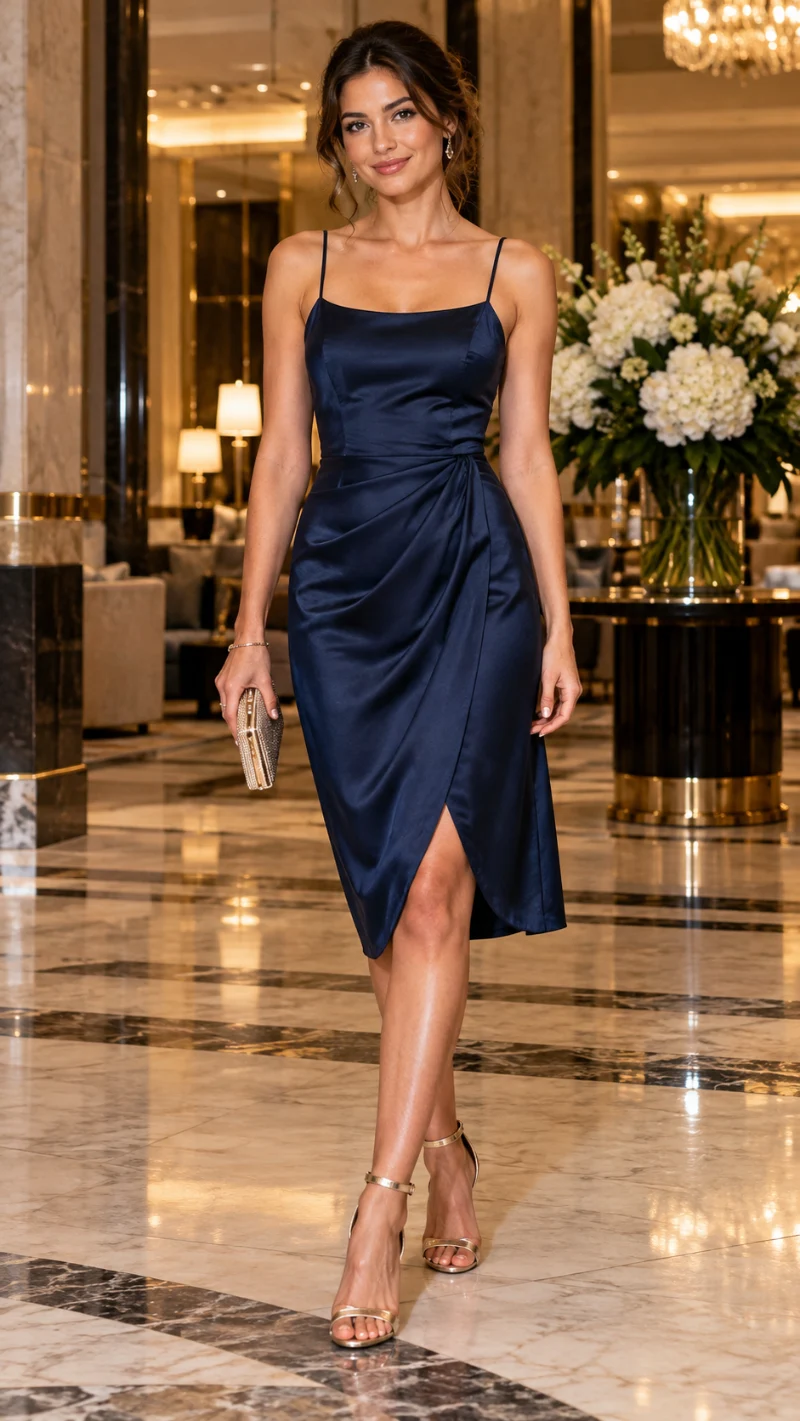
The simplest way to understand cocktail attire is to think refined rather than formal.
You are dressing for an occasion that deserves more effort than dinner at a casual restaurant, but you usually do not need the drama of a gala gown.
A knee-length or midi dress is a classic choice, but it is far from the only one. A tailored jumpsuit, satin trousers with a dressy blouse, or a sleek skirt with a polished top can work just as well.
The key is the overall finish.
Structured shapes, richer fabrics, polished shoes, and intentional accessories make clothes feel cocktail-ready. Casual fabrics, beachy details, athletic shoes, or very relaxed silhouettes usually pull the outfit in the opposite direction.
This quick comparison helps show where cocktail attire sits.
| Dress Code | What It Usually Looks Like | Overall Feel |
|---|---|---|
| Smart casual | Blouse, trousers, simple dress, loafers | Relaxed but polished |
| Cocktail | Midi dress, tailored jumpsuit, dressy separates, heels or refined flats | Dressy and social |
| Semi-formal | Often overlaps with cocktail attire | Polished and occasion-ready |
| Black tie | Formal gown, very refined evening separates | Formal and glamorous |
Cocktail attire gives you more freedom than black tie, but it still benefits from clothes that look deliberately chosen for an event.
The Fabric Often Matters More Than the Dress Length
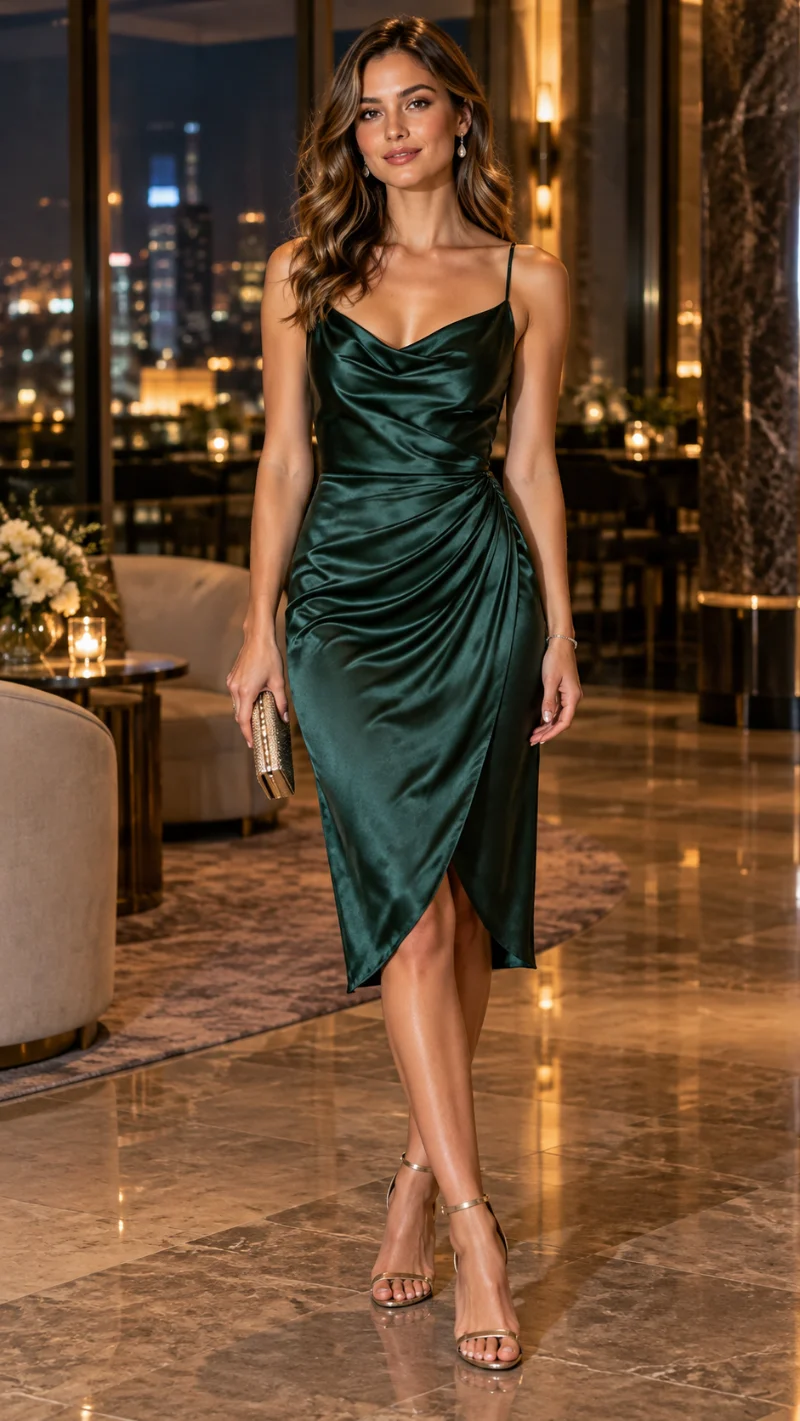
Many women focus first on how long the dress should be. Fabric can actually tell you more about whether an outfit feels appropriate.
A cotton midi dress may be the right length but still look too casual for an evening reception. A simple knee-length dress in satin, crepe, velvet, or a structured woven fabric can instantly feel more suitable.
Texture also helps.
Soft sheen, smooth draping, crisp tailoring, lace accents, subtle embellishment, and heavier evening fabrics give an outfit more presence without requiring a complicated design.
Here is a useful way to think about common fabric choices.
| Fabric or Finish | What to Look For and Why It Works |
|---|---|
| Crepe | Drapes cleanly and looks polished without feeling overly formal |
| Satin | Adds soft shine that naturally feels suited to evening events |
| Velvet | Works especially well for fall and winter cocktail events |
| Chiffon | Gives movement and softness while still looking dressy |
| Structured woven fabric | Holds its shape and makes simple silhouettes look sharper |
| Casual jersey or thin cotton | Can work in some settings, but usually needs stronger styling to feel dressy |
Fabric note: A simple silhouette in a richer fabric often looks more sophisticated than a complicated dress made from something very casual.
The Best Silhouette Is the One That Looks Intentional
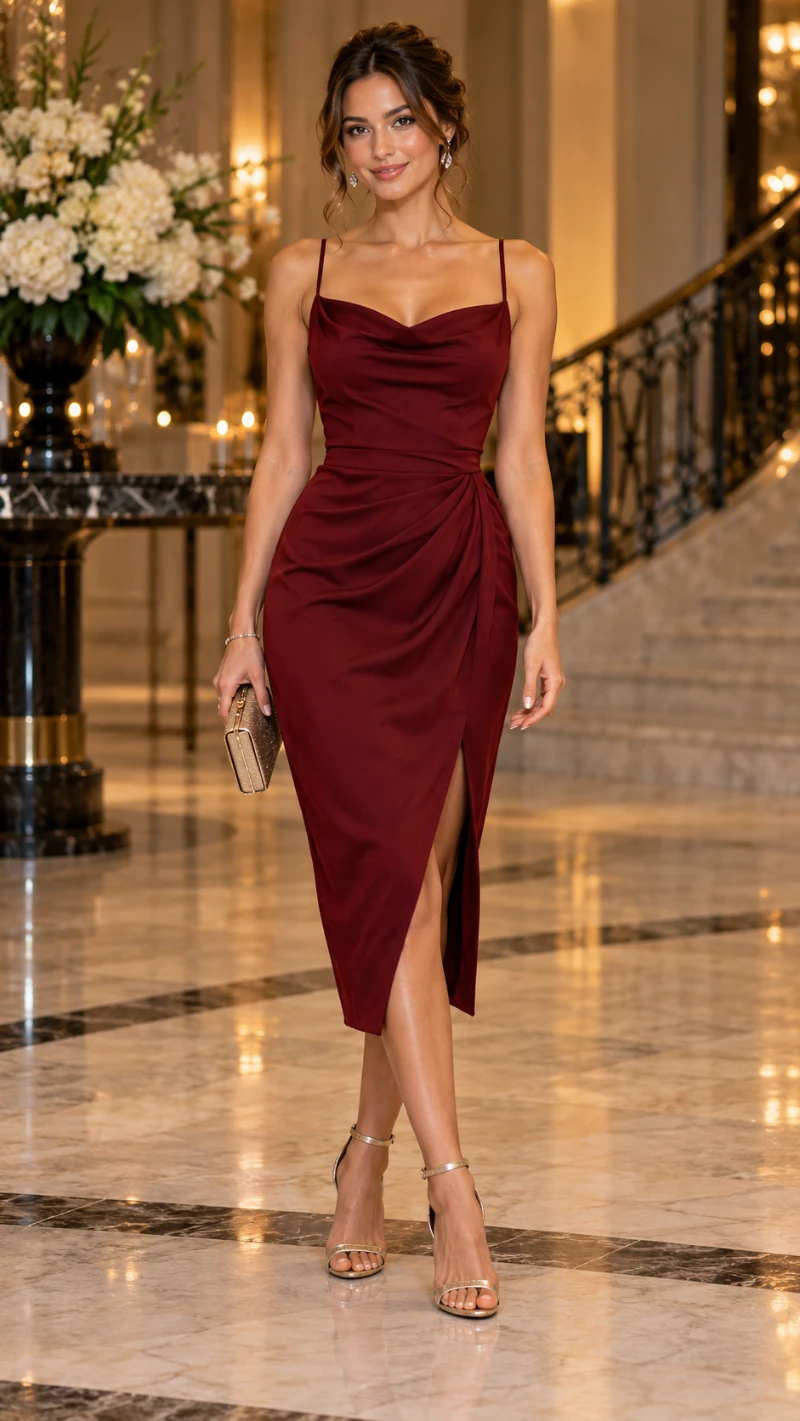
There is no single cocktail dress shape every woman needs to wear.
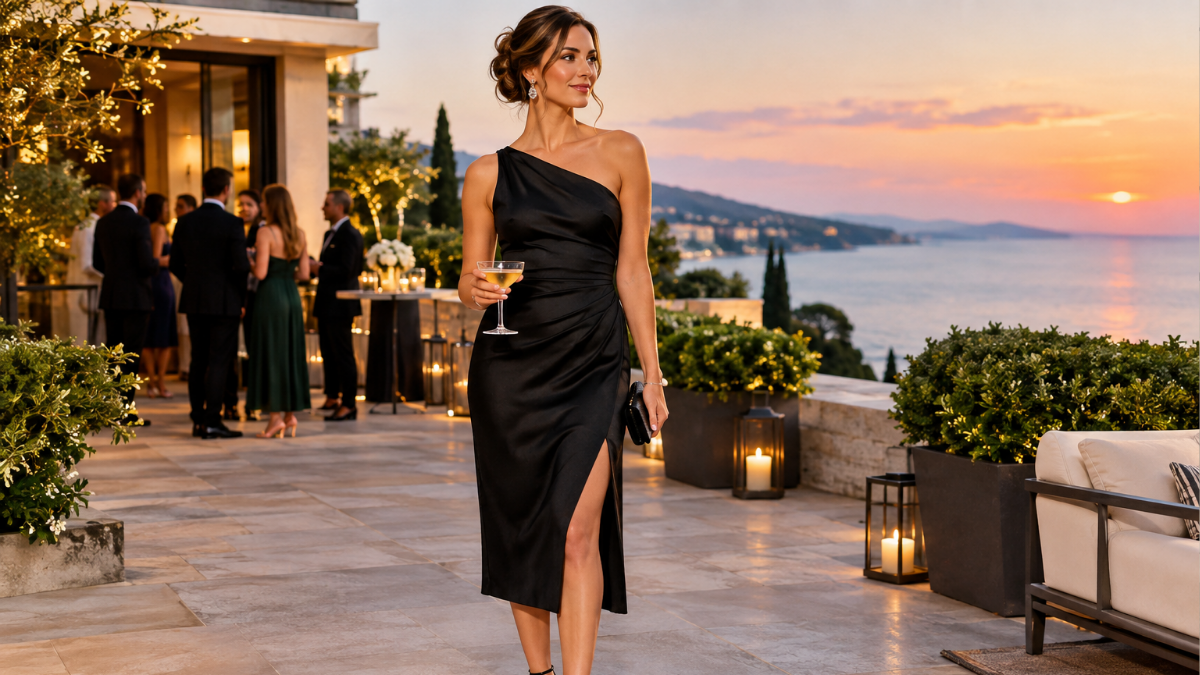
A fitted sheath can work beautifully. So can an A-line midi dress, wrap shape, slip dress, column silhouette, softly draped dress, or tailored jumpsuit.
Rather than chasing one so-called flattering shape, pay attention to balance.
A very loose dress can sometimes feel more daytime than cocktail unless the fabric and accessories add structure. A very fitted outfit can look polished when the proportions feel clean and you can move comfortably.
Necklines also change the mood.
A bateau, square, one-shoulder, halter, V-neck, high neck, or softly draped neckline can all work. What matters is that the neckline looks intentional with the rest of the outfit rather than like something borrowed from casual daywear.
Try standing, sitting, walking, and reaching in the outfit before the event. Cocktail clothes should look good when you are actually moving through the evening, not only when you are standing in front of a mirror.
You Do Not Have to Wear a Dress

Cocktail attire for women has become much more flexible than the old idea of a little black dress being the only safe answer. A well-cut jumpsuit can look every bit as polished as a dress.
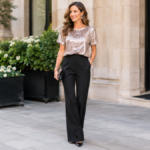
Wide-leg trousers can also work when paired with a satin blouse, structured top, refined knit, or elegant jacket. A midi skirt with a fitted or softly draped top is another useful option.
The trick is making sure at least a few details clearly signal that this is an occasion outfit. That might mean a richer fabric, sharper tailoring, elegant jewelry, a smaller evening bag, or refined footwear. Here are a few formulas you can repeat for different events.
| Occasion | Simple Formula | Why It Works |
|---|---|---|
| Evening wedding | Midi dress + heeled sandal + small clutch | Dressy without competing with formal wedding attire |
| Work cocktail event | Tailored jumpsuit + pointed shoe + structured bag | Polished while still feeling professional |
| Restaurant celebration | Satin blouse + wide-leg trousers + delicate jewelry | Comfortable but clearly more special than everyday wear |
| Winter party | Velvet midi dress + closed-toe heel + simple earrings | Rich texture makes the outfit feel seasonal and refined |
Once you know one or two formulas that suit your style, cocktail dressing gets much faster.
Shoes and Accessories Set the Final Level of Dressiness
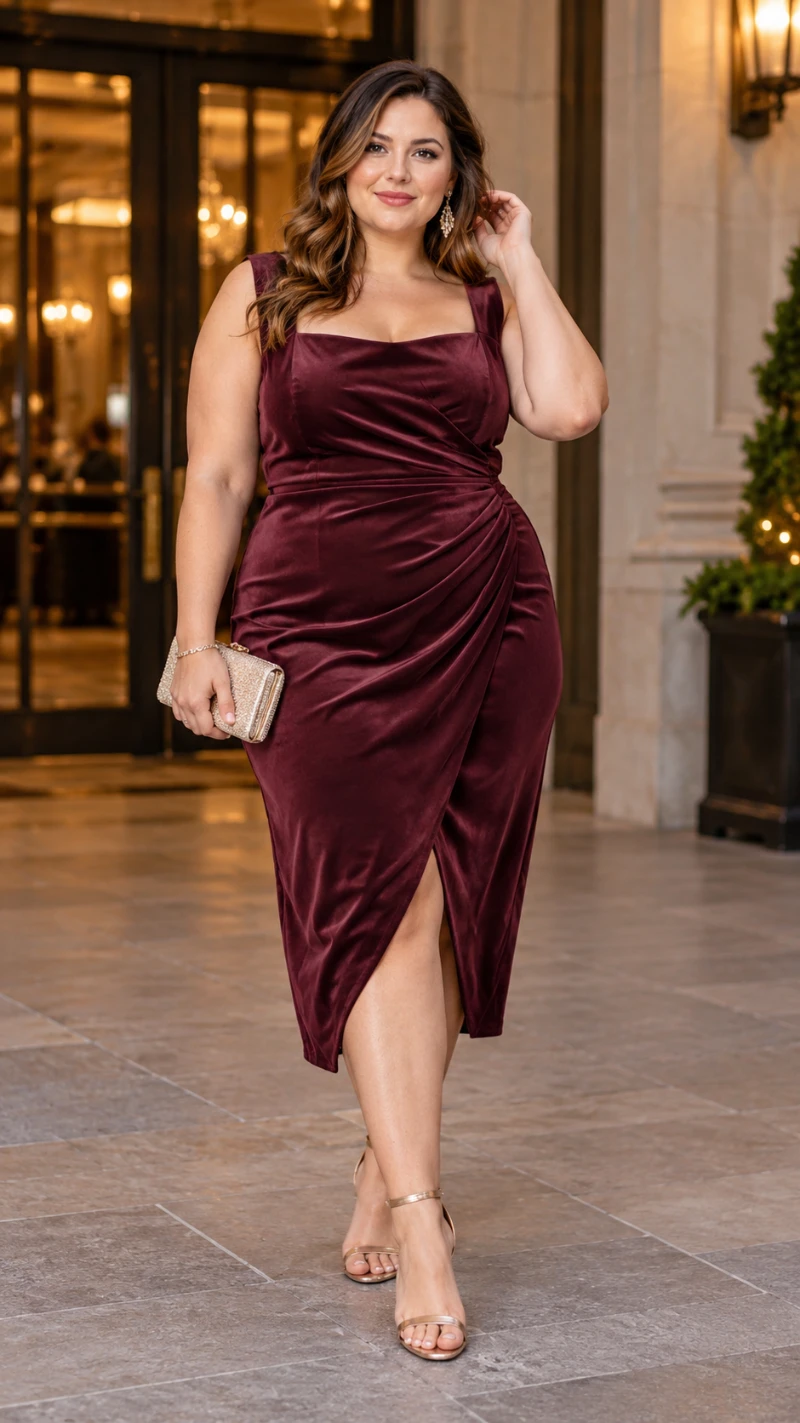
The same dress can look completely different depending on the shoes and bag you pair with it.
A midi dress with casual sandals and a large everyday tote may feel like daytime. Add a sleek heel or refined flat, a smaller bag, and simple jewelry, and it immediately reads as more appropriate for a cocktail event.
Heels are common, but they are not required.
Pointed flats, elegant slingbacks, dressy loafers, low block heels, polished ankle boots, and refined sandals can all work depending on the season and venue.
Comfort still matters.
There is little value in wearing a beautiful shoe that makes you want to sit down ten minutes after arriving.
For accessories, you usually need less than you think. Earrings, a bracelet, a necklace, or a statement bag can provide enough interest without making every part of the outfit compete for attention.
Try this: If your dress already has shine, texture, or dramatic sleeves, keep the jewelry quieter. If the outfit is very simple, accessories can do more of the visual work.
Color Does Not Have to Mean Black
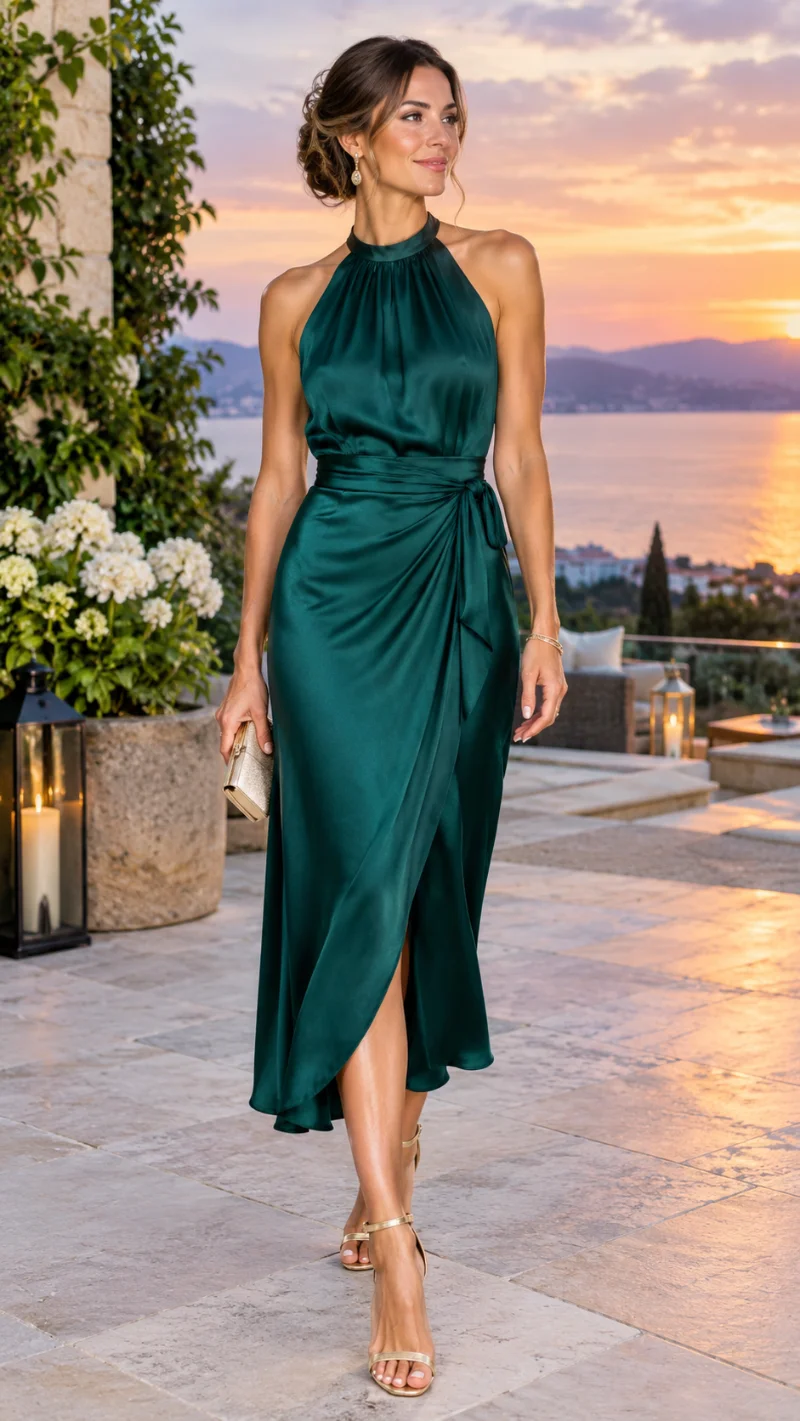
Black is useful because it is easy to dress up, but cocktail attire does not require dark colors.
Navy, burgundy, chocolate brown, forest green, deep plum, silver, jewel tones, soft pastels, and even bright colors can work depending on the event.
The season can help you choose.
Spring and summer events often suit lighter colors, softer fabrics, and open shoes. Fall and winter events can handle richer shades, heavier textures, sleeves, and closed-toe footwear.
Prints are fine too.
A floral, abstract print, polka dot, or subtle pattern can still look sophisticated when the cut and fabric feel polished.
For weddings, pay attention to the couple’s dress code and cultural expectations. If the invitation provides specific colors or guidance, use that before relying on general cocktail rules.
What Usually Makes an Outfit Feel Too Casual
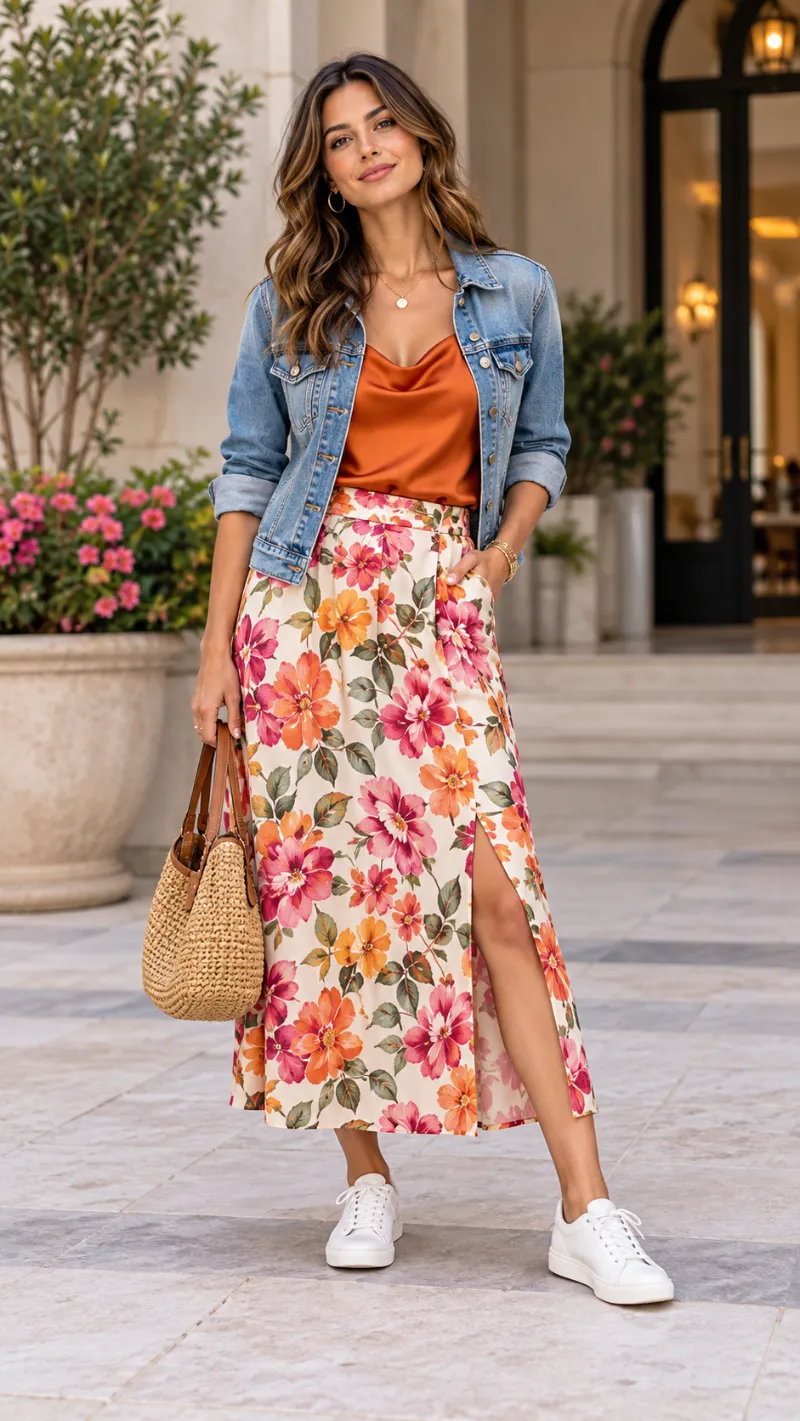
Most cocktail-attire mistakes are not really about breaking a rule. They happen because too many casual details appear in the same outfit.
A single relaxed element can often work. Several together may shift the whole look toward daytime.
Instead of treating these as hard rules, use them as adjustment points:
- Very casual cotton dress: Add structured shoes, an evening bag, and refined jewelry, or choose a richer fabric if the venue is more formal.
- Large everyday tote: Swap it for a clutch, small shoulder bag, or compact structured handbag.
- Athletic sneakers: Choose a refined flat, slingback, loafer, sandal, or ankle boot when the event calls for more polish.
- Very relaxed oversized layers: Try a cropped jacket, tailored blazer, wrap, or cleaner outer layer so the outfit keeps its shape.
You rarely need to replace the entire outfit. Often, changing one or two details is enough.
A Simple Cocktail Attire Formula to Remember
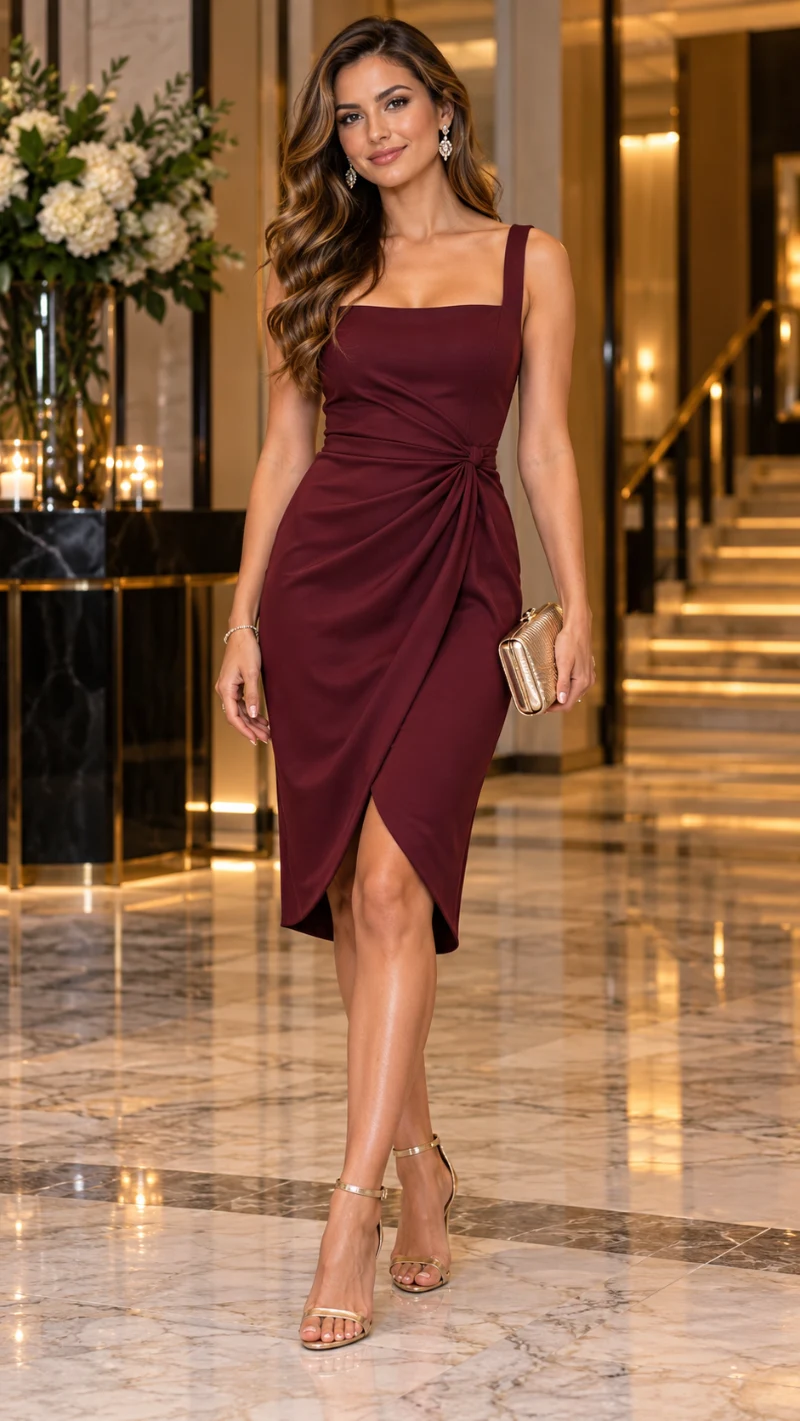
When you are unsure what to wear, use one formula as your starting point.
Formula: polished main piece + refined shoe + smaller bag + one intentional accessory
The main piece could be a midi dress, tailored jumpsuit, skirt and blouse, or dressy trousers with an elevated top.
From there, adjust for the season and venue.
A summer rooftop event may call for a sleeveless midi dress and sandals. A December evening party may make more sense with a velvet dress, closed-toe shoes, and a tailored coat.
The formula stays the same even when the clothes change.
Frequently Asked Questions
Can women wear a long dress for cocktail attire?
Yes, but the style matters. A simple ankle-length or maxi dress can work if it feels polished rather than like a formal gala gown or casual beach dress.
Look for clean lines, refined fabric, and restrained accessories.
Can I wear pants to a cocktail event?
Absolutely.
Tailored trousers with an elegant blouse or structured top can work very well. A polished jumpsuit is another strong choice, especially when paired with refined shoes and accessories.
Are flats appropriate for cocktail attire?
Yes.
Choose flats that look deliberate and dressy, such as pointed-toe styles, embellished flats, elegant slingbacks, or polished loafers. You do not need heels to meet the dress code.
Can I wear a short dress to a cocktail event?
A short dress can work if the overall look still feels polished.
Balance a shorter hemline with a refined fabric, clean silhouette, and sophisticated shoes rather than very casual or club-focused styling.
What should I wear when the invitation says cocktail attire for a wedding?
A midi dress, polished jumpsuit, or dressy separates are all reasonable choices.
Consider the venue, season, ceremony time, and any instructions from the couple. Wedding cocktail attire usually works best when it feels celebratory without becoming as formal as black tie.
Cocktail Attire Should Still Feel Like You
Cocktail dressing becomes much easier once you stop treating it like a secret set of fashion rules.
Start with clothes that feel polished, choose fabrics with a little presence, and use shoes and accessories to set the level of dressiness. Most importantly, wear something you can actually enjoy the event in.
The next time an invitation says cocktail attire, build from one simple formula instead of starting your wardrobe search from scratch.