The hardest part of seasonal dressing is rarely the coldest day. It is that awkward stretch when your fall outfits suddenly feel too light, but pulling out your heaviest winter clothes feels like too much.
Learning how to transition your wardrobe from fall to winter makes those in-between weeks much easier. You do not need to replace the clothes you have been wearing or start dressing for January the moment temperatures drop.
A few thoughtful changes in fabric, layers, shoes, and outerwear can carry much of your fall wardrobe straight into colder weather. The goal is to add warmth without losing the shape, color, and personality that made those outfits work in the first place.
The Best Seasonal Transition Starts With Layers, Not New Outfits
A useful winter wardrobe is often built on top of a good fall wardrobe.
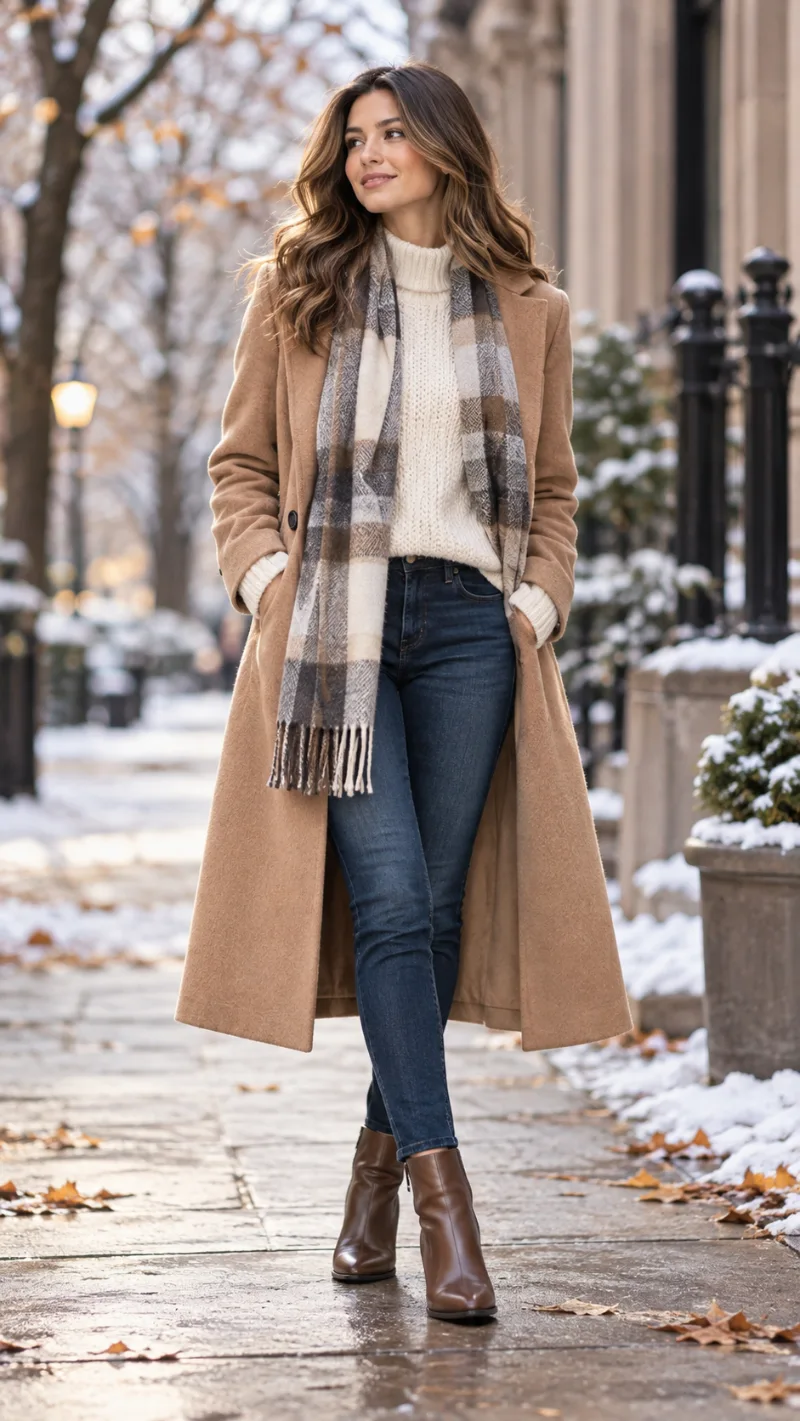
Instead of putting away your button-down shirts, knit dresses, trousers, jeans, skirts, and lightweight sweaters, look at them as your base layer. Winter dressing becomes much simpler when you add warmth around those pieces rather than replacing every outfit.
The trick is controlling bulk.
Three thoughtfully chosen layers usually feel better than piling several thick pieces together. A fitted long-sleeve top beneath a sweater, for example, can add warmth without changing the silhouette nearly as much as an oversized sweatshirt underneath a coat.
Fabric matters here too. Cotton alone can feel chilly once temperatures fall, while wool blends, cashmere blends, merino, fleece-lined fabrics, and substantial knits hold warmth more effectively.
This simple seasonal swap guide shows how little needs to change.
| Fall Piece | Winter Transition |
|---|---|
| Cotton tee | Add a fitted long-sleeve base underneath |
| Light cardigan | Layer under a wool coat or structured jacket |
| Midi dress | Add tights, boots, and a warm coat |
| Button-down shirt | Wear beneath a crewneck or V-neck knit |
| Lightweight trousers | Add thermal tights underneath on colder days |
The outfit still looks familiar. You have simply strengthened it for the weather.
Keep Your Fall Colors and Change the Fabric Weight
Winter style does not require suddenly dressing in black, charcoal, and navy.
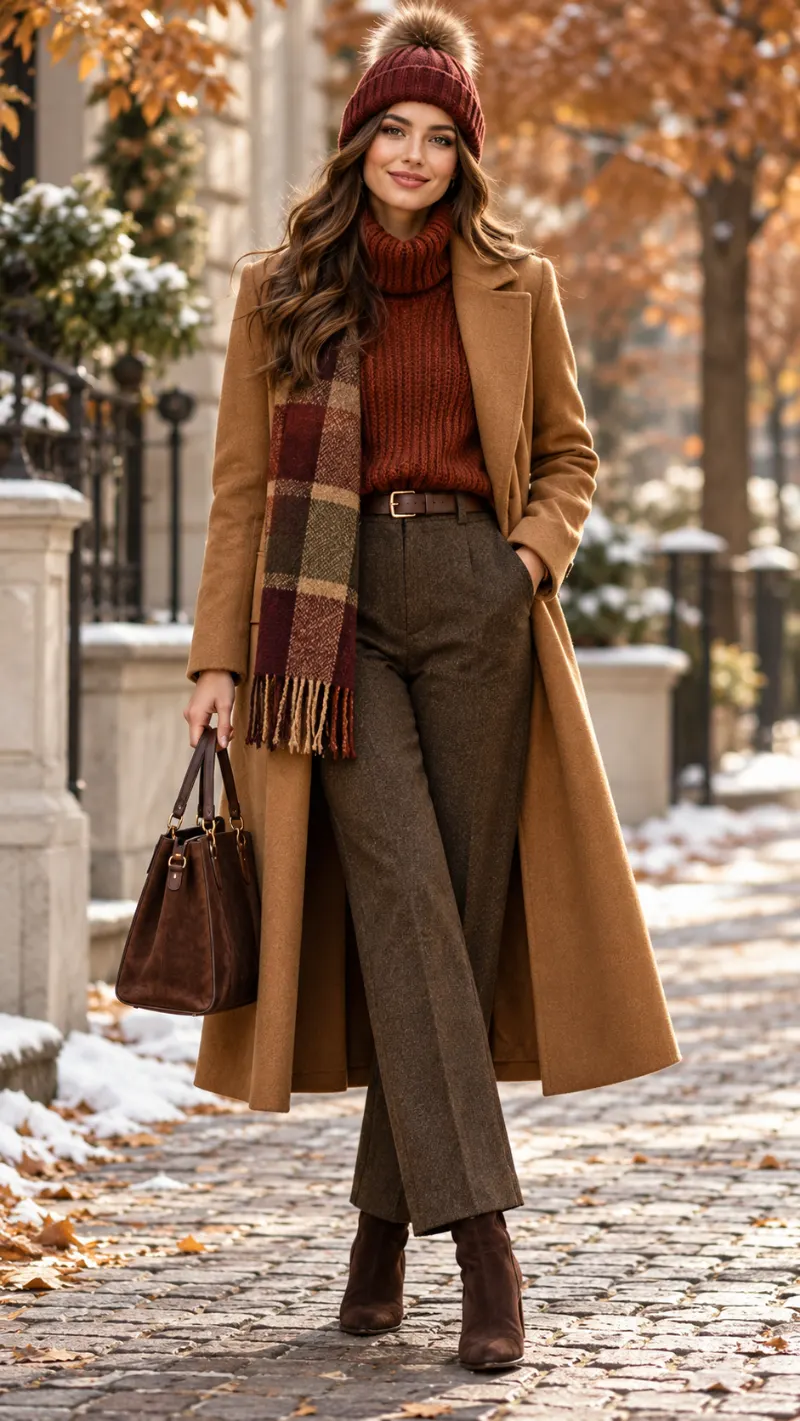
Warm camel, chocolate brown, olive, burgundy, cream, rust, denim blue, and muted green can move beautifully from fall into winter. Even softer colors can stay in rotation when the materials around them become heavier.
A cream cotton blouse may feel unmistakably autumnal. A cream wool sweater paired with dark trousers and boots feels ready for winter.
That difference comes from texture.
Suede can give way to leather in wetter weather. Thin cotton knits can become ribbed wool blends. Lightweight satin skirts can stay in your wardrobe when paired with thicker sweaters, tights, and substantial footwear.
Fabric note: If an outfit looks right but feels too cold, change one fabric before changing the whole outfit. A heavier knit, lined trouser, leather boot, or wool coat can completely shift the seasonal feel.
You can also create more visual depth by mixing textures. Try denim with wool, a smooth knit with corduroy, or a soft sweater with leather accessories.
Those combinations make simple winter outfits look intentional without requiring more pieces.
Let Outerwear Become Part of the Outfit
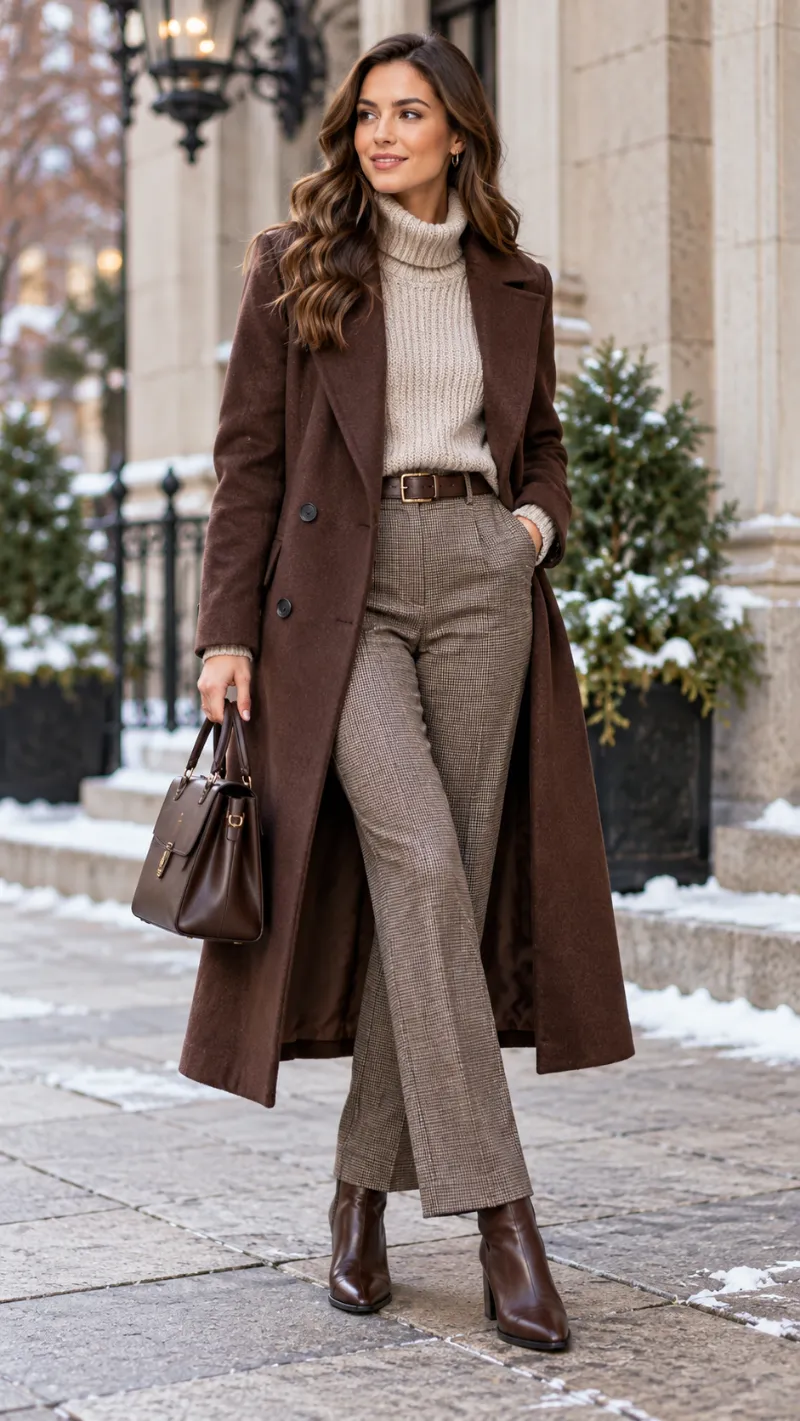
During fall, a jacket can feel optional. By winter, your coat is often the first thing people see.
That means outerwear works better when you treat it as part of your outfit rather than something you throw over it at the last second.
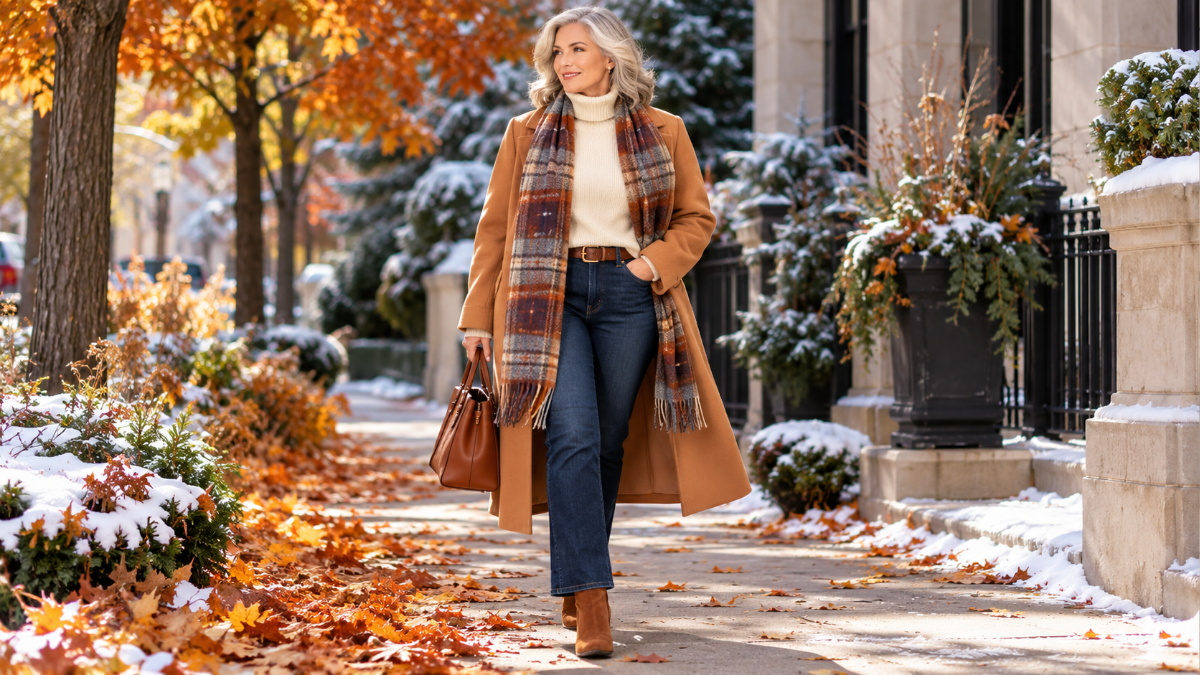
A wool coat can make jeans and a sweater feel polished. A quilted jacket adds warmth without the weight of a heavy coat on milder days. A longer puffer works well when practicality matters more than structure.
Pay attention to what you normally wear underneath.
If your winter outfits include chunky sweaters or blazers, your coat needs enough room through the shoulders and arms. A coat that technically closes but pulls across the upper body will rarely feel comfortable enough to wear regularly.
Here is a simple way to match outerwear to the clothes already in your wardrobe.
| What You Wear Most | Outerwear That Works Well | Why |
|---|---|---|
| Jeans and sweaters | Wool coat or quilted jacket | Easy balance of warmth and polish |
| Dresses and skirts | Knee-length or longer coat | Keeps proportions smooth and adds coverage |
| Blazers and trousers | Roomy tailored coat | Allows structured layers underneath |
| Leggings and casual knits | Puffer or parka | Adds practical warmth for daily wear |
| Wide-leg trousers | Straight or slightly relaxed coat | Keeps the overall silhouette balanced |
Fit note: Try winter coats on over your actual sweaters rather than over a thin shopping-day top. The extra layer can completely change how the shoulders, sleeves, and buttons fit.
Use Shoes to Make Fall Outfits Feel Winter Ready
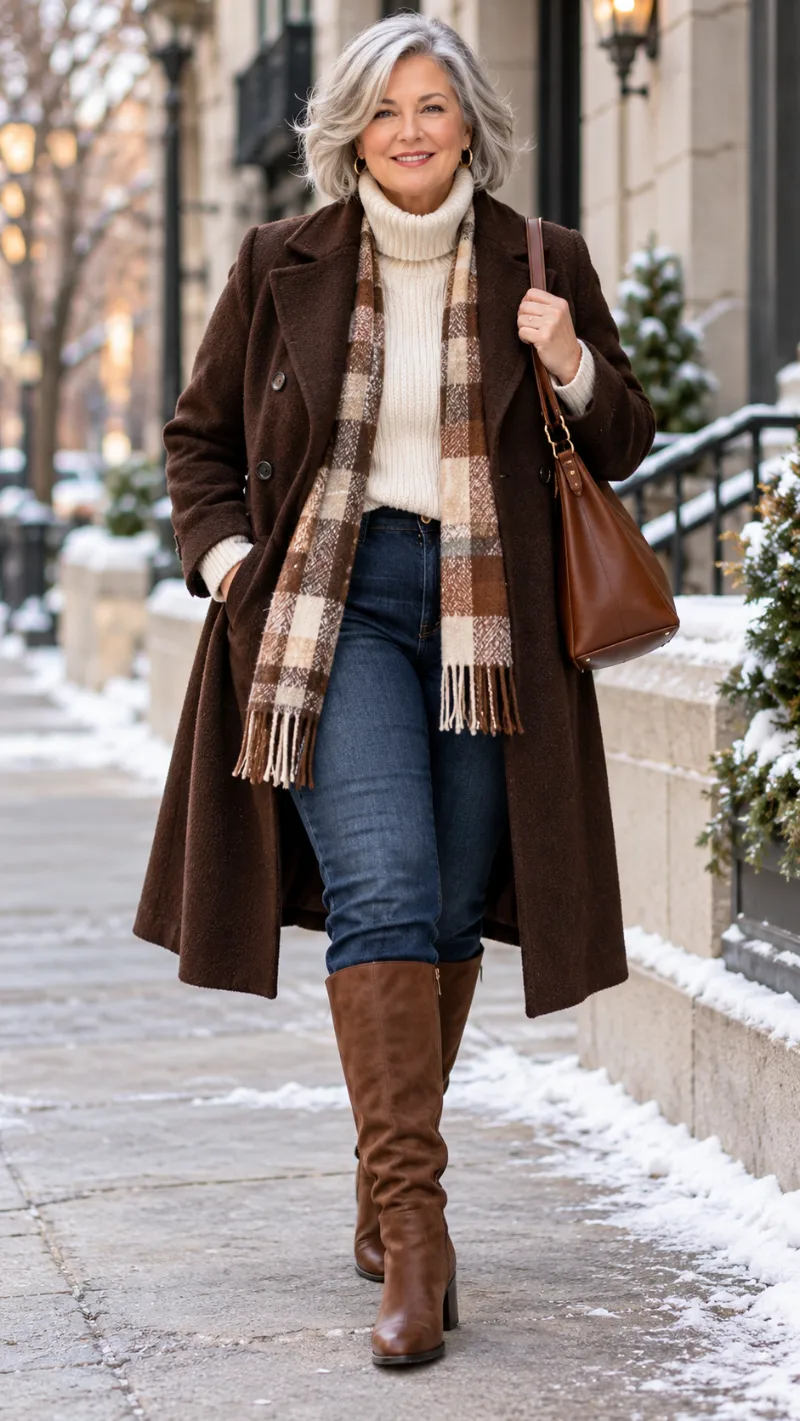
Footwear is one of the fastest ways to transition your wardrobe from fall to winter.
Loafers, ballet flats, and lightweight sneakers may work through early fall, but colder weather usually calls for more coverage, grip, and insulation.
Ankle boots are often the easiest bridge. They work with straight jeans, wide-leg trousers, midi skirts, and dresses without making the outfit feel dramatically heavier.
As winter arrives, knee-high boots can give skirts and dresses more warmth. Weather-resistant Chelsea boots work well for casual outfits, while sleek leather boots can keep tailored trousers looking polished.
Pay attention to the space between your hem and shoe.
Cropped pants that looked intentional with loafers may leave too much ankle exposed in December. A longer trouser, higher boot shaft, or warm sock solves the problem without changing the rest of the look.
For dresses and skirts, tights can make a major difference. Sheer tights offer only a small amount of warmth, while opaque or thermal versions make lighter pieces much more practical.
Add Warmth Without Letting Every Outfit Become Bulky
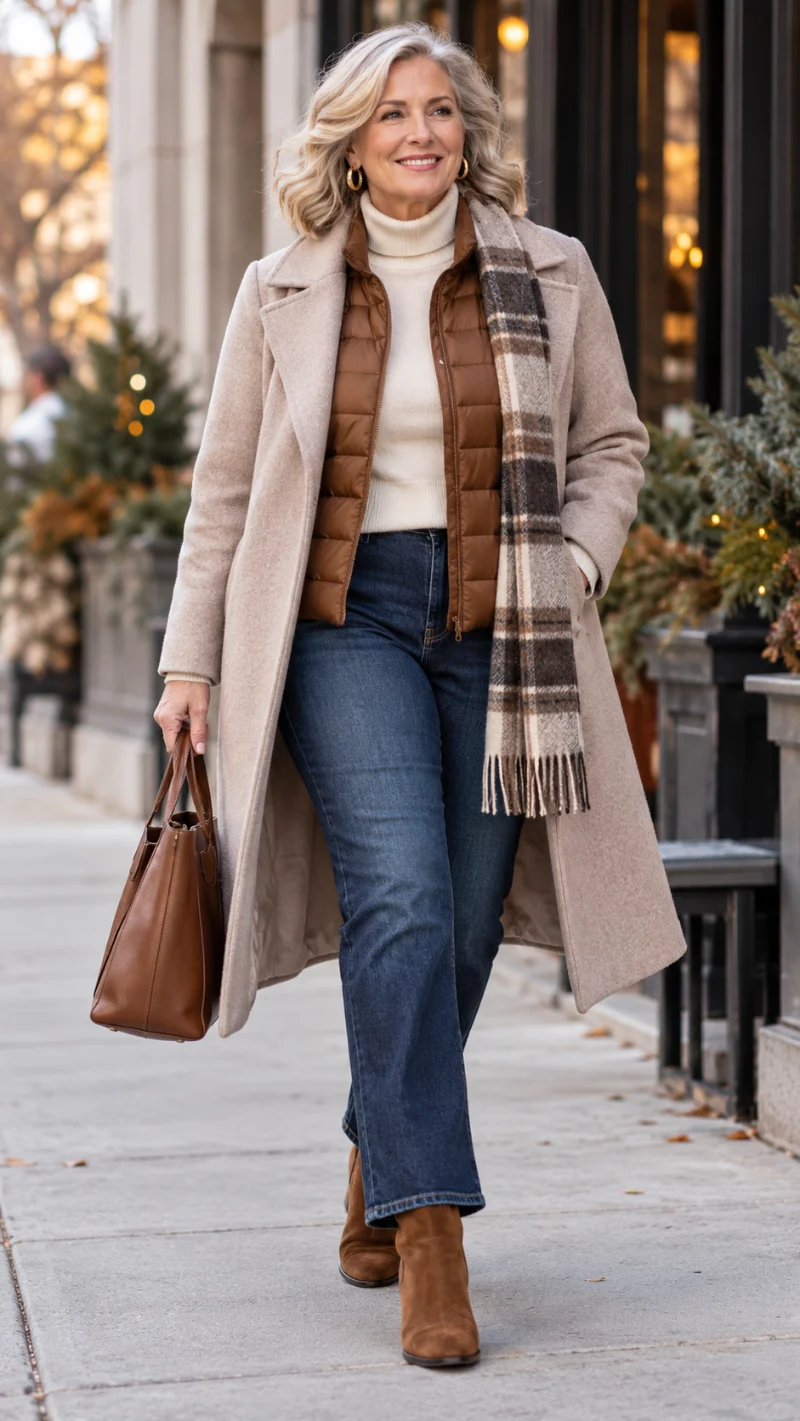
Cold-weather dressing often goes wrong when every layer is oversized.
A roomy sweater under a loose coat with wide trousers and a large scarf can feel physically heavy, even if each piece looks good on its own.
Instead, vary the volume.
If your sweater is chunky, try a straighter trouser or jean. When you wear wide-leg pants, a neater knit can help maintain definition through the upper body. A long coat often works best when at least one layer underneath has a cleaner line.
None of these are strict rules. They are simply ways to keep layers from competing with each other.
A few common seasonal problems have easy fixes.
| Instead of This | Try This |
|---|---|
| Wearing several bulky sweaters at once | Use a thin thermal base beneath one substantial knit |
| Putting a tight coat over thick layers | Choose outerwear with enough shoulder and arm room |
| Retiring every dress until spring | Add tights, boots, knitwear, and a longer coat |
| Wearing thin fall shoes in wet cold weather | Switch to weather-resistant boots with better grip |
| Adding random layers only for warmth | Repeat colors or textures so layers look intentional |
Comfort upgrade: A thin base layer is one of the least visible ways to make an outfit warmer. It lets you keep wearing shirts and sweaters without adding obvious bulk.
Build Around a Few Fall-to-Winter Outfit Formulas
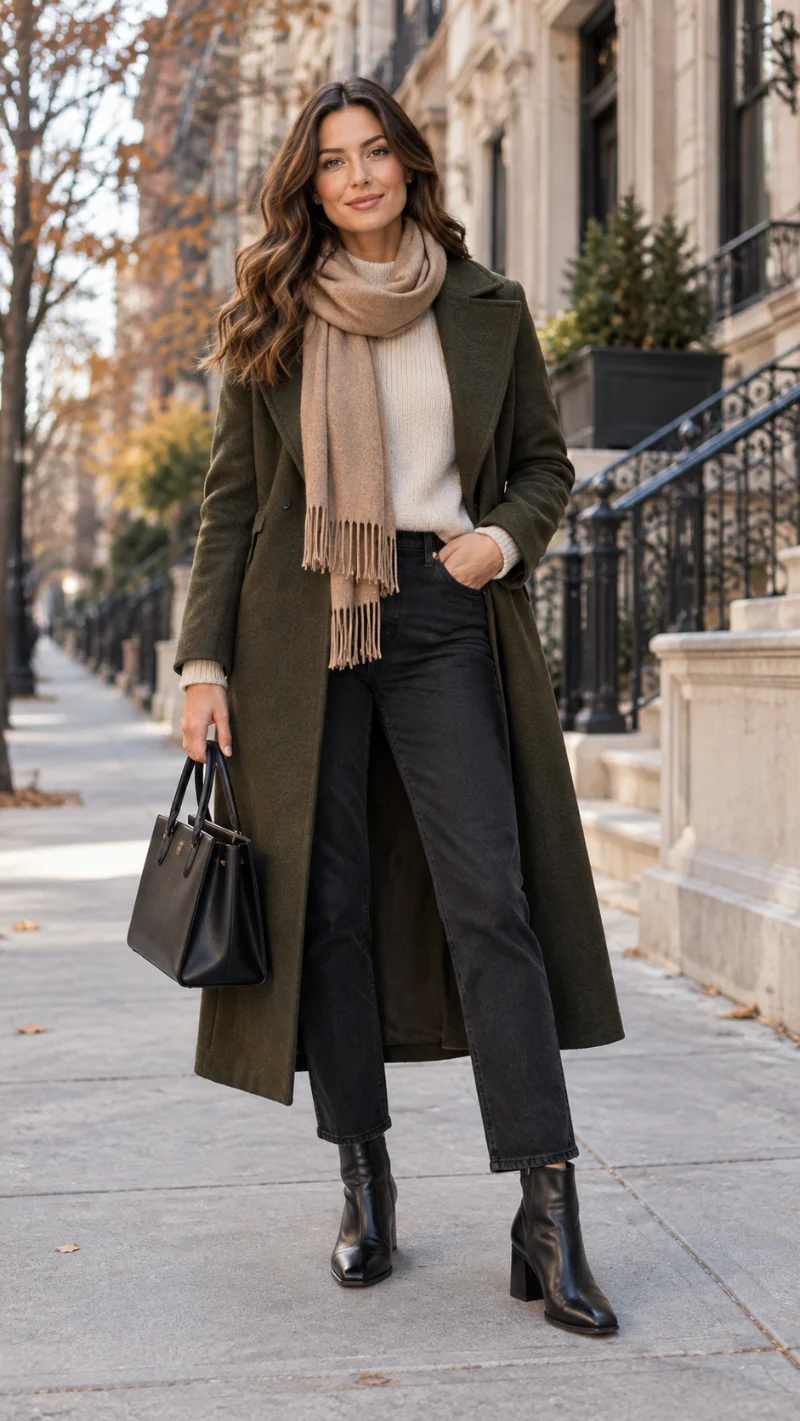
Getting dressed becomes easier when you have a few combinations that already work.
You do not need completely different outfits every day. A reliable formula gives you a starting point, then accessories, color, fabric, and footwear can change the mood.
Formula: straight-leg jeans + fitted base layer + knit sweater + ankle boots + wool coat
This combination works because every layer has a job. The base adds warmth, the sweater gives texture, and the coat protects the whole outfit without hiding its shape.
For a dressier version, try:
Formula: midi skirt + fine knit + opaque tights + knee-high boots + long coat
For relaxed days:
Formula: dark jeans + long-sleeve tee + cardigan + quilted jacket + weather-resistant boots
The pieces can change while the structure stays the same.
That is what makes a seasonal wardrobe easier to use. You are not reinventing your style every morning.
Know What Can Stay in Storage Until Real Winter Arrives
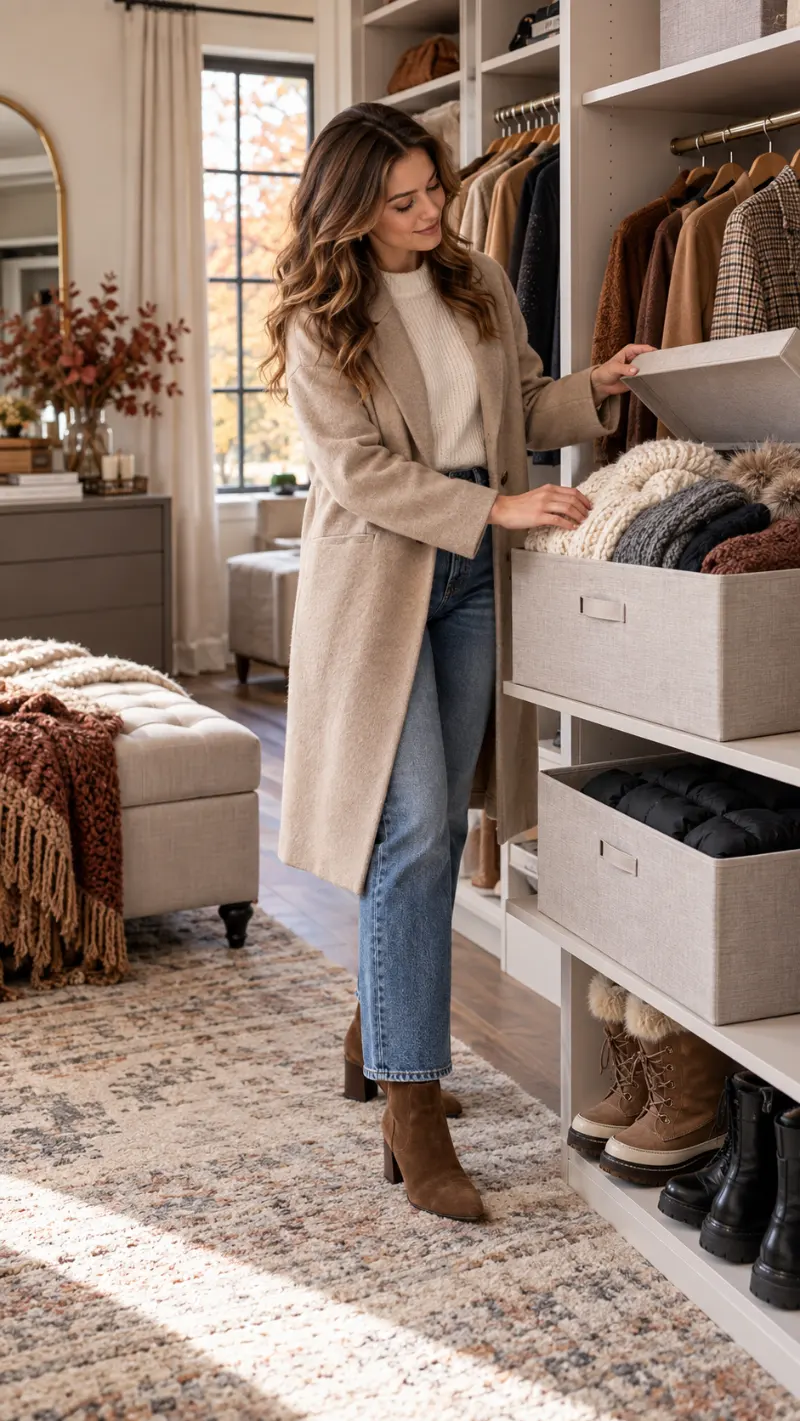
Transition dressing also means knowing when not to bring everything out.
Heavy parkas, very thick scarves, snow boots, and the warmest thermal pieces may be unnecessary during the first cold weeks. Wearing them too early can leave you overheated and gives you nowhere to go once temperatures fall further.
Instead, bring winter pieces into rotation gradually.
Start with closed shoes, medium-weight knitwear, tights, and slightly warmer jackets. Move into wool coats, heavier boots, thicker knits, and thermal layers as the weather demands them.
This approach also makes your wardrobe easier to manage.
You can actually see what you are wearing instead of crowding the closet with two full seasons at once.
Try moving only the most useful winter pieces into easy reach first. Store the extreme-cold items nearby but separate until you need them.
Frequently Asked Questions
When should I switch my wardrobe from fall to winter?
There is no single date that works for every climate. Start transitioning when your usual fall outfits regularly require an extra layer, warmer footwear, or heavier outerwear rather than changing the entire closet at once.
What fall clothes can still be worn in winter?
Jeans, trousers, button-down shirts, midi skirts, dresses, cardigans, blazers, and many sweaters can continue into winter. Adding base layers, tights, boots, heavier outerwear, and warmer accessories often makes them cold-weather friendly.
How can I make fall dresses warm enough for winter?
Start with opaque or thermal tights and boots. Add a fitted base layer beneath the dress when the neckline allows, then use a cardigan, sweater, blazer, or long coat for additional warmth.
How do I layer clothes without looking bulky?
Mix thin and thick layers instead of stacking several heavy ones. A close-fitting base, medium-weight knit, and roomy coat usually creates less bulk than two oversized sweaters beneath tight outerwear.
Do I need separate fall and winter wardrobes?
Not necessarily. Many wardrobe basics can work through both seasons when fabric weight, footwear, outerwear, and layering change. Keeping a shared base wardrobe can also make seasonal dressing simpler and reduce unnecessary purchases.