Building a sophisticated wardrobe later in life often feels like it requires a massive budget. Many women find themselves staring at closets full of compromise pieces that just don’t hang right.
It is incredibly frustrating to buy new clothes only to feel like the outfits look unpolished or slightly dated. You want to project confidence and refinement, but dropping hundreds on a single sweater simply isn’t practical.
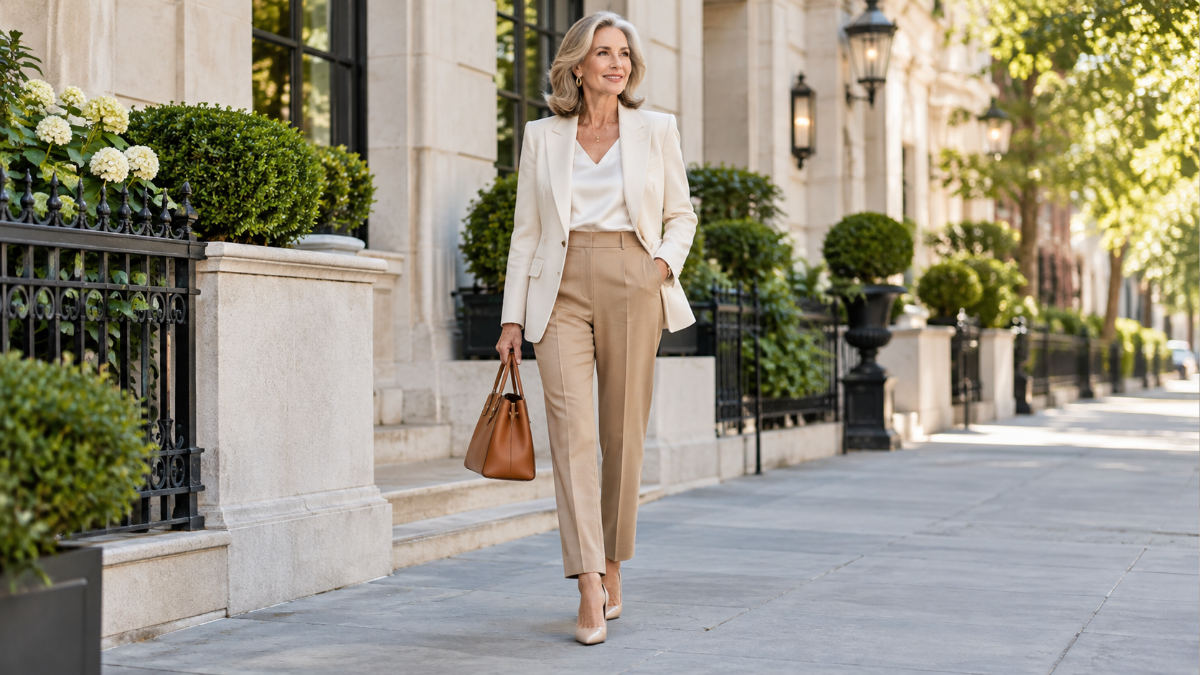
The good news is that learning how to look expensive over 50 relies entirely on a few smart styling tactics, not your credit card limit. By focusing on how garments are constructed, you can easily build a premium look on a realistic budget.
The Styling Logic Behind a Premium Look
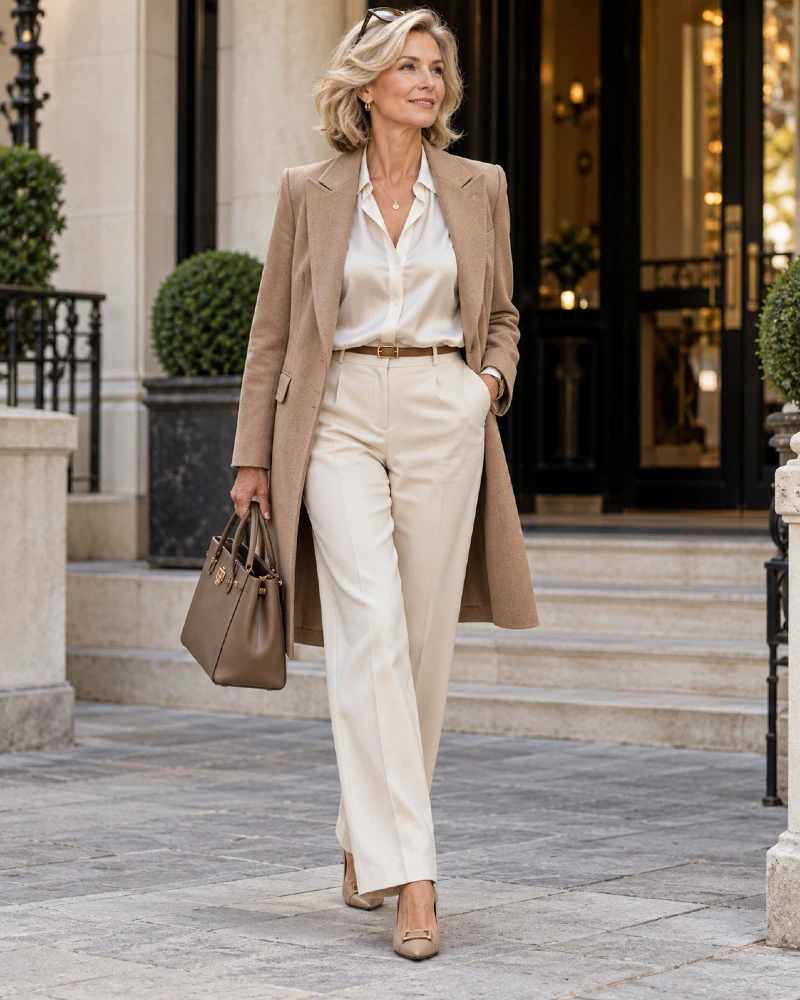
High-end style is fundamentally about intention and proportion. When an outfit looks costly, it is usually because the clothes skimming the body appear custom-made for the wearer.
Designer garments look different because they prioritize structure, draping, and movement. You can replicate this exact visual effect with accessible brands by becoming highly selective about construction.
It comes down to treating your wardrobe like an editor. A modest pair of trousers that falls cleanly from the hip will always outshine a poorly fitted designer pair.
Prioritize Fabrics That Mimic Luxury
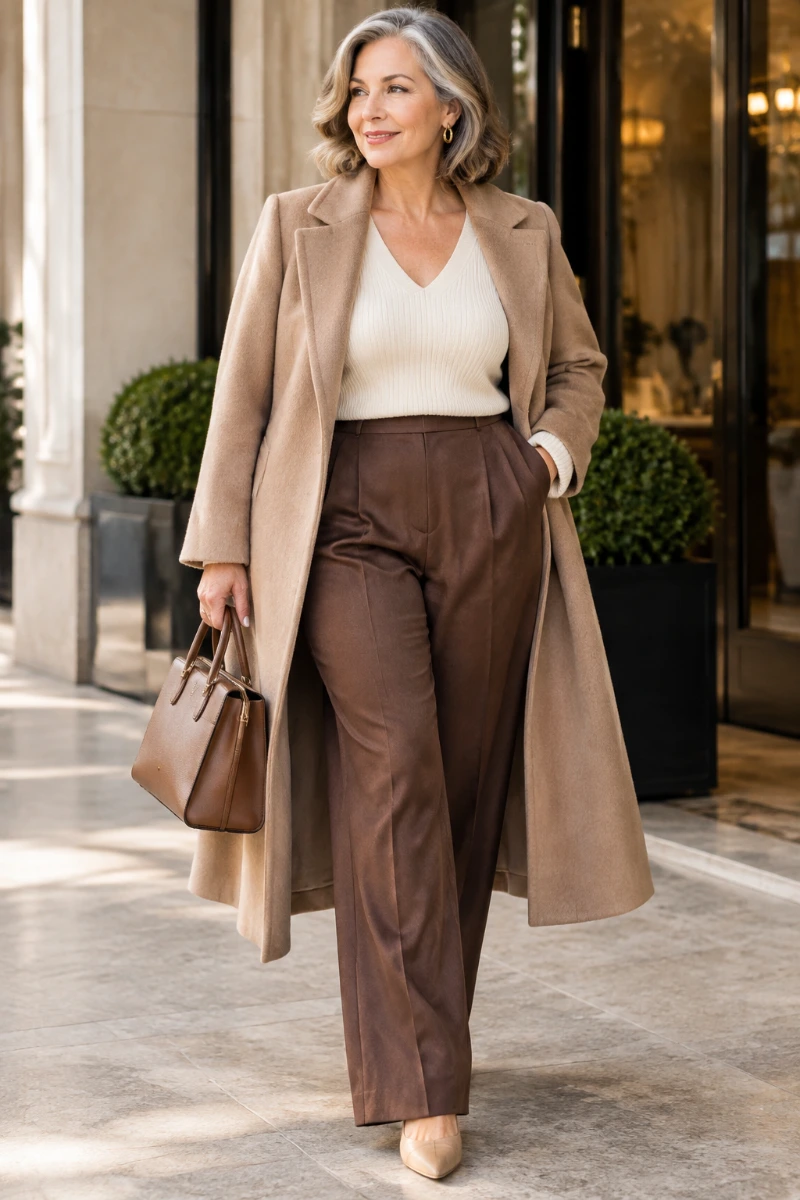
The fastest way to upgrade an outfit is to evaluate the material before you even check the price tag. Textiles dictate how light hits a garment and how it moves when you walk.
Flimsy synthetics often cling to the body and create static, which instantly reads as budget-friendly. Solid, substantial materials provide a structured foundation that smooths your silhouette.
You do not need to buy pure cashmere or heavy silk to achieve this effect. Look for smart blends that offer the drape of luxury fibers with the durability you need for everyday wear.
Keep this quick material checklist in mind the next time you browse a clothing rack or shop online.
| Fabric Goal | What to Look For | Why It Works |
| Premium Knitwear | Dense cotton-merino blends | Holds its shape, resists pilling, and drapes cleanly over the torso. |
| Polished Blouses | Viscose or modal crepe | Mimics the soft, matte fluid movement of silk without the high maintenance. |
| Structured Trousers | Heavyweight Ponte or wool blends | Provides architectural shape and smooths the leg line naturally. |
Upgrading the Small Construction Details
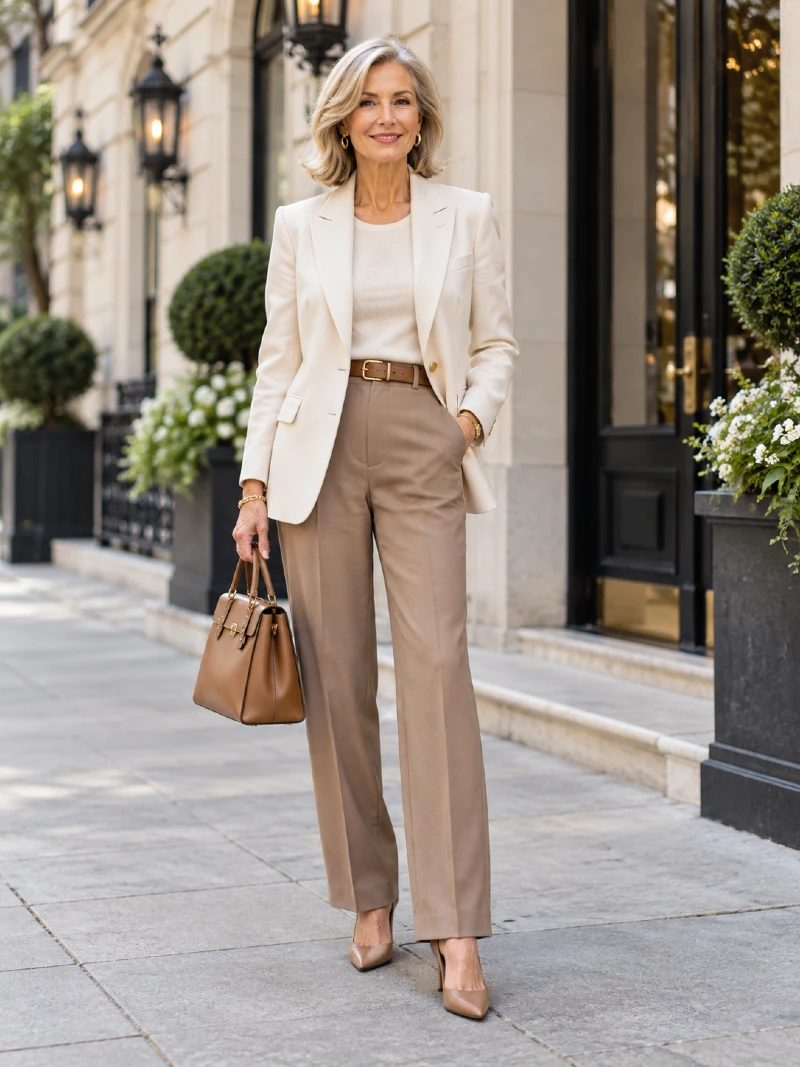
Budget brands save money on manufacturing by using cheap hardware, flimsy linings, and rushed stitching. These tiny details are often the only things separating a basic blazer from a premium one.
You can bypass these manufacturing shortcuts by making strategic choices in the dressing room. Opting for covered plackets, where buttons are hidden under a fabric fold, instantly streamlines a shirt.
If a coat or cardigan has shiny plastic buttons, replacing them with tortoiseshell or metal alternatives from a craft store changes the entire look.
Swap out these common budget giveaways for details that read as intentional and high-quality.
| What to Avoid | The Premium Fix |
| Shiny plastic hardware | Swap for matte metal, horn, or tortoiseshell buttons. |
| Puckered or uneven seams | Choose garments with flat, cleanly pressed topstitching. |
| Flimsy, unlined jackets | Look for partially lined or structured unlined wool blends. |
The Power of Tonal Dressing
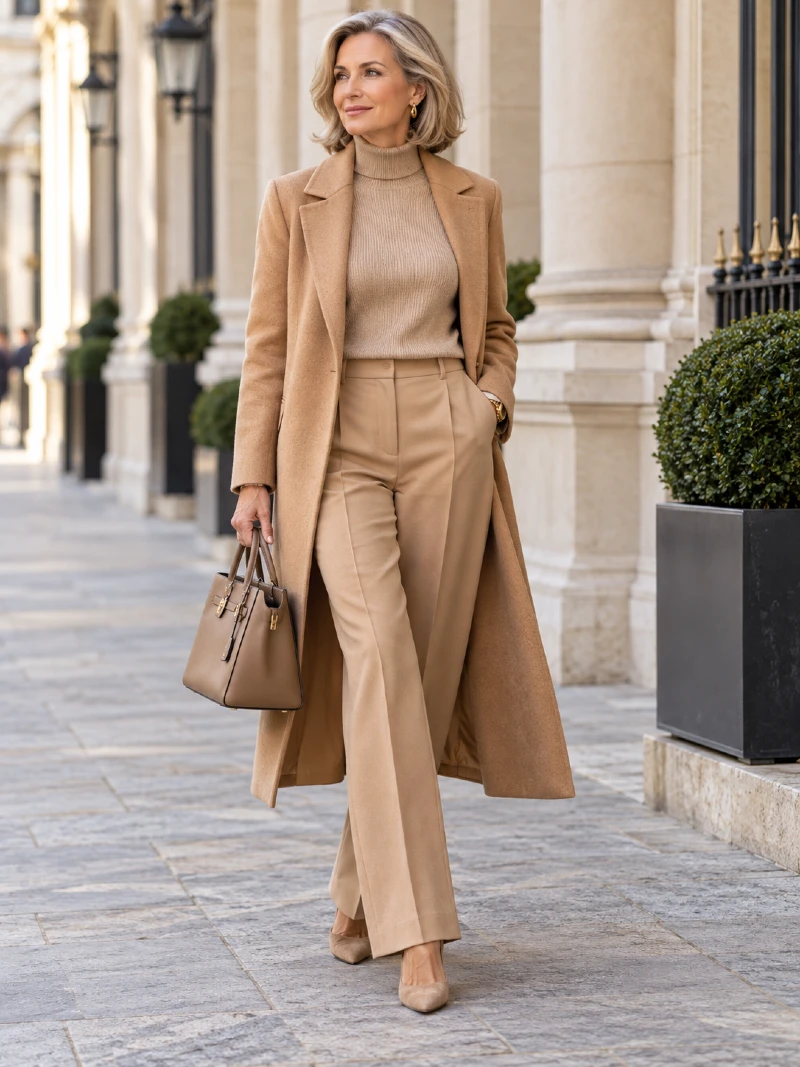
Wearing multiple shades of the same color creates an unbroken, elongated vertical line. This technique requires zero tailoring and works with items already sitting in your closet.
Monochromatic outfits naturally look deliberate and highly considered. The eye registers the coordinated palette as a matched set, which is a hallmark of luxury dressing.
To keep a tonal outfit from looking flat, mix your textures. Pair a chunky knit sweater with a smooth satin-like midi skirt in the same color family.
Try one of these simple tonal formulas using basic pieces you likely already own.
| Occasion | The Formula | Why It Works |
| Running Errands | Camel wool coat + tan cashmere-blend sweater + dark wash straight jeans. | The camel tones create warmth and richness against crisp denim. |
| Smart Casual Lunch | Navy silk-blend blouse + navy tailored trousers + pointed-toe flats. | Dark navy acts like a softer black, looking instantly chic and cohesive. |
| Evening Out | Charcoal grey turtleneck + silver or grey slip skirt + black boots. | Mixing a matte knit with a slight sheen adds expensive-looking depth. |
Strategic Tailoring Makes Everything Better
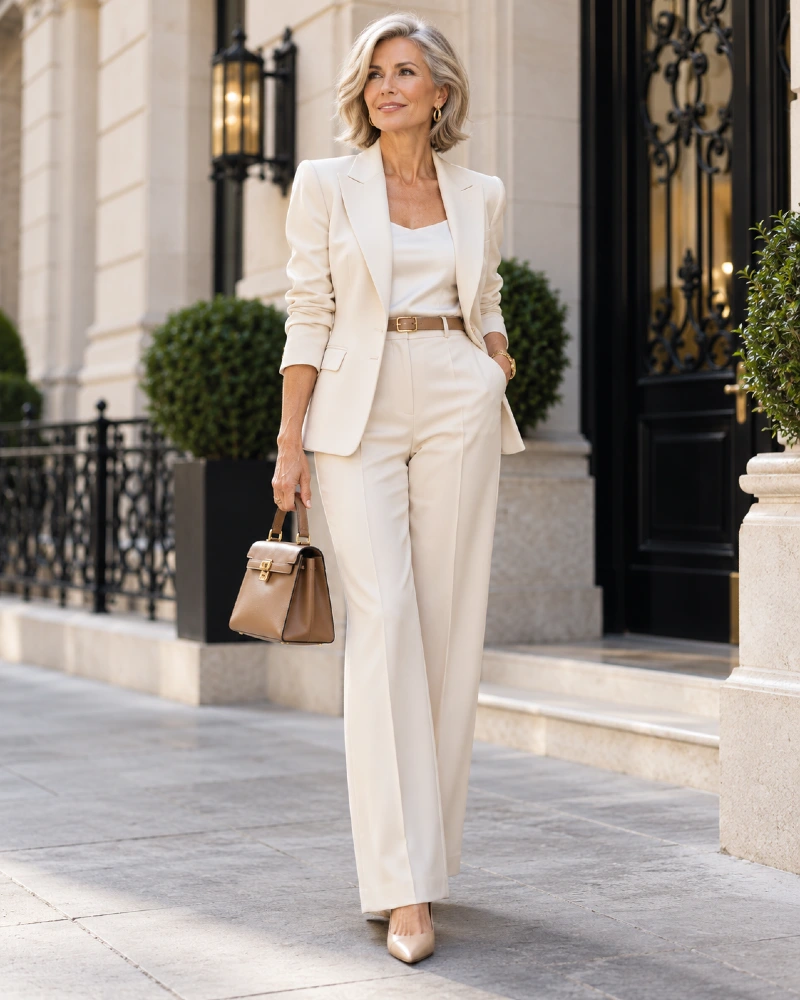
Even the most affordable garments look bespoke when they fit your current body precisely. Off-the-rack clothing is cut for a generic fit model, so expecting a flawless fit right away is unrealistic.
Investing a small amount at a local dry cleaner or tailor yields a massive return on how your clothes present to the world.
Consider these quick alterations to upgrade your current wardrobe:
- Hemming trousers to hit exactly at the top of your most-worn shoes to prevent fabric bunching.
- Taking in the waist of a blazer so it gently skims your shape rather than hanging loose.
- Shortening sleeves on coats or button-downs to show a hint of your wrist, which slims the silhouette.
Frequently Asked Questions
Can I look expensive while wearing jeans?
Absolutely. The trick is choosing a dark, even wash with no artificial fading or distressing. Pair a straight or wide-leg jean with a structured blazer and a pointed-toe shoe for a highly polished finish.
Do I have to wear heels to look dressed up?
Not at all. A pointed-toe flat or a structured leather loafer adds the same level of refinement without the foot pain. Look for shoes with a slight architectural detail, like a squared-off toe or a metallic buckle.
What colors naturally look more expensive?
Neutrals like camel, navy, charcoal, and ivory consistently read as high-end because they highlight the fabric’s texture. If you prefer color, rich jewel tones like emerald or burgundy often look more luxurious than bright neons.
Conclusion
Dressing well is ultimately about how a garment makes you feel as you move through your day. You deserve a wardrobe that reflects your experience and confidence without causing financial stress.
By paying attention to fabric drape, swapping out minor details, and prioritizing a tailored fit, you take control of your personal style.
Choose one piece from your closet this week, evaluate how it fits, and see if a simple styling tweak can give it a whole new life.